Written by:
Michael “Doc” Weissmann, Ph.D., VDCI Entomologist
Co-Written by:
Dr. Louise Lynch-O’Brien of the University of Nebraska at Lincoln
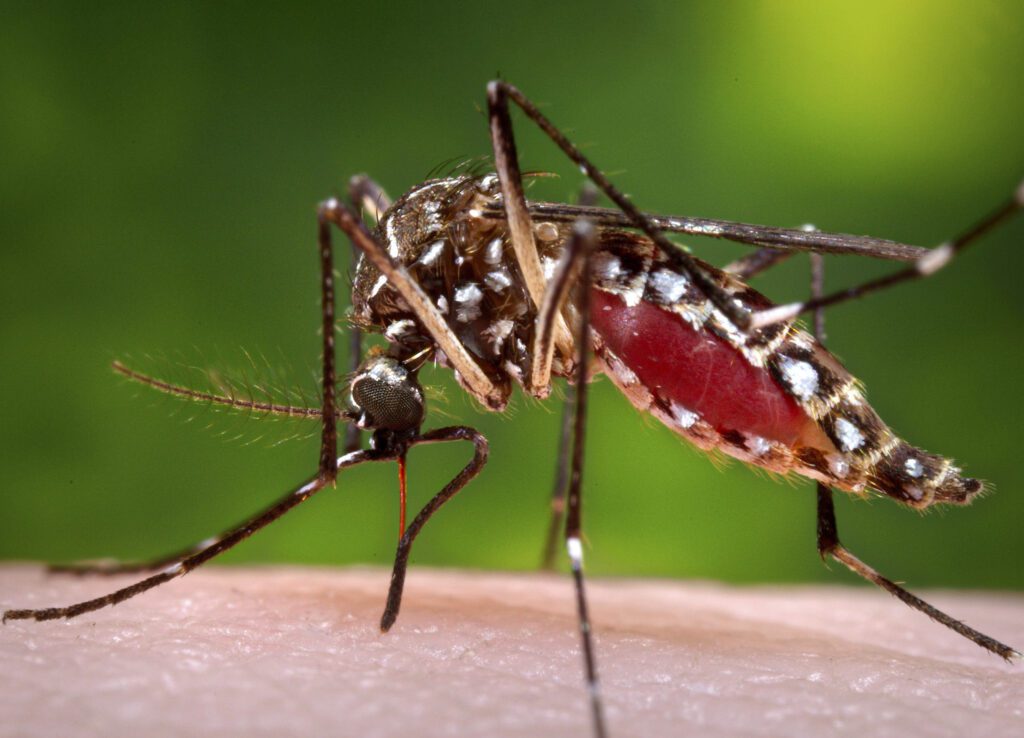
Though mosquitoes are considered the most dangerous species in the world, they are more widely known as one of the most annoying. For thousands of years, humans have sought out solutions and techniques to thwart mosquitoes when spending time outdoors – some effective, some not. While modern scientific advancements have provided us the tools and knowledge to manage mosquitoes more safely and effectively than ever before, dozens of old wives’ tales still persist. One of the most common misconceptions centers around bats.
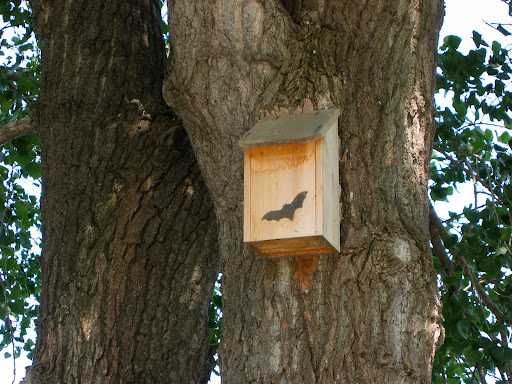
Bats can consume up to 1,000 mosquitoes in an hour, right? This “fact” is often presented as a primary reason to promote bat conservation. In more extreme instances, some activists claim that installing bat boxes in a neighborhood will lead to successful mosquito control and prevent people from contracting mosquito-borne illnesses like West Nile virus.
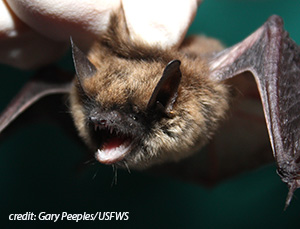 The claim likely originated from a study published in 1960 about how certain bats use echolocation to detect and capture small insects (Griffin et al. 1960). As part of the study, Donald Griffin and colleagues at Harvard University photographed little brown bats (Myotis lucifugus) and Eastern small-footed bats (M. leibii) preying on mosquitos (Culex quinquefasciatus) placed together in a room measuring (2.44 m. wide by 4.88 m. long by 2.44 m. tall (8 ft. wide by 16 ft. long by 8 ft. high). Only a small fraction of the bats (less than 10%) demonstrated prey capture behavior when released into the room that initially contained approximately 2000 mosquitoes, but the study focused on these “good catchers.” Again, this was a study on prey capture technique, not prey quantity.
Based on the amount of weight gained by the bats during each trial, the researchers estimated the number of mosquitoes consumed on average during that period. The study began with 2,000 mosquitoes for the initial trial, but they were not able to replenish the mosquito population to that same level during subsequent trials. The “champion catcher” was an individual M. leibii that was recorded to consume an average of 9.5 mosquitoes per minute during the 15-minute trial. It is summarized in the paper with the statement, “This bat was thus catching about ten mosquitoes per minute or one every six seconds.” Note that this was the highest rate recorded during the study, with all other capture rates being significantly less.
Since that publication, others have quoted this statement out of context, and used it to extrapolate numbers to greater time periods. Ten mosquitoes per minute becomes 600 mosquitoes in an hour. Just as the 9.5 mosquitoes per minute was rounded to 10, the 600 mosquitoes per hour is usually generously rounded up to 1000. Over an 8-hour mid-summer night, that would be 8,000 mosquitoes per night, or more than 2.9 million mosquitoes in a year, or nearly 117 million mosquitoes over a 40-year lifespan – just for one bat! Very impressive.
Is this kind of extrapolation justified? It assumes that the “champion catcher” rate of consumption is 1) true for all bats; 2) maintained for a full hour (or for the full evening, week, month, year, lifetime); and 3) no other insects are consumed except mosquitoes. The original study placed the bats in a room with only mosquitoes to feed on and nothing else. It has been demonstrated that some species of bats do consume mosquitoes as part of their diet (for example, Wray et al. 2018). However, bats tend to be generalist and opportunistic predators, feeding on a wide variety of nocturnal insects as available at different times of year and different times during a single evening. Optimal foraging strategy suggests that bats would prefer larger insects like beetles and moths that provide more dietary value for the predatory effort (“more bug for the buck”). Except in circumstances where mosquitoes are temporally and locally extremely abundant, they are likely to comprise only a small fraction of a bat’s caloric intake on a typical night of foraging.
Bats are important predators, valuable to humans for their role in reducing agricultural pest populations. Boyles et al. (2011) estimate the annual benefit of bat predation to North American agriculture at more than US$3.7 billion, based on consumption of crop pest species (a value that should be quoted with caution, of course, since that dollar figure is itself an extrapolation, based on the per-acre value of cotton in Texas!). However, studies confirming bats’ importance in mosquito control are limited, and the “1000 mosquitoes per hour” claim is not likely to be true under natural conditions.
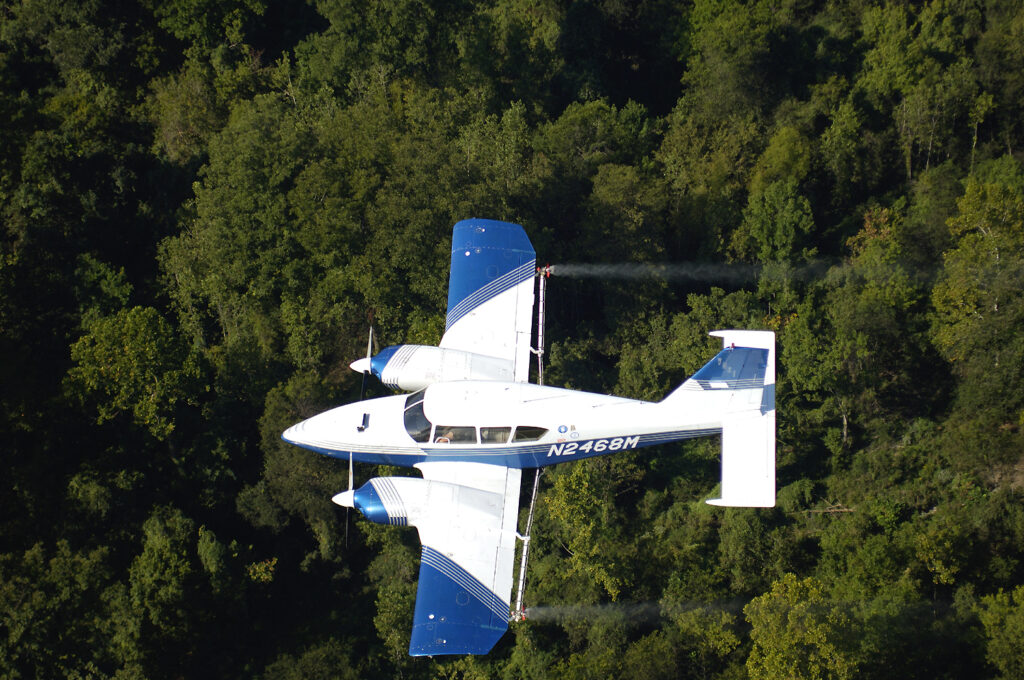
Luckily, there are much more impactful ways to prevent the spread of mosquito-borne diseases. Integrated Mosquito Management (IMM) programs are designed to proactively target mosquitoes at every stage of their lifecycle using professional surveillance and disease testing, population monitoring, larviciding, and adulticiding. These science-backed actions are supported by public education initiatives that empower community members to wear EPA-registered repellents and clothing that covers their bare skin, drain standing water where mosquitoes breed, and stay indoors during dusk and dawn when mosquitoes are most active.
Seeing bats swooping around in the evening does not mean you’re being defended, but they can serve as an important reminder to continue practicing responsible mosquito prevention efforts that protect ourselves and our communities.
–
Boyles, J.G., Cryan, P.M., McCracken, G.F., & Kunz, T.H. (2011). Economic importance of bats in agriculture. Science, 332 (6025): 41-42.
Griffin, D.R., Webster, F.A., & Michael, C.R. (1960). The echolocation of flying insects by bats. Animal Behaviour, 8 (3-4): 141-154.
Wray, A.K, Jusino, M.A., Banik, M.T., Palmer, J.M., Kaarakka, H., White, J.P., Lindner, D.L., Gratton, C., & Peery, M.Z. (2018). Incidence and taxonomic richness of mosquitoes in the diets of little brown and big brown bats. Journal of Mammalogy, 99 (3): 668-674.









 Since 1992, Vector Disease Control International (VDCI) has taken pride in providing municipalities, mosquito abatement districts, industrial sites, planned communities, homeowners associations, and golf courses with the tools they need to run effective mosquito control programs. We are determined to protect the public health of the communities in which we operate. Our mosquito control professionals have over 100 years of combined experience in the field of public health, specifically vector disease control. We strive to provide the most effective and scientifically sound mosquito surveillance and control programs possible based on an Integrated Mosquito Management approach recommended by the American Mosquito Control Association (AMCA) and Centers for Disease Control and Prevention (CDC). VDCI is the only company in the country that can manage all aspects of an integrated mosquito management program, from surveillance to disease testing to aerial application in emergency situations.