

Mosquitoes are tiny but formidable insects that not only interrupt outdoor activities with their incessant buzzing and itchy bites, but several species pose serious health risks by transmitting diseases like West Nile virus and Eastern Equine Encephalitis. To help reduce disease transmission, mosquito management strategies can be implemented to target potentially disease-carrying mosquitoes. However, areas where adult mosquitoes live and breed can often be difficult to access, vast, environmentally sensitive, or pose serious safety hazards for ground crews.
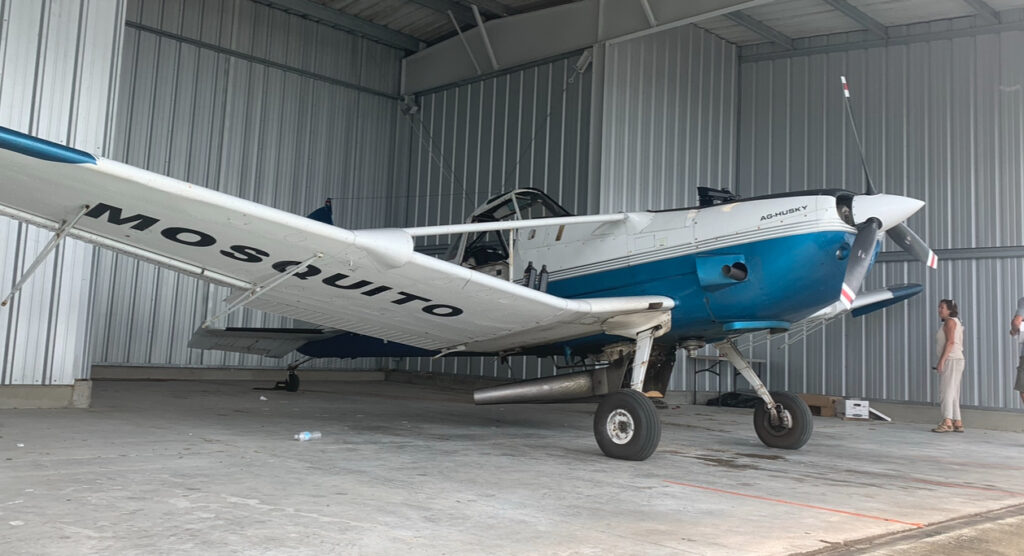
That’s where aerial mosquito control comes in. Vector Disease Control International (VDCI) operates an in-house fleet of specialized aircraft that has been modified for mosquito control purposes. The ability to swiftly target adult mosquitoes through aerial mosquito spraying helps significantly reduce the mosquito population and the potential for disease transmission. In some cases, aerial spraying may be the only viable method to disrupt the mosquito breeding cycle in areas where mosquito populations are exceptionally high or when access is obstructed by flooding, damaged infrastructure, or road closures due to a recent storm. By integrating aerial mosquito control into your mosquito management program, your community can enjoy outdoor spaces with added peace of mind.

What Is Aerial Mosquito Spraying?
Aerial mosquito spraying is a method used to swiftly control mosquito populations on a large scale. This process involves dispersing insecticides from an aircraft to target adult mosquitoes. Aerial spraying utilizes specific Environmental Protection Agency (EPA)-registered insecticides that effectively control mosquitoes yet are designed to minimize harm to other non-targeted insects, animal species, or humans.
Adulticiding applications utilize liquid pesticides and a two-engine aircraft. These planes are equipped with special nozzles to create an aerosol spray that is released approximately 300 feet above ground level. Aerial mosquito spraying can treat roughly 50,000 acres per night, whereas a single truck can treat 3,000 – making aerial spraying a more effective solution for larger control areas. Aerial mosquito applications can serve as an immediate solution in an emergency or to enhance your ground operations.
Aerial vs. Ground Applications: Which Is More Efficient?
Managing large areas for mosquito control can present significant logistical challenges, but aerial spraying offers an efficient solution. For instance, addressing a 100,000-acre area can be treated by a single plane, operated by a team of four individuals, and can cover this vast expanse in merely two nights. In contrast, achieving the same coverage using ground spraying would require deploying 15 trucks, each operating for 10 hours per night. This stark difference in efficiency is even more pronounced during routine or preventative measures. A typical spray block of about 10,000 acres, for instance, can be treated in approximately an hour by a pilot and co-pilot. To match this efficiency on the ground, you would need 10 trucks working simultaneously to cover the same area in the same timeframe, given that a truck can treat about 360 acres per hour. Efficiency is key when managing mosquitoes, as they must be targeted during peak activity times.
Is Aerial Mosquito Spraying Safe?
Ensuring the safety of aerial mosquito spraying is paramount for VDCI, our colleagues, the environment, and the communities we serve. Efficient and secure mosquito control starts with vigilant surveillance and tracking. As the mosquito season commences, professionals at VDCI diligently observe for drastic increases in the mosquito population or the presence of mosquito-transmitted diseases through active surveillance. Common methods for mosquito surveillance include adult trapping, assessing larval habitats, and laboratory analyses where mosquito species are identified, counted, and tested for disease. This data helps generate comprehensive maps highlighting potential areas of disease risk and mosquito activity patterns – ensuring we are treating in the right place and at the right time to reduce the development of insecticide resistance. Should the levels of disease or mosquito populations reach certain predefined criteria, also known as action thresholds, aircraft can be utilized for large-scale mosquito spraying.
When Is the Right Time for Aerial Applications?
Timing is key when it comes to aerial applications. An important factor in determining the optimal time for mosquito spraying is analyzing weather conditions that may affect safety and effectiveness. To navigate these challenges, VDCI leverages sophisticated weather forecasting tools to pinpoint the most suitable time for operations. While in flight, the precision of aerial spraying is enhanced through the use of integrated GPS tracking, GIS systems, and real-time onboard weather monitoring equipment. This technology enables pilots to adjust flight patterns based on environmental conditions, making aerial mosquito spraying an environmentally responsible control measure when conducted properly by professionals.
In addition to assessing weather conditions, our experts also consider the target species. For example, some mosquito species, such as Culex tarsalis in California, are only active for about an hour after sunset. Knowing the activity pattern of the nuisance or potentially disease-carrying mosquito will help drive more timely and effective aerial applications.

The Science and Safety Behind Applying Insecticides
Insecticides are applied using planes equipped with specialized application sprayers and technology to apply the smallest amount of product possible while achieving optimal control. Known as Ultra Low Volume (ULV) spraying, many insecticides often require less than an ounce of product per acre. This efficient application process ensures the insecticide is properly targeted and absorbed by the mosquito and significantly reduces the time the insecticide is present in the environment. VDCI’s insecticides for mosquito spraying are specifically selected for their targeted action against mosquitoes, minimizing potential harm to other wildlife or people. VDCI only uses insecticides that have been approved by the EPA, ensuring that all insecticide applications are strictly adhered to regulatory guidelines. This includes compliance with regulations regarding the volume of chemicals used, the frequency of their application, and the specifications for droplet size and density. Such measures are taken to help ensure treatments are low-risk for the environment and effective in mosquito prevention.
How We Keep Your Community Informed
Effective communication plays a crucial role in the success and safety of mosquito control efforts, especially when it comes to aerial spraying. These activities often garner significant public attention, sparking inquiries from community members concerned about potential risks. Engaging in clear and ongoing dialogue is essential to address these concerns and foster a transparent relationship with the public.
This communication strategy extends beyond liaising with state and local government officials. VDCI is committed to partnering with various local institutions for public education, such as health departments, libraries, and schools. Through these partnerships, VDCI distributes educational materials that alleviate concerns about aerial mosquito spraying and provide valuable information on how individuals can protect themselves from mosquito bites and contribute to reducing the risk of mosquito-borne diseases.

Why Partner With VDCI for Aerial Mosquito Control?
When you partner with VDCI, you can relax knowing that our aerial applications are science-backed to ensure they remain effective while keeping the local environment and residents safe. VDCI is a premier provider of advanced aerial mosquito control solutions nationwide, specializing in both adult and larval management. Our use of EPA-registered insecticides through aerial spraying ensures unparalleled protection for states, counties, and municipalities, especially during high-risk periods for mosquito-borne diseases. Due to the complexity of these operations, our in-house expertise, cutting-edge technology, and comprehensive reporting systems make us a valuable partner for any aerial mosquito spraying needs. With an in-house fleet of aircraft capable of treating over 50,000 acres each night and our highly trained pilots, VDCI delivers effectiveness far beyond typical mosquito control applications.
See how aerial mosquito spraying can support your current IMM program or emergency response plans – contact us today.
Frequently Asked Questions About Aerial Mosquito Control
How Does Aerial Mosquito Spraying Work?
Aerial mosquito spraying disperses EPA-registered insecticides from specially equipped aircraft to target adult mosquitoes across large or hard-to-reach areas. Twin-engine planes fitted with specialized nozzles release an ultra-fine aerosol approximately 300 feet above ground level. The droplets are designed to be absorbed by mosquitoes while introducing the smallest amount of product possible into the environment.
Is Aerial Mosquito Spraying Safe for People and Pets?
When conducted properly by trained professionals, aerial mosquito spraying is an environmentally responsible control measure. VDCI uses only EPA-registered insecticides selected for their targeted action against mosquitoes, applied through Ultra Low Volume (ULV) technology that often requires less than an ounce of product per acre. Every application follows strict regulatory guidelines governing product volume, application frequency, and droplet size to minimize risk to people, pets, wildlife, and the environment.
How Many Acres Can Aerial Spraying Treat per Night?
A single aircraft can treat roughly 50,000 acres in one night, compared to about 3,000 acres for a single ground spray truck. A typical 10,000-acre spray block can be completed in approximately one hour by a pilot and co-pilot — coverage that would require 10 trucks operating simultaneously to match. This efficiency matters because mosquitoes must be targeted during their peak activity periods.
When Is Aerial Mosquito Control Used?
Aerial applications are typically initiated when surveillance data shows mosquito populations or disease activity have exceeded predefined action thresholds. They are especially valuable when treatment areas are vast, environmentally sensitive, or inaccessible to ground crews — such as after flooding, infrastructure damage, or road closures following a storm. Aerial mosquito control can also serve as an immediate solution in an emergency or enhance existing ground operations within an Integrated Mosquito Management (IMM) program.
What Time of Day Do Aerial Applications Take Place?
Applications are timed around the peak activity period of the target mosquito species, which typically occurs during evening and nighttime hours. For example, Culex tarsalis in California is only active for about an hour after sunset, so knowing each species’ behavior helps drive more timely and effective applications. VDCI also uses advanced weather forecasting and real-time onboard monitoring to confirm conditions support an effective application.
How Are Communities Kept Informed About Aerial Spraying?
Clear, ongoing communication is a core part of every aerial mosquito spraying operation. VDCI coordinates with state and local government officials and partners with local institutions — including health departments, libraries, and schools — to distribute educational materials. These resources help address common concerns about aerial applications and explain how residents can further protect themselves from mosquito bites.
Contact Our Experts
Complete the form below or call us at 800-413-4445 to speak to an expert about your mosquito management needs.
 Since 1992, Vector Disease Control International (VDCI) has taken pride in providing municipalities, mosquito abatement districts, industrial sites, planned communities, homeowners associations, and golf courses with the tools they need to run effective mosquito control programs. We are determined to protect the public health of the communities in which we operate. Our mosquito control professionals have over 100 years of combined experience in the field of public health, specifically vector disease control. We strive to provide the most effective and scientifically sound mosquito surveillance and control programs possible based on an Integrated Mosquito Management approach recommended by the American Mosquito Control Association (AMCA) and Centers for Disease Control and Prevention (CDC). VDCI is the only company in the country that can manage all aspects of an integrated mosquito management program, from surveillance to disease testing to aerial application in emergency situations.