Here Are the Top 6 Things You Should Know
Mosquitoes are resilient, widespread, and capable of transmitting serious diseases, making them one of the most challenging public health issues communities face. If you’re new to supporting a mosquito management program, it helps to start with a clear picture of what you’re actually dealing with and what effective control really looks like.
Here are six core facts that will help you hit the ground running.
FACT 1. Mosquitoes Cannot Be Fully Eradicated

One of the most fundamental realities in city mosquito control is that complete eradication is not realistic. Mosquitoes have existed for millions of years and are incredibly resilient. They’re found on every continent except Antarctica and even survived through the Ice Age thanks to their remarkable ability to remain in a dormant or paused state until environmental conditions improve.
Additionally, mosquitoes are excellent at reproducing. A single mosquito can lay 200-300 eggs in spaces as small as a bottle cap, and it’s virtually impossible to find and eliminate all breeding sites. Gutters, tree holes, old tires, potholes, stagnant waterbodies, and flood-prone areas all create ideal breeding habitats.
Ultimately, the goal of mosquito control programs is not complete eradication. It’s to maintain mosquito populations at manageable levels to reduce nuisance biting and limit the spread of mosquito-borne diseases.
Learn more about what “winning” against mosquitoes looks like.
FACT 2. Mosquito Populations Fluctuate Throughout the Year

Mosquito populations are highly dynamic, and fluctuations are closely tied to environmental conditions. Of course, mosquito activity stops or subsides in areas that experience true winter weather, but rainfall, natural disasters, flooding events, temperature, and humidity levels also significantly influence population changes. Evidence also suggests climate change is creating more favorable conditions for mosquitoes in once inhospitable areas.
Effective programs should be designed to quickly pivot and respond when changes occur. Proactive planning, such as setting action thresholds, coordinating communication channels, and regularly collecting surveillance data, can help ensure rapid response precisely when and where it’s needed.
FACT 3. Mosquito-Borne Diseases Are Found Throughout the U.S.

Mosquitoes can transmit numerous harmful and potentially deadly diseases, including West Nile virus, Eastern Equine Encephalitis, yellow fever, and Zika. Different mosquito species can transmit different diseases, so the risks can vary from state to state and by local environments based on the prevalence of a particular species.
Furthermore, disease risks can change year-over-year. Explore our 2025 mosquito-borne disease year-in-review to see how disease presence has evolved since 2020.
FACT 4. You Can Target Mosquitoes at All Stages of Life and Reduce Adult Populations
The most effective way to manage mosquitoes is to disrupt their lifecycle. Mosquitoes progress through four stages: eggs, larvae, pupae, and adults. Professionals have tools and strategies to manage them at each life stage.
Larval control is particularly impactful, as it targets mosquitoes before they become biting adults that are capable of spreading harmful mosquito-transmitted diseases. Best practices like reducing standing water around your property can help eliminate common breeding sites. EPA-registered larvicides can be applied to areas of standing water, such as ponds and floodwater ditches.
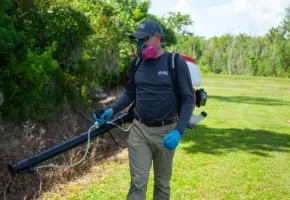
Adulticides are also available to manage flying, breeding mosquitoes. Experts may apply adulticide products via Ultra-Low Volume (ULV) backpack or truck sprayers for highly targeted locations, or by twin-engine aircraft for uniform coverage across wide land areas.

Ultimately, when multiple life stages are targeted at once, experts can help keep mosquito populations at or below manageable levels.
FACT 5. Mosquito Control Programs Should Be Comprehensive

An integrated approach is essential to keep mosquitoes within manageable levels. Integrated Mosquito Management (IMM) programs are carefully designed and tailored to the unique conditions and goals of each stakeholder.
IMM programs typically include surveillance and disease testing, source reduction, larval mosquito control, adult mosquito control, and insecticide resistance monitoring. This approach allows programs to adapt based on conditions, different mosquito species, and risk levels, rather than relying on routine, one-size-fits-all applications.
In addition to targeting mosquitoes at all lifecycle stages, effective programs must be backed by public support and education. The surrounding community plays a key role in eliminating mosquito breeding habitats, particularly on private properties, and preventing the spread of diseases through personal protective strategies.
FACT 6. In-House Programs Can Seek 3rd Party Support When and Where It’s Needed

Many organizations already operate in-house city mosquito control programs. However, peak season demand, large-scale outbreaks, challenging terrain, or lack of equipment can quickly stretch internal resources.
This is where supplemental support comes in. External ground and aerial support can help expand capacity and ensure rapid response during peak mosquito season, during high-risk disease outbreaks, or following natural disasters.
Rather than replacing internal teams, external support is designed to streamline management efforts and strengthen overall program effectiveness when it matters most.
Protect Public Health with an Integrated Approach to Mosquito Management
Mosquito management is a challenge, but it’s one that communities can meet with the right knowledge and resources. The more you understand about how mosquito populations behave, how programs are designed, and what kind of support is available, the better positioned you’ll be to make a real difference in your community.
Contact Our Experts
Complete the form below or call us at 800-413-4445 to speak to an expert about your mosquito management needs.
 Since 1992, Vector Disease Control International (VDCI) has taken pride in providing municipalities, mosquito abatement districts, industrial sites, planned communities, homeowners associations, and golf courses with the tools they need to run effective mosquito control programs. We are determined to protect the public health of the communities in which we operate. Our mosquito control professionals have over 100 years of combined experience in the field of public health, specifically vector disease control. We strive to provide the most effective and scientifically sound mosquito surveillance and control programs possible based on an Integrated Mosquito Management approach recommended by the American Mosquito Control Association (AMCA) and Centers for Disease Control and Prevention (CDC). VDCI is the only company in the country that can manage all aspects of an integrated mosquito management program, from surveillance to disease testing to aerial application in emergency situations.