

Many kinds of insects pose some risk to humans, but the greatest of these are the risks posed by mosquitoes. While constant mosquito bites can be a nuisance, in many areas they are also the source of a range of serious diseases like malaria, West Nile virus, and Eastern Equine Encephalitis, which together kill more than one million people worldwide each year. Their status as flying, highly mobile, and adaptable disease vectors makes mosquitoes the most dangerous group of insects in the world, and one that humanity has been battling for centuries through mosquito control techniques.
Trailblazers in Mosquito Control
Modern mosquito control largely began toward the end of the nineteenth century, with many of the developments occurring in New Jersey.
An important early figure in mosquito control was Leland Howard, head of the United States Department of Agriculture’s entomological service and a proponent for expanding its research on mosquitoes. Initially experimenting with kerosene, he found success in controlling mosquito larvae by spreading oil on the water’s surface, which formed a film that suffocated larvae trapped beneath it.
While this method was effective in localized treatments, it was far from environmentally friendly and unsuitable for use on the region’s expansive salt marshes, where mosquitoes breed.
Early Mosquito Control in New York
Nonetheless, oil was a key component of the first large-scale attempts at mosquito control in nearby New York City. At this time, mosquito-borne diseases like malaria and yellow fever were endemic in the United States, and malaria was particularly widespread in New York.
In the summer of 1901, Alvah Doty, the chief of the Bureau of Contagious Disease for the Port Authority, launched a widespread mosquito control effort to curb the spread of malaria. By offering the public a bounty for captured mosquitoes and treating standing water with oil supplied by The Standard Oil Company, Doty launched a successful mosquito control campaign in just two weeks that inspired similar efforts across the country.
John B. Smith and Biological Mosquito Control
John B. Smith, working at the same time as Leland Howard, took a different approach to mosquito control. An entomologist at the New Jersey Agricultural Experiment Station, Smith was an experimenter in pesticide development and the use of biological controls for agricultural pests.
His work on mosquito control rejected the overuse of oil for the environmental damage it caused, particularly to local fish populations. Looking for a more targeted approach, he conducted a comprehensive study of the region’s mosquito species, which were not well understood, and made several contributions to mosquito control, including early experiments in larvicides, natural repellents, and the use of fish as a biological control for mosquito larvae.
The Development of the New Jersey Light Trap
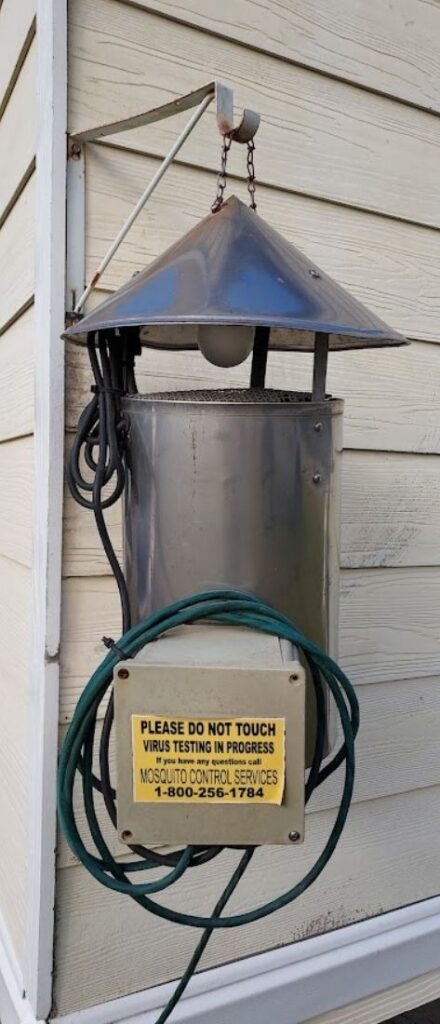
At Rutgers University, Tommy Mulhern and Thomas Headlee worked on the designs that would become the New Jersey light trap in the early 1930s.
This rocket-shaped trap takes advantage of mosquitoes’ attraction to light to lure them into an air current via a motorized fan that corrals them in the trap’s canister. Because the trap catches large numbers of mosquitoes of multiple species, including those most aggressive toward humans, the New Jersey light trap became the primary tool for mosquito surveillance in the twentieth century and is still used today.
While this was an important step toward the surveillance techniques used in contemporary mosquito control, Mulhern was also an innovator in water level management, a technique used to prevent mosquito proliferation by managing the floodwaters that would otherwise provide these insects with new breeding grounds.
Mulhern was also a major figure in the formation of the mosquito control organizations that still exist today. These included the New Jersey Mosquito Control Association (NJMCA) and the Eastern Association of Mosquito Control Workers, which later became the American Mosquito Control Association (AMCA) in 1944. Today, it is the world’s foremost organization dedicated to mosquito control research and education.
KEY TAKEAWAY:
Early mosquito control pioneers helped advance larval control, biological control, mosquito surveillance, water management, and professional collaboration—many of which remain important components of mosquito management today.
The Turning Point in Mosquito Control
In the aftermath of World War II, the development of more effective pesticides combined with fears of service members bringing home new mosquito-borne diseases led to wide-scale federal mosquito control programs. One of these potent and readily available pesticides was dichlorodiphenyltrichloroethane (DDT), and its dramatic effectiveness made it the weapon of choice in the fight against malaria.
However, DDT soon proved to be a more complicated solution than it initially appeared. In 1962, Rachel Carson published her book Silent Spring, which investigated the harmful effects of DDT on wildlife, especially birds, which saw population declines as a result of DDT weakening their eggshells and limiting their ability to reproduce effectively.
Despite pushback by the chemical industry, Silent Spring led to greater public awareness of the harmful effects of DDT and contributed to the formation of the Environmental Protection Agency, which enacted a nationwide ban on DDT in the 1970s. This change necessitated the use of new pesticides in mosquito control.
KEY TAKEAWAY:
The environmental effects associated with DDT helped drive the transition toward new pesticides and more environmentally responsible mosquito control practices.
The Mosquito Control Methods of Today
With new chemicals and more precise application methods, mosquito control began transitioning towards Integrated Mosquito Management (IMM), which is the standard today.
Unlike past eras in which treatments were applied widely and indiscriminately across large areas, today’s mosquito treatments are much more targeted. This approach uses data collected through surveillance and laboratory testing to guide applications.
An IMM program also factors in a community’s management goals and action thresholds before conducting treatments. This environmentally responsible mosquito management strategy helps optimize resources and ensures applications are effective in protecting public health.

New Mosquito Control Technologies
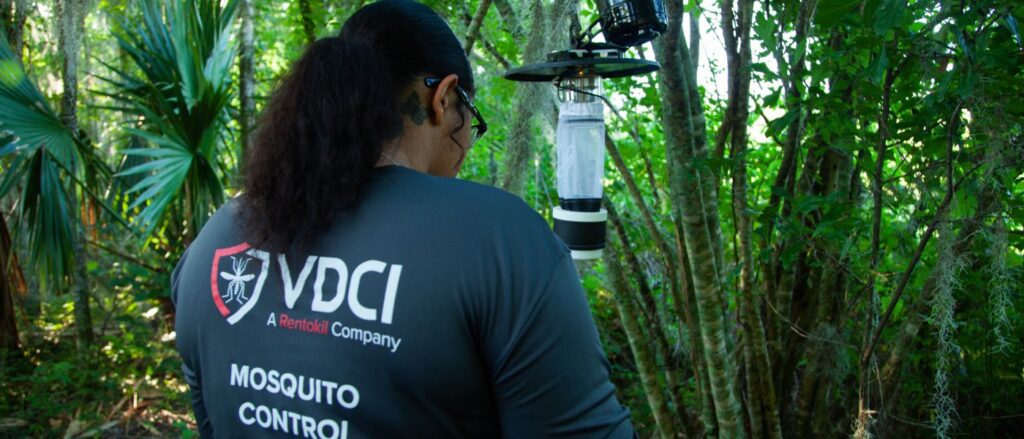
While pesticides and light traps have remained core tools of mosquito control, today they are bolstered by better or altogether new technology like GPS. Additionally, some newer techniques have been developed, such as sterilization, to manage mosquito populations in innovative ways.
Sterilization involves using bacteria or radiation to sterilize large numbers of male mosquitoes in a laboratory environment. They are then released into the environment, where they mate with female mosquitoes and limit the production of fertilized eggs.
A much greater reliance on surveillance and data analysis allows mosquito control professionals to track changes in mosquito populations and develop a more comprehensive understanding of the environmental and epidemiological situation they are working in. As mosquitoes continue to change and adapt, even appearing in previously mosquito-free places like Iceland, where mosquito specimens were documented in 2025, they pose a renewed threat to human health. Today’s mosquito control, supported by both the accomplishments and the harsh lessons of the past, strives to keep pace with this evolving threat.
KEY TAKEAWAY:
Modern mosquito management relies on surveillance, scientific data, targeted treatments, and evolving technologies to protect public health while reducing unnecessary environmental impacts.
Sources:
Patterson, Gordon. The Mosquito Crusades. Rutgers University Press, 2009.
Patterson, Gordon. “John B. Smith Chronology.” Rutgers University Center for Vector Biology. https://vectorbio.rutgers.edu/jb-smith-chronology.php. Accessed 21 December 2025.
Gaugler, Randy. “2013 AMCA Memorial Lecture Honoree Thomas Desmond Mulhern 1908 – 1993 Tommy Mulhern and the Lost Crusade.” Journal of the American Mosquito Control Association, 29(2):181–190, 2013. https://vectorbio.rutgers.edu/publications/Gaugler2013MulhernMemorialLecture.pdf
“Integrated Pest Management (IPM) Principles.” United States Environmental Protection Agency. https://www.epa.gov/safepestcontrol/integrated-pest-management-ipm-principles. Accessed 22 December 2025.
“Mosquito Surveillance Traps: Are They All The Same?” VDCI Mosquito Management. https://www.vdci.net/blog/mosquito-surveillance-traps-are-they-all-the-same/. Accessed 23 December 2025.
This blog was reviewed by Dr. Peter Obenauer, Medical Entomologist and Technical and Training Manager for VDCI. Dr. Obenaur has 25+ years of experience in preventive medicine, public health entomology, mosquito surveillance, technical writing, and operational vector-borne disease control.

Contact Our Experts
Complete the form below or call us at 800-413-4445 to speak to an expert about your mosquito management needs.
 Since 1992, Vector Disease Control International (VDCI) has taken pride in providing municipalities, mosquito abatement districts, industrial sites, planned communities, homeowners associations, and golf courses with the tools they need to run effective mosquito control programs. We are determined to protect the public health of the communities in which we operate. Our mosquito control professionals have over 100 years of combined experience in the field of public health, specifically vector disease control. We strive to provide the most effective and scientifically sound mosquito surveillance and control programs possible based on an Integrated Mosquito Management approach recommended by the American Mosquito Control Association (AMCA) and Centers for Disease Control and Prevention (CDC). VDCI is the only company in the country that can manage all aspects of an integrated mosquito management program, from surveillance to disease testing to aerial application in emergency situations.