Larviciding might seem as simple as walking through wetlands with a backpack sprayer, but at VDCI, operations go beyond ground level. As one of the few organizations with an aerial fleet dedicated solely for mosquito control, aircraft are crucial application tools. From coordinating flights to covering thousands of acres, every application is a carefully planned mission.
Here’s a closer look at what a day in the life of pilot David Brailsford really looks like.
Meet the Pilot Behind the Mission
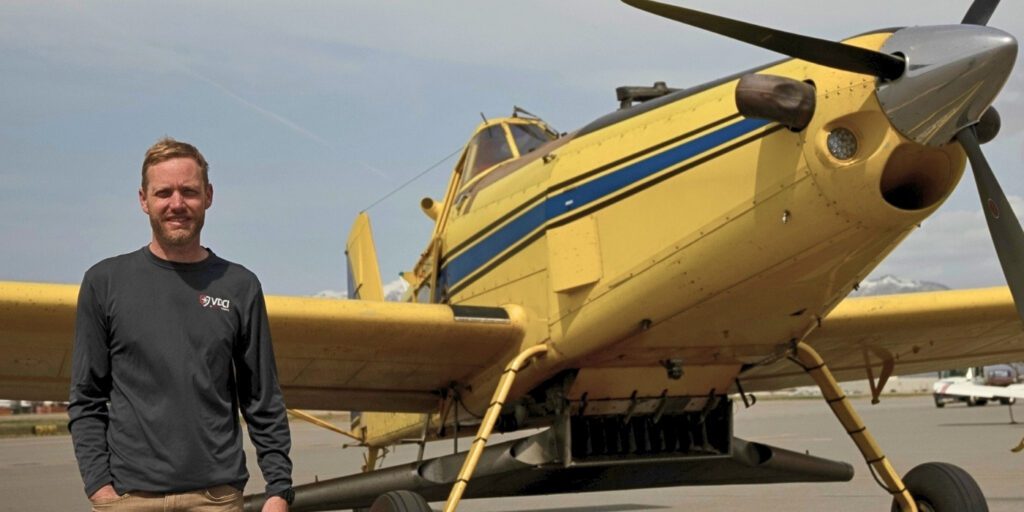
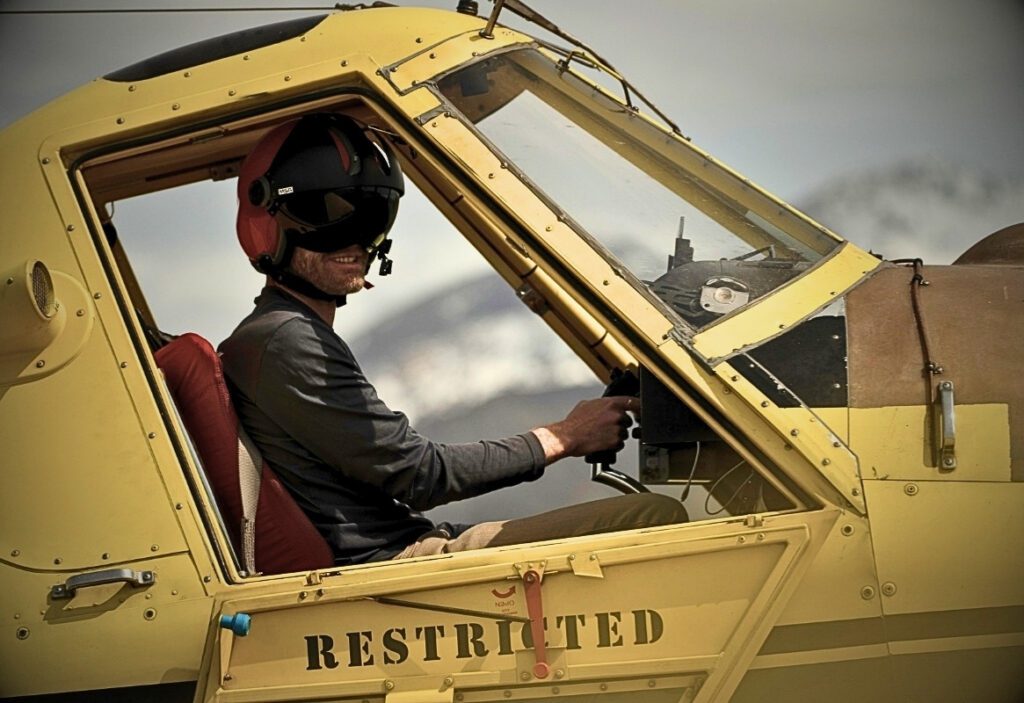
Before joining VDCI during the 2009-2010 season, David completed pilot training through Utah State University and taught aviation at Westminster College. This instructional background provided the technical skills and safety mindset that is the backbone of Integrated Mosquito Management (IMM) programs.
Today, he primarily flies larviciding missions in Utah while also supporting emergency response operations across the country, when needed. Larviciding is a proactive approach that targets mosquito larvae before they develop into biting adults. These missions involve low-altitude, highly controlled applications over standing water where mosquitoes lay eggs.
“Larviciding is the safest form of mosquito control. You’re targeting the mosquitoes before they can ever fly or bite anybody.”
How Flight Paths Are Designed for Mosquito Control
VDCI’s IMM programs are built on precise data and surveillance of mosquito breeding sites. Surveillance crews typically travel through Utah’s wetlands and flooded areas using boats, four-wheelers, and tracked side-by-side vehicles built to move through heavy mud. They use dip cups to collect samples from standing water and identify larval hotspots. Commercial drones may be deployed for sites smaller than 20 acres.
Once target areas are confirmed, ground crews draw GPS-based perimeters around the water. Those coordinates are then sent to VDCI’s Geographic Information System (GIS) Specialist, who converts the information into precise flight paths. These may span anywhere from 500 to 1,000 acres.
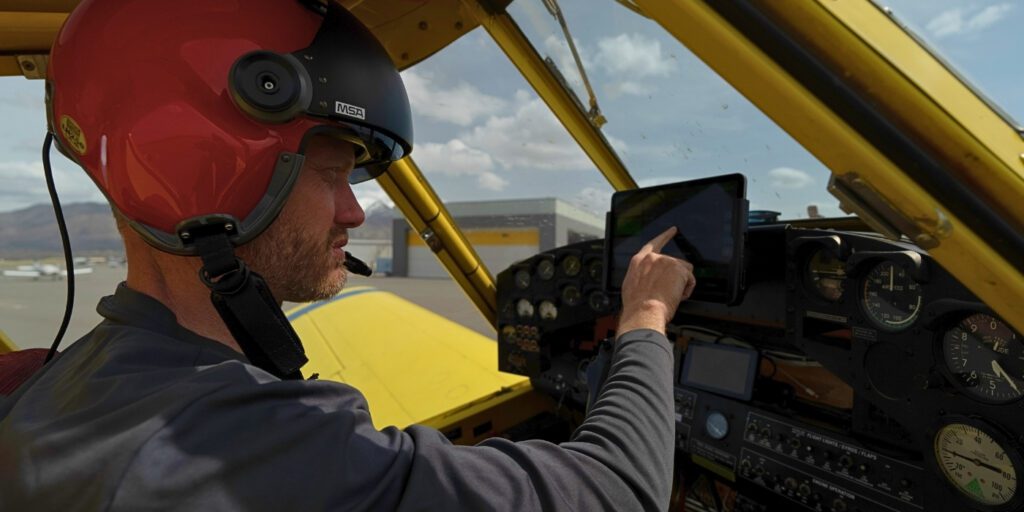
The software runs on an iPad and functions similarly to a 3D mapping system, allowing David to zoom in and clearly identify buildings, boundaries, and obstacles. Treatment areas—often referred to as “blocks”—are color-coded on the map to illustrate exactly where applications are needed.
During his missions, the mapping system tracks the aircraft’s path in real time. Treated areas change color on the map, allowing David to instantly see what has already been covered if he returns to the same location.
“The system leaves digital breadcrumbs – I call it a Hansel and Gretel trail.”
Pre-Flight Preparation for Aerial Mosquito Control
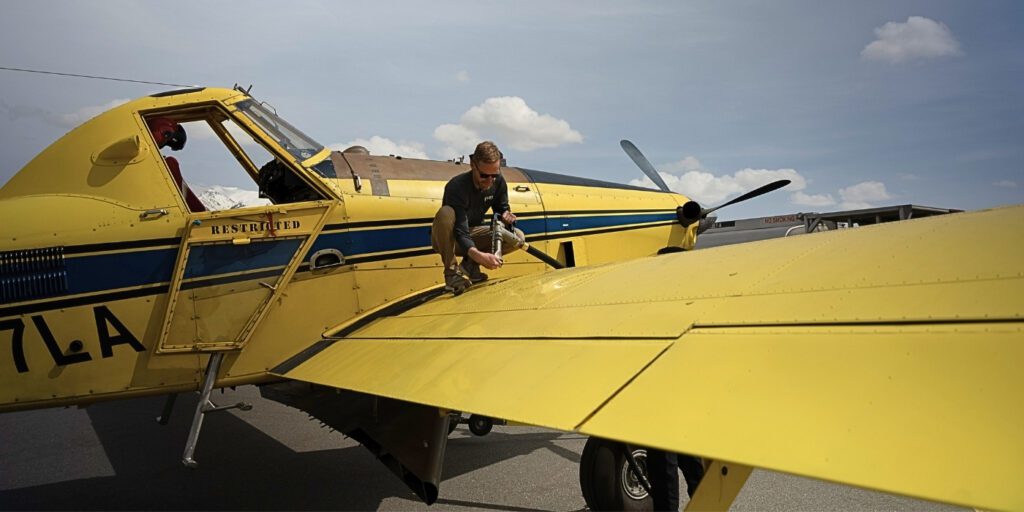
Before every flight, David and the team evaluate weather conditions and airspace requirements. Wind, in particular, is a critical consideration. Not only can the granular larvicide be blown off target, but it can also jeopardize pilot safety.
“Spraying is optional, but coming home isn’t. I will always prioritize a safe return to the airport even if work isn’t completed.”
Once approved to fly, David completes his pre-flight checklist:
- A full aircraft walkaround inspection
- Fuel and oil checks
- Coordinating with ground crews for product loading
- Verifying spray system functionality
- Confirming sufficient larvicide amounts
VDCI operates under specialized Federal Aviation Administration (FAA) authorizations that allow pilots like David to fly lower than standard aviation limits over complex terrain and populated areas. Permits are also obtained when operating aircraft below 300 feet in altitude. Because larviciding requires irregular flight patterns, crews stay in close communication with air traffic control.
“Unlike most flights that route directly from point A to point B, our paths are more circular, and we remain in the same areas for 20-40 minutes.”
How Aerial Mosquito Applications Are Performed
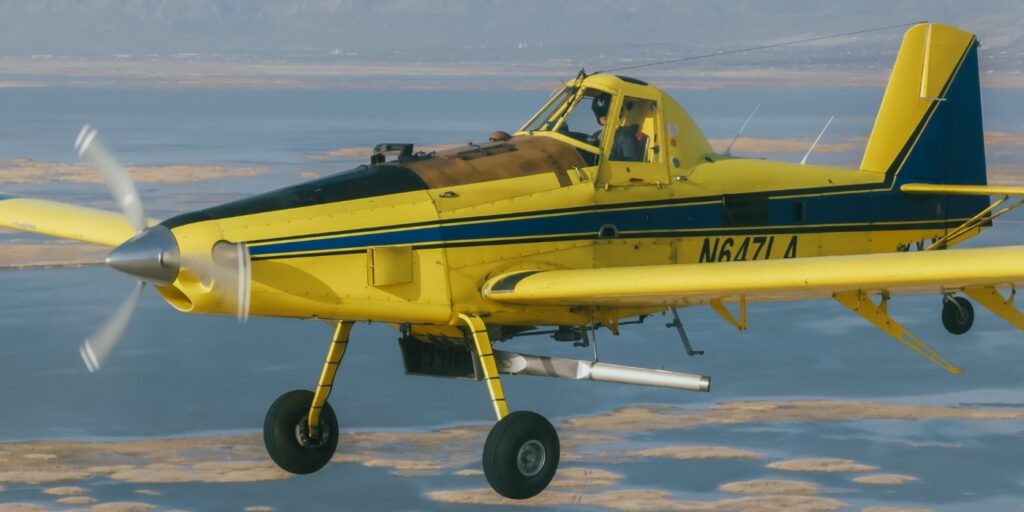
Once airborne, David does an initial pass of the targeted area to identify unexpected structures or obstacles. Then, flying at 120-130 mph, he precisely applies larvicides to the target areas. This involves using a manual “dump handle” lever to open and close a door at the bottom of the plane’s hopper (distribution tank), controlling the flow of granular product onto a spreader that uses wind velocity to disperse it.
A single application takes approximately 90 minutes, and he may refuel and reload 4-5 times during a mission. During larger operations, David may communicate with multiple pilots to coordinate flight paths and ensure even larvicide coverage.
The application data is also shared with ground crews and entered into our proprietary database for analysis and reporting. This data can be used to identify trends, evaluate larvicide effectiveness, and inform future management decisions. VDCI also retains these records to meet regulatory requirements and support long-term operational planning.
Emergency Mosquito Control After Natural Disasters
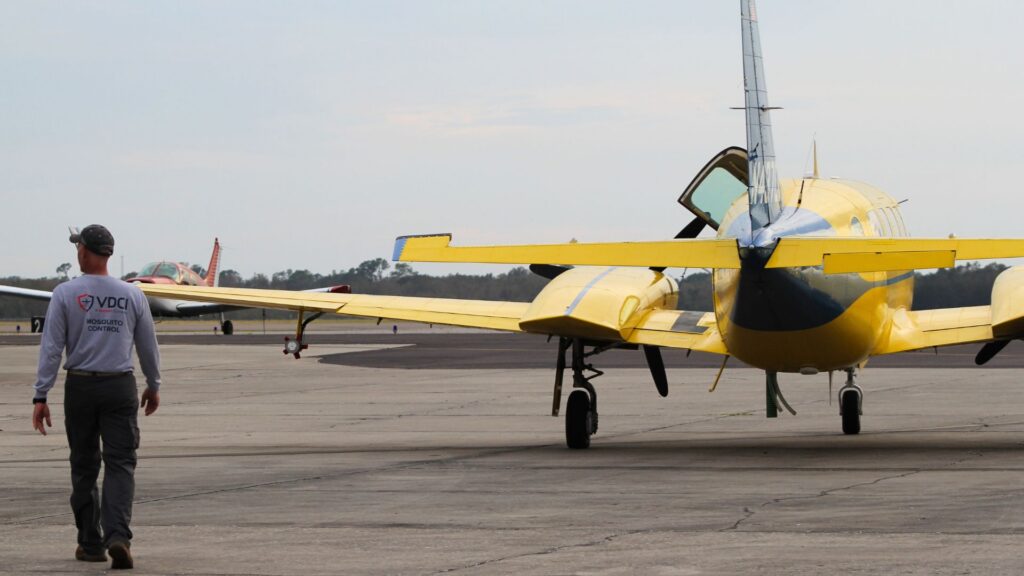
VDCI is the nation’s only commercial company that can handle all aspects of an IMM program, and deploy rapidly for emergency response mosquito management services in the wake of natural disasters and vector-borne disease outbreaks.
David has been involved in hurricane response operations, making flights from Utah to disaster zones in Florida – a journey that takes approximately 16 hours. These operations focus on adulticiding (to target adult mosquitoes) rather than larviciding, since flooding creates temporary breeding grounds that didn’t exist beforehand.
Missions typically take place at night and can require up to five or six shifts. Pilots rotate to keep aircraft operating continuously and safely. This helps ensure thorough coverage across large areas within tight deadlines. Each aircraft is capable of treating over 50,000 acres in one evening.
A Unique Role in Protecting Public Health
David notes that as one of the few mosquito control companies with a dedicated aerial fleet, VDCI provides him with a unique and rewarding opportunity to protect public health directly.
“It’s a highly technical, low-altitude style of flying that most pilots never get to experience. The views of rolling hills and constantly changing terrains are an added bonus.”

Contact Our Experts
Complete the form below or call us at 800-413-4445 to speak to an expert about your mosquito management needs.
 Since 1992, Vector Disease Control International (VDCI) has taken pride in providing municipalities, mosquito abatement districts, industrial sites, planned communities, homeowners associations, and golf courses with the tools they need to run effective mosquito control programs. We are determined to protect the public health of the communities in which we operate. Our mosquito control professionals have over 100 years of combined experience in the field of public health, specifically vector disease control. We strive to provide the most effective and scientifically sound mosquito surveillance and control programs possible based on an Integrated Mosquito Management approach recommended by the American Mosquito Control Association (AMCA) and Centers for Disease Control and Prevention (CDC). VDCI is the only company in the country that can manage all aspects of an integrated mosquito management program, from surveillance to disease testing to aerial application in emergency situations.