

Mosquitoes are a diverse family of flies, with over 3,500 species worldwide. They can be found nearly everywhere in the world, from equatorial forests to the Arctic. Although the adults are notable for feeding on the blood of humans and other animals, it is only the female mosquitoes of some species that do so. Females of these species utilize blood to obtain proteins necessary for egg development.
Due to their widespread distribution, adaptability, and status as disease vectors, mosquitoes can pose significant health risks to people around the world.
The Mosquito Lifecycle
Like other flies, mosquitoes undergo complete metamorphosis that includes four life stages: egg, larva, pupa, and adult.
Egg Stage
Female mosquitoes lay their eggs on the surface of standing water. While mosquitoes cannot breed in running water, the sources of stagnant water they use can vary dramatically by species. Common breeding sources include:
- Ponds
- Drainage ditches
- Tree holes
- Plastic buckets
- Other natural or artificial containers
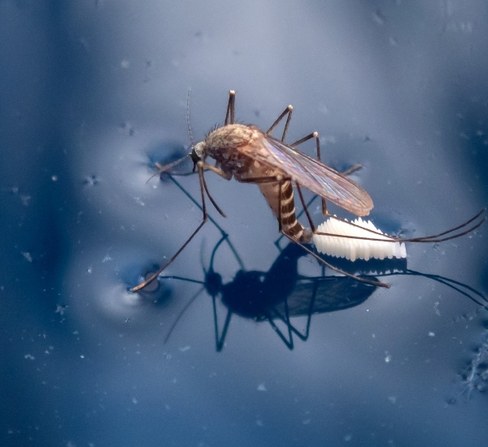
Where Do Mosquitoes Lay Their Eggs?
Mosquitoes have adapted various ovipositing behaviors, allowing them to succeed in a range of environments.
Culex mosquitoes lay their eggs in clusters of floating rafts, while Aedes mosquitoes lay single eggs on vegetation or another natural substrate just above the waterline. The eggs of Anopheles mosquitoes feature a pontoon-like structure that allows them to float directly on the water surface. Toxorhynchites mosquitoes can oviposit while airborne and simply flick their eggs into water-filled tree holes or artificial containers.
Larval and Pupal Stages
Mosquito eggs hatch into fully aquatic larvae, which typically feed on algae, bacteria, and other microscopic organisms. Some mosquito larvae, such as Toxorhynchites, are predatory and will feed on other mosquito larvae, making them a natural biological control for other mosquitoes.
In turn, mosquito larvae can serve as a food source for:
- Dragonflies
- Fish
- Amphibians
- Waterfowl

Surviving larvae eventually develop into pupae; the mosquito pupa is unusual among insect pupae in that it retains the ability to move and will swim vigorously to avoid predation. When it is not moving, the pupa typically hangs down from the surface of the water, breathing oxygen from two air tubes called trumpets.
Adult Mosquitoes
Adult mosquitoes emerge from the pupa at the water’s surface and take flight. Their flight range can also vary dramatically by species. Container species like Aedes albopictus may fly only about 50 meters from their breeding sites, while many salt marsh species are known to fly more than 30 miles.
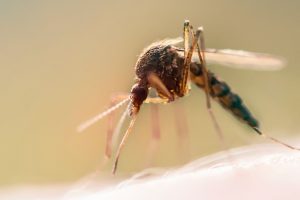
Adult male and female mosquitoes of all species feed primarily on the nectar of flowers. Because of this, they are pollinators of some plants. Adult mosquitoes are also an important food source for animals such as dragonflies, small birds, and spiders.
Because female mosquitoes feed on blood, many of them vector pathogens like viruses, protozoans, and nematodes, which can cause a wide range of infectious diseases. A few days after feeding, females will seek appropriate breeding sites in which to oviposit their eggs.
Environmental Factors That Influence Mosquito Populations
Weather can have a major influence on mosquito populations.
Droughts
In times of drought, freshwater sources often dry up and become less available for breeding sites. Many animals, such as birds, will also congregate in greater densities at these water sources. The resulting proximity can cause a higher rate of bites and may increase the spread of mosquito-borne diseases since there is an increased rate of transmission between mosquito vectors and their avian hosts.

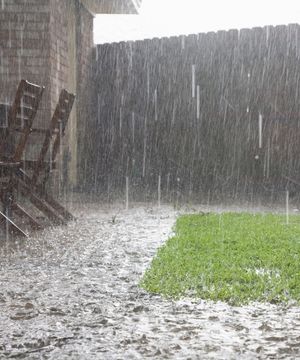
Heavy Rainfall and Flooding
At the opposite end of the spectrum, heavy rains and flooding can lead to a sharp increase in the mosquito population, thereby potentially increasing disease risk.
While many mosquitoes breed in permanent water sources, others, known as floodwater mosquitoes, breed in temporary water sources such as drainage ditches and floodplains. These mosquito species have eggs that are adapted to temporary water sources, allowing them to remain dormant during dry periods for an extended period of time. Once a heavy rain event occurs, they will immediately hatch, thus completing their lifecycle. After a flooding event, many such eggs will hatch simultaneously in one area.
Temperature, Humidity, and Habitat
As with many insects, mosquitoes are prone to dehydration and prefer environments that are warm and humid. Warmer temperatures often facilitate increased larval development. Mosquitoes are not typically active at temperatures below 50°F or relative humidity below 30%. In addition to standing water sources, optimal habitat for all mosquitoes will include vegetation thick enough to shelter adults from wind and sunlight during the day.

Mosquito Surveillance & Abatement
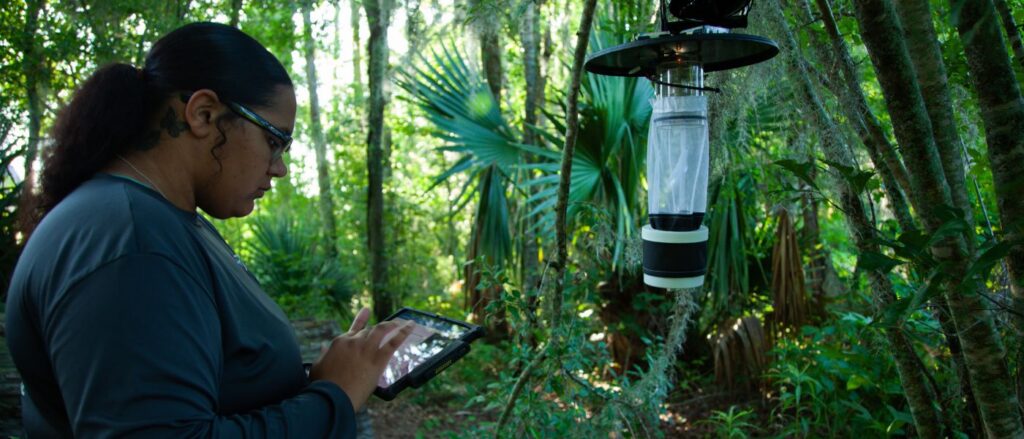
Mosquito management professionals pay close attention to the environmental and ecological factors that may affect mosquito populations. By monitoring weather, temperature, and humidity conditions, experts can anticipate changes in mosquito populations and behavior, allowing them to create models to predict disease outbreaks.
Prior to a major rainfall event, they may take action to curb larval populations, or they may closely monitor breeding site locations and disease levels in adults during a drought.
Mosquito management professionals can utilize chemical treatments as well as biological control agents to control adult and larval mosquitoes. By introducing organisms like the mosquito fish (Gambusia affinis) or the bacterium Bti (Bacillus thuringiensis israelensis), mosquito larvae can be effectively managed without harming other organisms in the aquatic environment.

As we can see, there are a number of factors at work when it comes to controlling mosquito populations. This multifaceted approach is known as Integrated Mosquito Management, the most effective and environmentally responsible way to control mosquito populations.
Mosquito abatement is about always staying two steps ahead of changes in mosquito populations and behavior. That’s why careful surveillance and a thorough understanding of relevant environmental and ecological conditions are absolutely crucial for an effective abatement program.
Key Takeaways
- Mosquitoes undergo complete metamorphosis through their four-stage lifespan: egg, larval, pupal, and adult.
- Most mosquitoes remain relatively close to the water source where they hatch.
- Weather patterns, flooding, drought, temperature, and humidity all influence mosquito populations.
- Integrated Mosquito Management relies on surveillance, environmental monitoring, various control strategies, and public education to reduce mosquito populations effectively.
This blog was reviewed by Dr. Peter Obenaur, Medical Entomologist and Technical and Training Manager for VDCI. Dr. Obenaur has 25+ years of experience in preventive medicine, public health entomology, mosquito surveillance, technical writing, and operational vector-borne disease control.

Contact Our Experts
Complete the form below or call us at 800-413-4445 to speak to an expert about your mosquito management needs.
 Since 1992, Vector Disease Control International (VDCI) has taken pride in providing municipalities, mosquito abatement districts, industrial sites, planned communities, homeowners associations, and golf courses with the tools they need to run effective mosquito control programs. We are determined to protect the public health of the communities in which we operate. Our mosquito control professionals have over 100 years of combined experience in the field of public health, specifically vector disease control. We strive to provide the most effective and scientifically sound mosquito surveillance and control programs possible based on an Integrated Mosquito Management approach recommended by the American Mosquito Control Association (AMCA) and Centers for Disease Control and Prevention (CDC). VDCI is the only company in the country that can manage all aspects of an integrated mosquito management program, from surveillance to disease testing to aerial application in emergency situations.