

ARTICLE SUMMARY:
Mosquito control programs use a range of strategies to manage mosquito populations and reduce nuisance and disease risks. This article breaks down six commonly confused sets of mosquito control terms and explains how each concept fits into an effective management program.
Even among people who work closely with mosquito control programs, some of the most common vector control terms are frequently misunderstood. Whether you’re a community leader, public health official, or local citizen, understanding common terms and their distinctions can lead to better communication, more informed mosquito control decisions, and more realistic expectations.
Below, we break down six pairs of commonly confused mosquito control terms. While they may sound similar, these concepts describe very different mosquito control strategies, goals, and outcomes.
1. Integrated Mosquito Management (IMM) vs. Mosquito Spraying
One of the biggest misconceptions is that mosquito control simply means spraying insecticides. In reality, spraying is only one tool within a much larger strategy known as Integrated Mosquito Management (IMM).
What Is Integrated Mosquito Management?
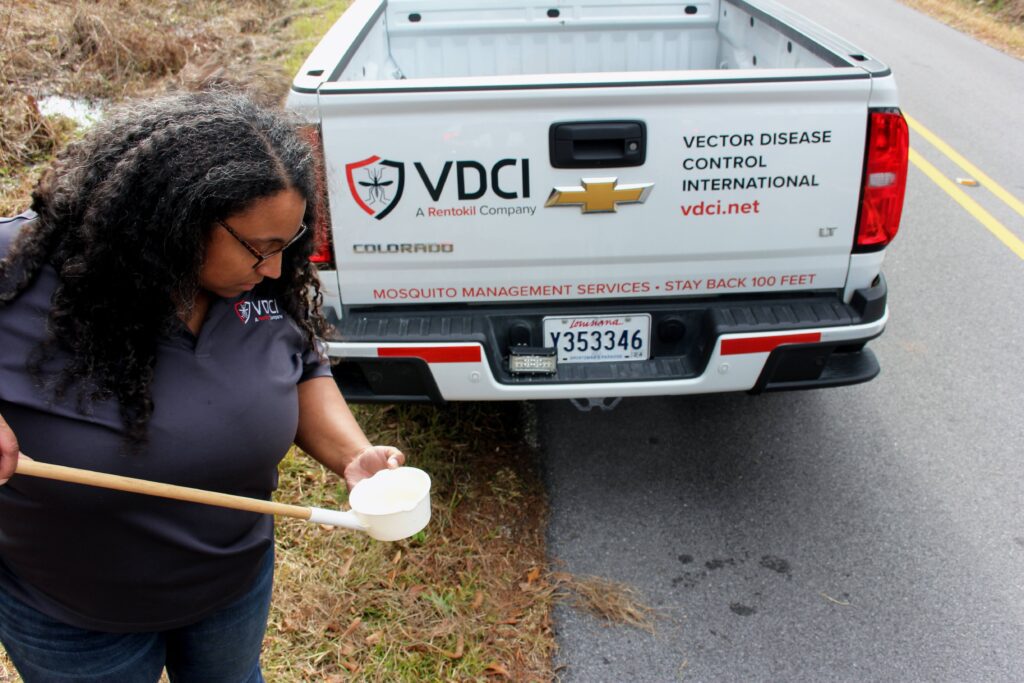
Integrated Mosquito Management is a science-based approach to mosquito control that uses surveillance data, established action thresholds, environmental considerations, and multiple control methods to manage mosquito populations. IMM targets mosquitoes at each life cycle stage.
A comprehensive IMM program may include:
- Surveillance to monitor mosquito populations and activity
- Source reduction to eliminate breeding sites
- Disease testing to assess public health risks
- Insecticide resistance monitoring to ensure treatment effectiveness
- Larval control measures to disrupt mosquito development before they mature
- Adult control measures when populations reach threshold levels
- Public education to empower community participation and personal protection
The goal is to achieve effective mosquito control while minimizing unnecessary pesticide applications.
What Is Mosquito Spraying?
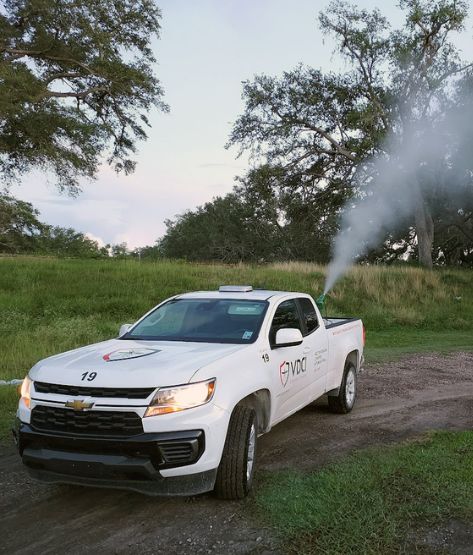
Mosquito spraying refers specifically to applying insecticides—usually adulticides—to reduce adult mosquito populations. Spraying can be an important mosquito control tool, but spraying alone is not the same as Integrated Mosquito Management.
Spraying alone doesn’t:
- Eliminate mosquito breeding sites
- Identify where or when mosquito populations are increasing
- Replace mosquito surveillance
- Address insecticide resistance
- Evaluate whether treatment achieved the desired result
KEY TAKEAWAY:
Spraying is just one tool in Integrated Mosquito Management (IMM). Effective mosquito control combines surveillance, prevention, and targeted treatments to manage mosquitoes at every life stage while minimizing unnecessary insecticide use.
2. Larvicide vs. Adulticide
Larvicides and adulticides are both insecticides—products that are designed to kill specific insects. However, they target different life cycle stages.
What Is a Larvicide?
Larvicides used in mosquito control are used to target mosquitoes during their larval stage, before they become biting adults. Mosquito larvae develop in standing water, so larvicides are typically applied to aquatic habitats where mosquitoes are known to breed, such as stormwater ponds and ditches.
Insecticides may be applied using:
- Backpack applicators
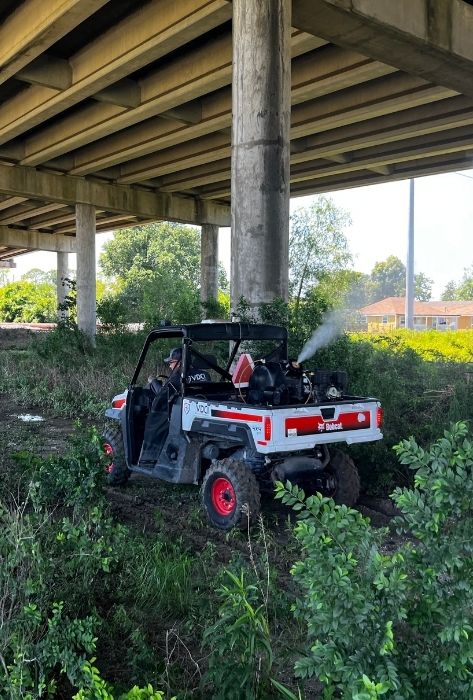
- Truck- or ATV-mounted sprayers
- Commercial drone
- Turbo-powered single-engine helicopter
- Fixed-wing single-engine aircraft

What Is an Adulticide?
In mosquito control, an adulticide is a product that targets flying adult mosquitoes after they have emerged from their aquatic habitats. Adulticides are typically applied with Ultra-Low Volume (ULV) equipment that disperses insecticide as fine aerosol droplets. The droplets remain suspended in the air briefly, allowing adult mosquitoes to contact the insecticide while flying.
Adulticides may be applied using:
- Backpack applicators
- Truck- or ATV-mounted sprayers
- Twin-engine aircraft
Adulticiding is generally used when surveillance indicates that mosquito populations have exceeded established action thresholds or when there is an elevated public health concern, such as an increased risk of disease transmission.
Which Is Better: Larvicide or Adulticide?
Neither is inherently better; they serve different purposes. Larviciding and adulticiding are vital mosquito control tools, but they shouldn’t be viewed as interchangeable. They’re most effective when used strategically as part of an integrated mosquito management plan.
KEY TAKEAWAY:
Larvicides target mosquitoes before they become biting adults, while adulticides target flying adult mosquitoes. Both are important tools that can be used strategically within an integrated mosquito management program.
3. Insecticide Resistance vs. Tolerance
Insecticide resistance and tolerance are sometimes used interchangeably, but they describe different biological processes.
What Is Insecticide Resistance?
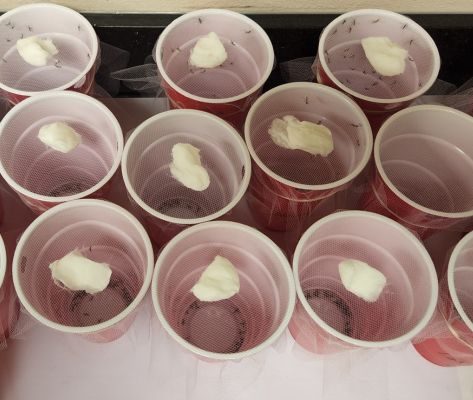
Insecticide resistance is a genetic change that allows some mosquitoes to survive exposure to an insecticide that would normally control them.
Resistance develops over generations. When mosquitoes survive insecticide exposure and reproduce, the traits associated with resistance can become more common within the population.
Insecticide resistance is:
- Genetic
- Heritable
- An evolving population-level concern
What Is Tolerance?
Tolerance refers to an individual mosquito’s natural ability to withstand insecticide exposure without necessarily involving an inherited genetic change.
Tolerance:
- Is not necessarily inherited
- May vary among individual mosquitoes
- Does not mean an entire mosquito population will become resistant
Why Understanding Mosquito Insecticide Resistance vs. Tolerance Matters
Resistance can affect the long-term effectiveness of mosquito control products. That’s why mosquito management programs may use strategies such as:
- Conducting insecticide resistance testing
- Rotating insecticide classes
- Using multiple mosquito control methods
Preventing insecticide resistance helps preserve the effectiveness of available mosquito control tools over time.
KEY TAKEAWAY:
Mosquitoes can develop insecticide resistance through genetic changes that are passed from one generation to the next. Resistance management can include testing mosquito populations, rotating insecticide classes, and using multiple control strategies.
4. Mosquito Surveillance vs. Monitoring
Surveillance and monitoring both involve collecting information, but they answer different questions.
What Is Mosquito Surveillance?
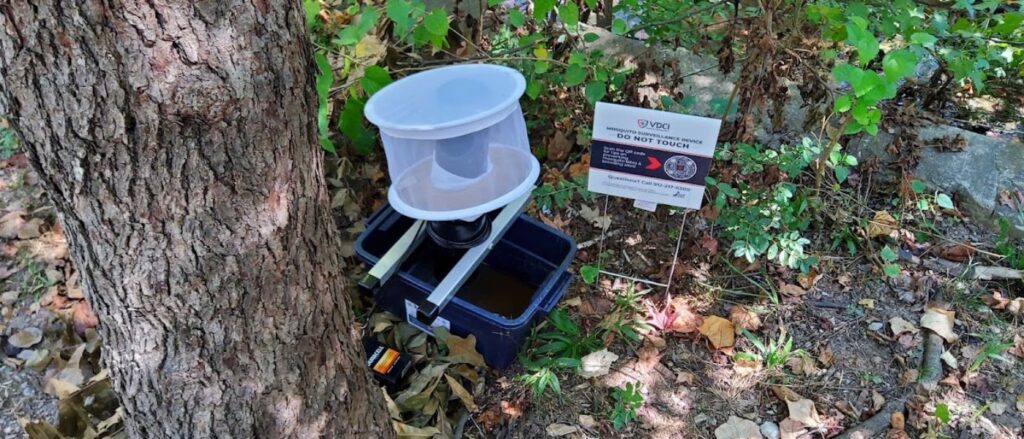
Mosquito surveillance is the process of gathering information about mosquito populations and disease activity to inform mosquito control decisions.
Surveillance activities may include:
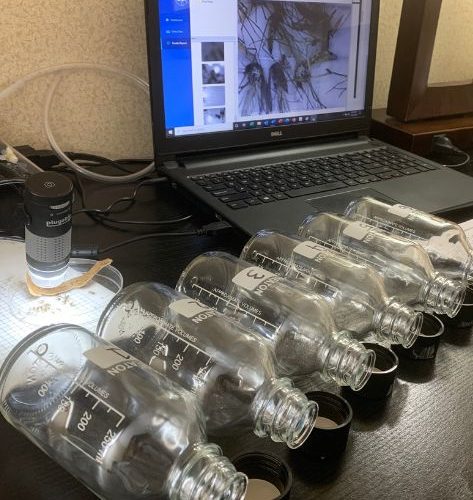
- Setting mosquito traps
- Identifying mosquito species
- Counting mosquito abundance
- Testing mosquitoes for viruses or other pathogens
- Mapping mosquito breeding locations over time
- Tracking seasonal population trends
Mosquito surveillance can answer questions such as:
- Which mosquito species are present?
- How many mosquitoes are present?
- Are disease-carrying mosquito populations increasing?
- Have established action thresholds been met?
This information helps mosquito management professionals determine whether intervention is necessary.
What Is Mosquito Control Monitoring?
Monitoring helps mosquito control programs determine whether treatments achieved their intended results and whether adjustments are needed.
Monitoring may assess:
- Treatment coverage
- Larvicide and adulticide effectiveness
- Changes in mosquito populations
- Long-term impact
KEY TAKEAWAY:
Surveillance collects information about mosquito populations and disease activity to help determine whether control measures are needed. Monitoring evaluates how effective those control measures were after they were implemented.
5. Mosquito Source Reduction vs. Treatment
Not every mosquito problem requires a pesticide application. Often, one of the most effective ways to reduce mosquitoes is to eliminate or modify the places where they breed.
What Is Source Reduction?
Source reduction is the process of removing or modifying mosquito breeding habitats so mosquitoes have fewer places to lay eggs and develop. Source reduction addresses mosquito production at its source rather than treating mosquitoes after they have developed.
Examples of source reduction include:
- Removing standing water
- Cleaning clogged gutters
- Emptying water-holding containers
- Improving drainage
- Managing stormwater systems
- Eliminating discarded tires and debris

What Is A Mosquito Treatment?
Mosquito treatment involves applying EPA approved products designed to control mosquitoes, including larvicides, which target mosquitoes in aquatic habitats, and adulticides, which target flying adult mosquitoes. Treatments are selected based on factors such as surveillance data, environmental conditions, mosquito species, and public health needs.
Why Do Both Mosquito Source Reduction and Treatment Matter?
Source reduction is often the first line of defense because it addresses the habitat that allows mosquitoes to reproduce.
However, not every breeding site can be eliminated. Wetlands, retention ponds, floodwater habitats, stormwater systems, and other permanent or difficult-to-modify water bodies can continue to produce mosquitoes. In these situations, targeted larviciding—and, when necessary, adulticiding—can provide additional control.
The most effective mosquito management programs combine habitat reduction with targeted treatments rather than relying on pesticides alone.
KEY TAKEAWAY:
Source reduction is the process of eliminating or modifying mosquito breeding habitats to prevent mosquitoes from developing. Mosquito treatment involves applying products designed to control mosquitoes.
6. Mosquito Suppression vs. Eradication
Perhaps the biggest misconception in mosquito control is the belief that mosquitoes can be entirely eliminated. However, this is not realistic.
More than 3,500 mosquito species exist worldwide, and many occupy extensive natural habitats. Rather than attempting to eliminate every mosquito, vector control programs focus resources on reducing populations of mosquito species that pose the greatest nuisance or public health risks.
What Is Mosquito Suppression?
Mosquito suppression means reducing mosquito populations to levels that help minimize nuisance biting and the risk of mosquito-borne disease. Suppression is the goal of most mosquito control programs.
What Is Mosquito Eradication?
Mosquito eradication means permanently eliminating an entire mosquito species from a defined geographic area. For mosquitoes, complete eradication is generally not a realistic objective.
Instead, modern vector control programs focus on mosquito suppression — reducing mosquito populations and associated risks to manageable levels while considering environmental stewardship.

KEY TAKEAWAY:
The realistic objective of modern vector control is mosquito suppression—reducing mosquito populations to minimize nuisance biting and disease risk—rather than permanently eliminating mosquitoes from an area.
Protect Public Health with A Strong Mosquito Management Program
While mosquito control terminology can be intricate, clear definitions are essential for setting realistic expectations with citizens and building effective and realistic mosquito control programs. At its core, the long-term goal is simple – to protect public health. VDCI helps communities bring each of these elements together to safely, effectively, and efficiently reduce mosquito populations and minimize the spread of vector-borne diseases. Contact our experts to get started.
This blog was reviewed by Dr. Peter Obenaur, Medical Entomologist and Technical and Training Manager for VDCI. Dr. Obenaur has 25+ years of experience in preventive medicine, public health entomology, mosquito surveillance, technical writing, and operational vector-borne disease control.

Contact Us
Complete the form below or call us at 800-413-4445 to speak to an expert about your mosquito management needs.
 Since 1992, Vector Disease Control International (VDCI) has taken pride in providing municipalities, mosquito abatement districts, industrial sites, planned communities, homeowners associations, and golf courses with the tools they need to run effective mosquito control programs. We are determined to protect the public health of the communities in which we operate. Our mosquito control professionals have over 100 years of combined experience in the field of public health, specifically vector disease control. We strive to provide the most effective and scientifically sound mosquito surveillance and control programs possible based on an Integrated Mosquito Management approach recommended by the American Mosquito Control Association (AMCA) and Centers for Disease Control and Prevention (CDC). VDCI is the only company in the country that can manage all aspects of an integrated mosquito management program, from surveillance to disease testing to aerial application in emergency situations.