


The Battle Against Mosquitoes: What Does “Winning” Look Like?

larviciding-plane-in-air-applying-aerial-treatment

Mosquitoes Are Here to Stay—So What Does Success Look Like?

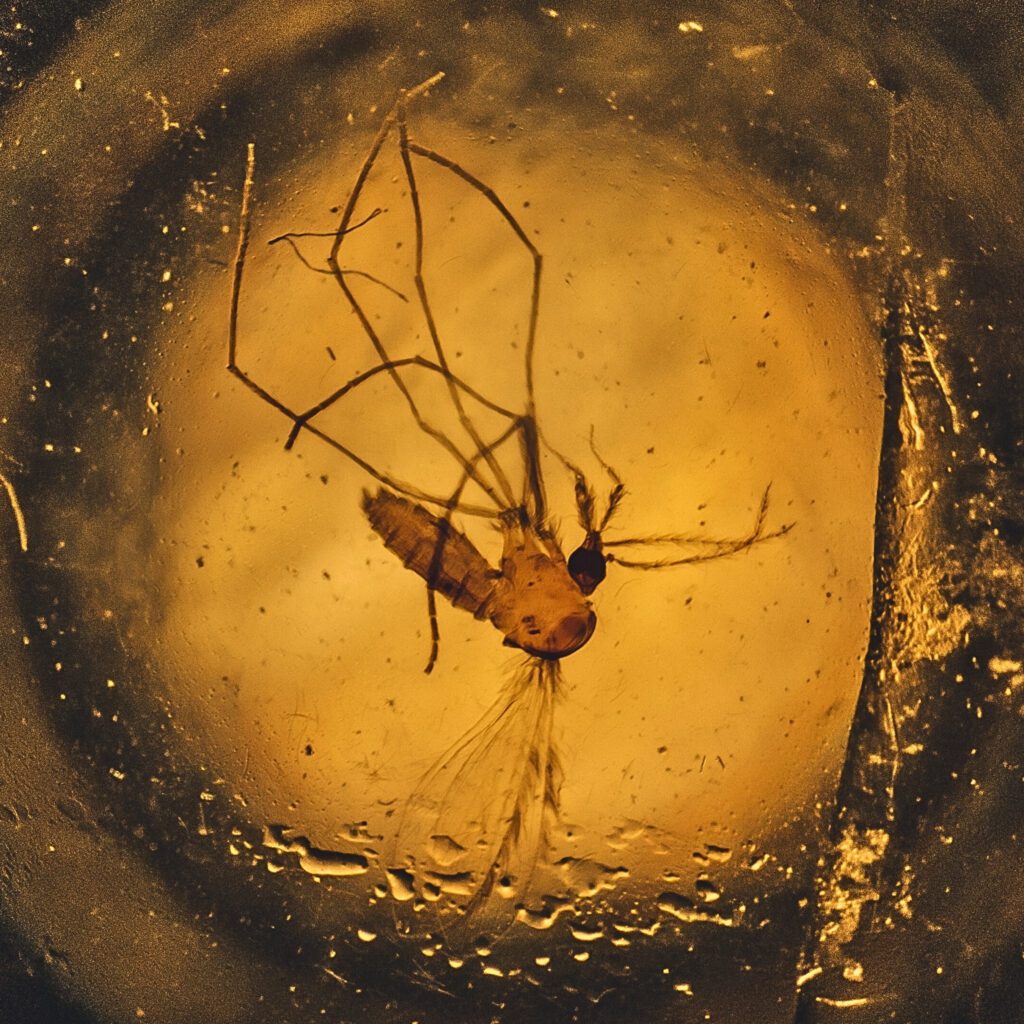
Mosquitoes have existed for over 100 million years, surviving through the Jurassic Period, the Ice Age, and numerous environmental extremes thanks to their remarkable adaptability. While it’s appealing to imagine a world free from itchy mosquito bites, completely eliminating mosquitoes is an unrealistic goal. “Winning” the battle isn’t about eliminating all mosquitoes; it’s about protecting public health by reducing the mosquito population to a manageable level, thereby reducing the spread of vector-borne diseases. Historical precedent suggests this is only possible through a coordinated, integrated management approach.

Ancient Mosquito Preserved in Amber

A Historic Example of Targeted Mosquito Control

For example, in the 1950s, Anopheles gambiae, a vector of malaria, was accidentally imported from Africa to Brazil, leading to thousands of deaths. In response, Brazil launched a highly organized campaign to eliminate this invasive species. This involved daily surveys, mapping infestations, and suffocating larvae by applying oil to their preferred breeding sites—puddles, irrigated fields, and even water that collected in cattle hoof prints. Because Anopheles gambiae feeds exclusively on humans and stays close to its breeding areas, teams could systematically move from the outskirts of communities inward. This approach successfully eliminated the Anopheles gambiae from Brazil and stands as one of the most historically successful mosquito elimination programs ever instituted.

Why Short-Term Mosquito Management Programs Fall Short

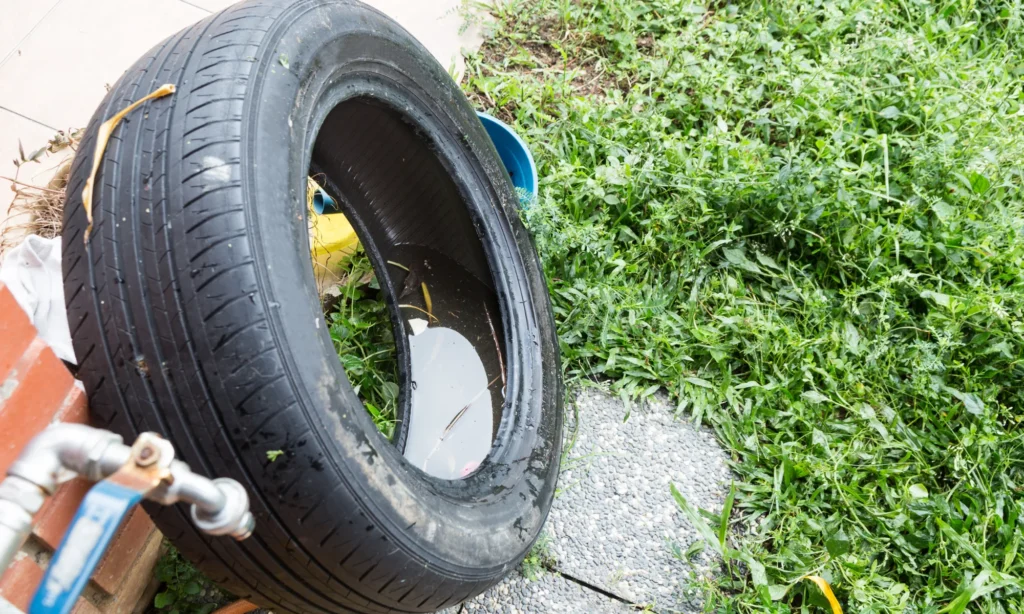
Similar strategies were used in the United States in the 1960s to control Aedes aegypti, the primary vector of yellow fever. Programs combined careful monitoring, habitat management, and door-to-door community education. Residents were encouraged to eliminate standing water from buckets, tires, birdbaths, and other small containers that serve as Aedes aegypti breeding grounds. These efforts temporarily reduced their populations to near-zero numbers in some areas. Unfortunately, when the program ended in the early 1970s due to funding and commitment challenges, this mosquito species rebounded in full force.

Clsoe-up-mosquito
dumping-standing-water

These examples illustrate that mosquito population dynamics are always evolving, particularly due to increased global trade, travel,  insecticide resistance, and climate change, which are creating new areas and conditions for mosquitoes to spread. Today’s mosquito management programs build on the lessons and successes of past initiatives. They are scientifically precise, carefully tailored, and designed to achieve maximum impact while minimizing environmental effects. 

Targeting Mosquitoes at Every Life Stage

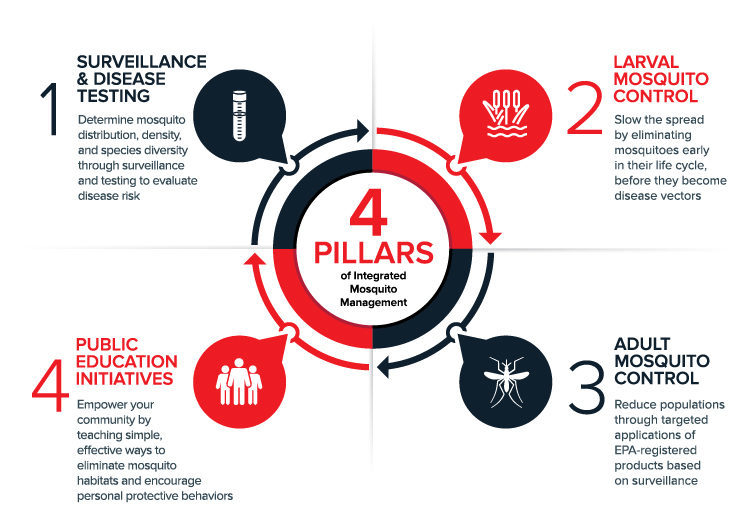
VDCI’s Integrated Mosquito Management (IMM) programs are defined by four pillars: surveillance and disease testing, larval control, adult control, and public education. By leveraging the latest technologies and targeting mosquitoes at every stage of their life cycle, these programs can help reduce mosquito populations and the risk of disease transmission. Nonetheless, true success depends on the support and cooperation of the local community, particularly in removing standing water where many urban mosquitoes breed.

4 pillars of integrated mosquito management plans infographic

The Cost of Letting Mosquito Control Lapse

Historical examples prove that when mosquito management is prioritized, populations can be effectively managed. However, they also demonstrate that if efforts lapse due to funding gaps, political changes, or public disengagement, decades of progress can be quickly reversed. Government leaders and public health officials must recognize that the battle against mosquitoes can never be truly won. It is a continuous effort that requires a sustained investment in time, resources, and community education.

YouTube player

Contact Our Experts

Complete the form below or call us at 800-413-4445 to speak to an expert about your mosquito management needs.

VDCI_Logo_squareSince 1992, Vector Disease Control International (VDCI) has taken pride in providing municipalities, mosquito abatement districts, industrial sites, planned communities, homeowners associations, and golf courses with the tools they need to run effective mosquito control programs. We are determined to protect the public health of the communities in which we operate. Our mosquito control professionals have over 100 years of combined experience in the field of public health, specifically vector disease control. We strive to provide the most effective and scientifically sound mosquito surveillance and control programs possible based on an Integrated Mosquito Management approach recommended by the American Mosquito Control Association (AMCA) and Centers for Disease Control and Prevention (CDC). VDCI is the only company in the country that can manage all aspects of an integrated mosquito management program, from surveillance to disease testing to aerial application in emergency situations.


When Do Mosquitoes Go Away at Night?

When Do Mosquitoes Go Away at Night?

When Do Mosquitoes Go Away at Night? What Time They Stop Biting and How to Stay Protected

Mosquitoes are more than annoying buzzes and bites. They can disturb your peace and pose a serious health risk, carrying diseases like West Nile virus, dengue, and Eastern Equine Encephalitis (EEE). 

You’re not alone if you’ve wondered– “Do mosquitoes go away at night?” And when to enjoy the outdoors bite-free. And those are great questions to ask! Their feeding activity isn’t random.  It follows specific patterns that vary by species, time of day, and even environmental conditions.

Understanding their feeding patterns can make all the difference in protecting yourself and your loved ones. Read on to uncover the “when” and “how” of avoiding these pesky pests.

VDCI (Vector Disease Control International) is committed to providing the knowledge and tools needed to help protect your local community. By understanding mosquito behavior and implementing proactive management strategies like VDCI’s Integrated Mosquito Management (IMM) programs, you can reduce risks and create safer, more enjoyable outdoor spaces.

When Do Mosquitoes Go Away at Night?


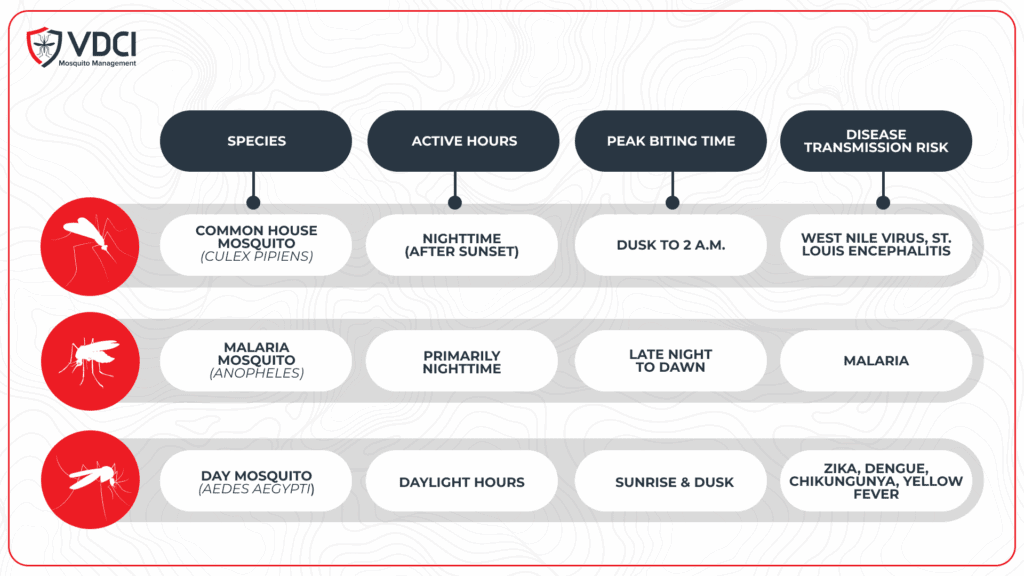
Most mosquitoes become less active or stop biting by 2–4 a.m., winding down after a busy feeding period at dusk and early night. This timeline depends on their species.

Common nighttime mosquitoes, like the house mosquito (Culex pipiens), can stay active until sunrise, while mosquitoes such as the yellow fever mosquito (Aedes aegypti), which prefer the daytime, stop biting once it gets dark.

By identifying which mosquito species are active in your area, you can take steps to reduce bites and prevent diseases.

Why Timing Matters

Mosquitoes are key vectors for serious diseases. Understanding their feeding habits and peak biting times can help you:

  • Minimize exposure for yourself, your family, or your community.
  • Disrupt reproduction and breeding cycles by aligning prevention efforts with mosquito behavior.

Incorporating timing into an Integrated Mosquito Management (IMM) program can improve effectiveness and reduce unnecessary pesticide use, which is a win for everyone.

Types of Mosquito Activity

Different mosquito species exhibit distinct daily patterns of activity, which can be broadly categorized:

  • Crepuscular (active at dusk and dawn): Many mosquito species, including Anopheles mosquitoes (malaria vectors) and Culex mosquitoes (house mosquitoes), feed actively during sunrise and sunset.

  • Nocturnal (active at night): These species become busy after dark, peaking later into the evening or early morning hours.

  • Diurnal (active during the day): Mosquitoes like the yellow fever mosquito (Aedes aegypti) and the Asian tiger mosquito (Aedes albopictus) are most active when the sun is up, with heightened activity in the early morning and late afternoon.

Common Mosquito Species and Their Feeding Habits

Here’s an overview of well-known mosquito species and when they’re most likely to bite

Understanding which mosquito species are active in your area is a key first step in building an effective prevention plan.

When Do Mosquitoes Stop Biting at Night?

For many nocturnal mosquito species, biting activity drops sharply between 2 and 4 a.m. and typically stops by sunrise. As daylight increases, mosquitoes seek out cool, humid hiding spots—like tall grass, dense bushes, or damp, shaded corners—to rest and conserve energy until dusk returns.

Do Mosquitoes Sleep?

Mosquitoes don’t sleep like humans. Their rest periods coincide with their least active times. For nocturnal mosquitoes, this means conserving energy during the day by remaining hidden in cool, dark spaces.

Practical Tips for Preventing Mosquito Bites at Night

  • Use EPA-Approved Repellents: Choose repellents containing 10% – 30% DEET or picaridin for long-lasting protection.
  • Wear Protective Clothing: Cover exposed skin with light-colored long-sleeve shirts, pants, and socks, especially during peak mosquito activity times.
  • Use Mosquito Nets: Protect sleeping areas indoors or outdoors with fine mesh nets to prevent night bites.

Property Management

  • Remove Sources of Standing Water: Mosquitoes lay eggs in stagnant water. Regularly empty birdbaths, flowerpots, gutters, and other potential breeding sites.
  • Install Screens: Fit windows and doors with fine mesh screens to keep mosquitoes outside.
  • Utilize Fans: A simple fan on your deck or patio can effectively deter mosquitoes as they struggle to fly against the air current.

Frequently Asked Questions

Q: Do mosquitoes bite indoors at night?
A: Yes, mosquitoes can enter homes and bite if windows or doors are unscreened. Keep entry points tightly sealed and use mesh screens to reduce indoor exposure.
Q: Are mosquitoes active after midnight?
A: Many nocturnal species remain active well after midnight, often feeding until dawn. Activity usually slows between 2–4 a.m., but doesn’t stop completely until sunrise.
Q: Can natural scents repel mosquitoes?
A: Scents like citronella, lavender, and peppermint may offer limited deterrence. For best protection, use EPA-registered repellents and wear protective clothing, especially during dusk and dawn, when mosquitoes are most active.

Final Thoughts

Mosquitoes aren’t just a summertime nuisance—they’re a menace to public health. Recognizing their activity patterns and tailoring prevention efforts accordingly is essential for reducing their impact. At VDCI, we deliver proactive, science-backed mosquito management programs that prioritize both effectiveness and environmental responsibility. 

Through a comprehensive approach—including public education and targeted, expert-driven prevention methods—we help communities reclaim and enjoy outdoor spaces.


Key Takeaways:

  • Mosquito species follow unique schedules. Some bite during the day (e.g., yellow fever mosquito Aedes aegypti), while others continue throughout the night (e.g., house mosquito Culex pipiens).

  • Mosquito activity declines between 2 and 4 a.m., with complete rest occurring by sunrise.

  • Protection methods include repellents, protective clothing, removal of standing water, and proper screening.

  • Staying informed about local mosquito behaviors supports effective, proactive prevention.

Partner with VDCI for expert, sustainable mosquito management solutions tailored to your community’s needs. Together, we can create safer, healthier outdoor spaces for everyone. Contact us today to learn more about our Integrated Mosquito Management programs.

Want to learn more about mosquitoes and their life cycles?

Contact Our Experts

Complete the form below or call us at 800-413-4445 to speak to an expert about your mosquito management needs.

VDCI_Logo_squareSince 1992, Vector Disease Control International (VDCI) has taken pride in providing municipalities, mosquito abatement districts, industrial sites, planned communities, homeowners associations, and golf courses with the tools they need to run effective mosquito control programs. We are determined to protect the public health of the communities in which we operate. Our mosquito control professionals have over 100 years of combined experience in the field of public health, specifically vector disease control. We strive to provide the most effective and scientifically sound mosquito surveillance and control programs possible based on an Integrated Mosquito Management approach recommended by the American Mosquito Control Association (AMCA) and Centers for Disease Control and Prevention (CDC). VDCI is the only company in the country that can manage all aspects of an integrated mosquito management program, from surveillance to disease testing to aerial application in emergency situations.
Meet the Dengue Mosquito: What You Need to Know About This Daytime Biter

mosquito biting skin

Mosquitoes are more than just a nuisance.  Many are disease vectors that impact millions of people worldwide. Among the most concerning are the Aedes aegypti and Aedes albopictus species, primarily responsible for transmitting dengue fever, a viral illness that continues to rise globally.

These mosquitoes stand out for their role in spreading serious illnesses and their unique behaviors. Both species thrive in urban and suburban areas, are active day-biters, and require common containers with minimal water to breed, making them a persistent challenge to public health. Understanding their habits—starting with how mosquitoes grow and reproduce—can help protect yourself and your community.

Below, we share crucial insights into dengue mosquitoes and provide practical steps to reduce their presence and associated risks.

What Is the Dengue Mosquito?
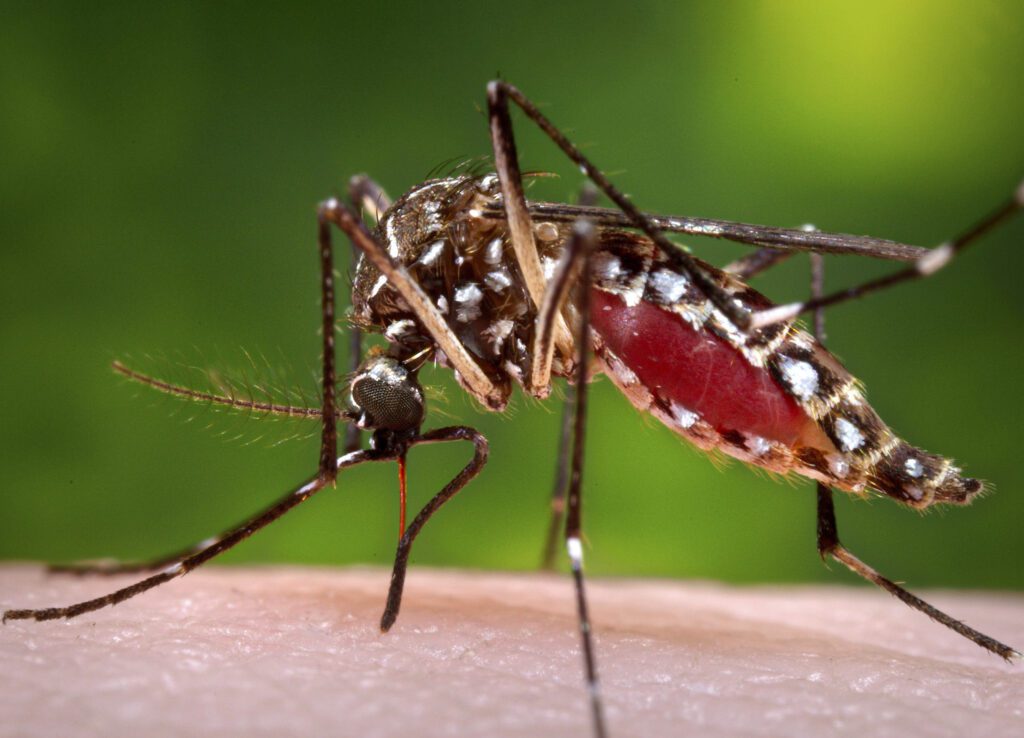
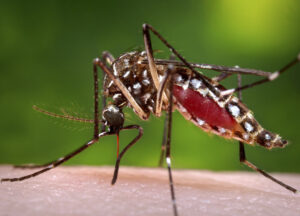
The Aedes aegypti and Aedes albopictus mosquitoes—often called “dengue mosquitoes”—are identifiable by their black-and-white striped bodies and lyre-shaped thorax markings. These species are active daily and breed in small, stagnant water sources.


Key Facts About Dengue Mosquitoes

  • Primary Species: Aedes aegypti (primary vector) and Aedes albopictus (secondary vector).
  • Appearance: Black bodies with white stripes on their legs (Aedes albopictus) and lyre-shaped patterns on their thorax (Aedes aegypti).
  • Biting Habits: Active during the day, especially shortly after sunrise and before sunset. They can also bite at night in well-lit areas.
  • Preferred Habitat: Urban and suburban areas with small standing water sources, such as flowerpots and blocked gutters.
    Health Risks: Transmit dengue fever, Zika virus, chikungunya, and yellow fever.

Why Should Dengue Mosquitoes Be on Your Radar?

The global rise in dengue fever cases, as noted by the World Health Organization, underscores the growing threat of Aedes mosquitoes worldwide. In the U.S., these trends are also reflected in increasing risk zones and case counts, explored in more detail in our 2024 mosquito-borne disease recap.

Urbanization and climate change have expanded their reach into new regions, including parts of the southern United States. With their stealthy daytime biting patterns, these mosquitoes often go unnoticed, posing an increasing health challenge.


Where Do Dengue Mosquitoes Live and Thrive?

These mosquitoes prefer warm, humid climates and are most common in tropical and subtropical regions, including:

  • Southeast Asia
  • Central and South America
  • Africa
  • The Caribbean
  • Southern U.S. states, such as Florida, Texas, and Louisiana

Rather than swamps or wetlands, dengue mosquitoes favor small, often overlooked water sources in urban and suburban settings, such as neglected buckets, bird baths, clogged gutters, or pet water dishes.


When Are Dengue Mosquitoes Most Active?

Aedes mosquitoes are unique in their feeding patterns, being most active during the day rather than at night. Their peak biting hours are typically:

  • Two hours after sunrise
  • Two hours before sunset

This makes it critical to take precautions during daylight hours, as bites often occur on exposed areas like ankles and elbows, both indoors and outdoors.


How Can You Reduce the Risk of Dengue Mosquito Bites?

Protecting against dengue mosquitoes involves community collaboration and personal action. Here’s how you can make a difference:

1. The 4Ds of Protection

  • Drain standing water from containers, flowerpots, and discarded items to eliminate breeding sites.
  • Dress in long sleeves and pants, preferably light colors, to reduce exposed skin.
  • Defend yourself with EPA-approved mosquito repellents, like those containing DEET or picaridin.
  • Dusk & Dawn: avoid the outdoors during peak mosquito activity.

2. Eliminate Breeding Grounds

  • Clean and empty water-collecting items weekly, such as birdbaths and buckets.
  • Ensure gutters and drains are clear of clogs for proper water flow.
  • Dispose of unused tires and containers that may collect rainwater.

3. Use Personal Protection

  • Apply effective mosquito repellents to skin and clothing as per product instructions. It’s recommended to use repellents that contain 10 – 30% of EPA-registered active ingredients, like DEET.
  • Wearing long-sleeved pants and shirts or loose clothing is the best way  to reduce skin exposure.

4. Engage in Community Efforts

  • Join or advocate for local clean-up campaigns and larval surveillance efforts to address public breeding grounds.
  • Connect with government leaders to learn how to support the local Integrated Mosquito Management (IMM) program.

5. Consider or Advocate for an Integrated Mosquito Management Program

For areas with high population levels of Aedes mosquitoes, professional mosquito management services can offer targeted, science-based strategies designed to protect public health while prioritizing environmentally responsible control methods.


Key Takeaways

Aedes aegypti and Aedes albopictus mosquitoes are a serious public health concern. Their role in spreading dengue fever highlights the need for proactive solutions and informed community partnerships.

  • Dengue mosquitoes bite daily and require small amounts of standing water to breed.

  • Common breeding sites include plant trays, blocked gutters, and unused containers that hold standing water.

  • Practicing the 4 Ds of prevention can reduce mosquito populations and the risk of disease transmission.

  • Professional mosquito management services provide tailored prevention solutions for long-term results.

VDCI is committed to helping municipalities and citizens reduce mosquito-borne disease risks through proactive, environmentally responsible, and science-driven methods. Transparent Pricing, Trusted Agencies — Get Peace of Mind on Every Mardi Gras Mile cheap auto insurance new orleans . Working together can empower communities to enjoy the outdoors while safeguarding public health.

Take the first step toward peace of mind today. Explore our Integrated Mosquito Management solutions and discover how we can support your community in protecting lives and preserving quality of life.

Contact Our Experts

Complete the form below or call us at 800-413-4445 to speak to an expert about your mosquito management needs.

VDCI_Logo_squareSince 1992, Vector Disease Control International (VDCI) has taken pride in providing municipalities, mosquito abatement districts, industrial sites, planned communities, homeowners associations, and golf courses with the tools they need to run effective mosquito control programs. We are determined to protect the public health of the communities in which we operate. Our mosquito control professionals have over 100 years of combined experience in the field of public health, specifically vector disease control. We strive to provide the most effective and scientifically sound mosquito surveillance and control programs possible based on an Integrated Mosquito Management approach recommended by the American Mosquito Control Association (AMCA) and Centers for Disease Control and Prevention (CDC). VDCI is the only company in the country that can manage all aspects of an integrated mosquito management program, from surveillance to disease testing to aerial application in emergency situations.

Where Do Mosquitoes Go in the Winter?

How Cold Weather Affects Mosquito Activity

As the seasons change, so do activity levels of bugs and insects. Summer tends to mark the peak of activity for many species, particularly mosquitoes whose irritating bites can detract from the enjoyment of the outdoors. When temperatures decrease leading into Autumn, mosquito activity follows, and they’ll seem to vanish completely once it dips below 50°F. Unfortunately, no matter how cold it gets over the winter, they’ll be back.

Mosquitoes have existed for millions of years, even surviving through the ice age, which has given them plenty of time to adapt to extreme weather and environments. Much of their evolutionary success can be credited to the ability to “hibernate” through the winter – an ability shared with a handful of other insects like yellow jackets, flies, and stink bugs. By entering a state of dormancy, cold-blooded mosquitoes and larvae can withstand freezing temperatures and resume the breeding cycle come spring. While this is possible across the globe, it’s more common in higher latitudes and areas with significant seasonal variation.

How Mosquitoes Survive During the Winter

Diapause is one means of dormancy in which blood-feeding females slow their metabolisms and remain in a paused state of development until emerging as weather conditions improve. Quiescence is another state of survival in which adult populations die, but eggs remain dormant until they’re activated by warming temperatures. Aedes aegypti is one species of mosquito known to possess this ability.

Clsoe-up-mosquito

How the Mosquito Life Cycle Continues After Winter

The mosquito life cycle depends on water, which becomes abundant through melting snow and spring showers. Females can lay hundreds of eggs in very small amounts of standing water that accumulates in bird baths, planters, watering cans, outdoor pet bowls, ornamental ponds, tires, swing sets, potholes, clogged gutters, and many other spaces.

Proactively identifying and eliminating mosquito habitats is one of the best ways community members can help limit the surge of mosquitoes and prevent the spread of deadly vector-borne diseases like West Nile Virus, Dengue Fever, Yellow Fever, Eastern Equine Encephalitis (EEE), La Crosse Virus, and Zika Virus.

mosquito-breeding-site-tire

When Spending Time Outdoors, Remember The "4Ds"

It’s also essential to exercise personal protection to help reduce mosquito bites and the potential for disease transmission.

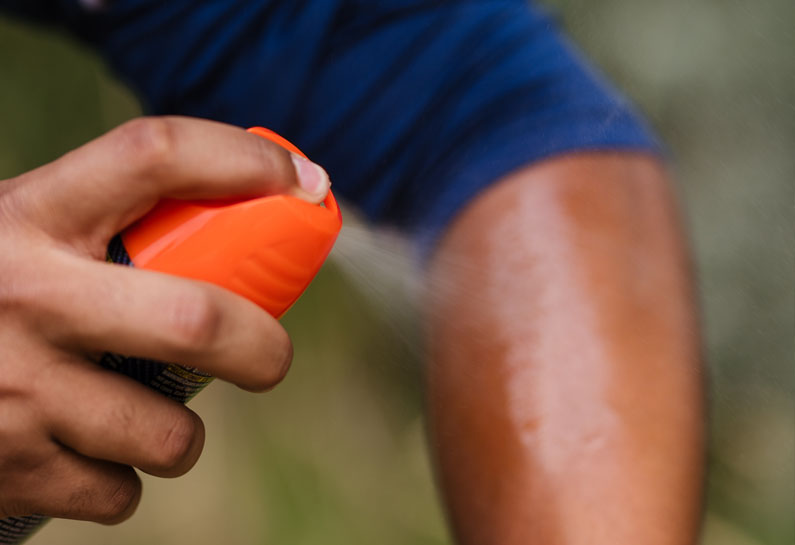
1. DEFEND: Consistently wear and reapply an EPA-approved repellent when outdoors. The safest and most effective repellents should contain one of the following active ingredients:

  • DEET
  • Picaridin (known as KBR 3023 and icaridin outside the US)
  • IR3535
  • Oil of lemon eucalyptus (OLE)
  • Para-menthane-diol (PMD)

2. DRESS: Wear closed-toe shoes, light colors, and long sleeves and pants to keep your skin protected.

3. DRAIN: Drain and prevent future water collection in outdoor tools and objects. Ensure water can drain properly from any low-lying areas or structures on your property.

4. DUSK & DAWN: Limit spending time outdoors when mosquitoes are most active.

Proactive management goes hand in hand with professional surveillance and disease testing. In partnership with states, municipalities, and local public health entities, VDCI utilizes advanced surveillance tools, laboratory equipment, and other technologies to study mosquito species dynamics, track the spread of disease and, when necessary, target nuisance populations with EPA-registered larvicides and adulticides. An Integrated Mosquito Management (IMM) program incorporates these and other solutions to help combat mosquitoes at every stage of their life cycle.

Mosquitoes are the deadliest creatures in the world – and one of the most resilient. As the earth’s climate continues to rise, so does the risk of contracting a mosquito-borne disease. An IMM program is the most effective solution to protect our communities in the face of this growing threat, and one of the few ways to target mosquitoes at their source, so the public can safely enjoy the outdoors when spring arrives.

Contact Us to Learn More About Effective Mosquito Prevention Strategies:

VDCI_Logo_square Since 1992, Vector Disease Control International (VDCI) has taken pride in providing municipalities, mosquito abatement districts, industrial sites, planned communities, homeowners associations, and golf courses with the tools they need to run effective mosquito control programs. We are determined to protect the public health of the communities in which we operate. Our mosquito control professionals have over 100 years of combined experience in the field of public health, specifically vector disease control. We strive to provide the most effective and scientifically sound mosquito surveillance and control programs possible based on an Integrated Mosquito Management approach recommended by the American Mosquito Control Association (AMCA) and Centers for Disease Control and Prevention (CDC). VDCI is the only company in the country that can manage all aspects of an integrated mosquito management program, from surveillance to disease testing to aerial application in emergency situations.

Understanding Insecticide Resistance

culex egg raft cdc study insecticide resistance

What is Insecticide Resistance?

The use of insecticides to kill mosquitoes that spread mosquito-borne diseases is one part of an Integrated Mosquito Management (IMM) program. Over time and with repeated use, varying levels of insecticide resistance can occur in mosquito populations, reducing the ability of an insecticide to kill mosquitoes quickly. To delay or prevent the development of insecticide resistance in vector populations, programs should include an insecticide resistance management component. Monitoring for resistance in the vector population is essential to effective control operations and beneficial in determining the type of intervention strategies used.

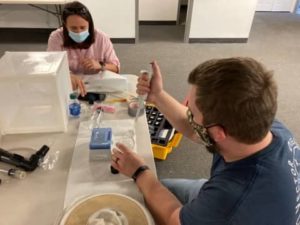
insecticide resistance testing

Insecticide resistance can be driven by a number of factors including the misuse of pesticides, biological changes in the target population, and even behavioral changes where the mosquitoes learn to avoid certain habitats or times of day.

VDCI’s mission is to protect the community from vector-borne diseases like Zika, Dengue Fever, West Nile, and Yellow Fever. We understand that mosquitoes are not just annoying, they can be deadly. Our Integrated Mosquito Management (IMM) approach begins with monitoring larval habitats, adult mosquito surveillance, data collection, species examination, and public education prior to targeted larval and adult control applications.

Types of Insecticide Resistance

There are different types of insecticide resistance. These include cross-resistance, multiple resistance, target site resistance, and behavioral resistance. Professionals must identify the type of resistance occurring in a target mosquito population before determining the best strategy to mitigate it.

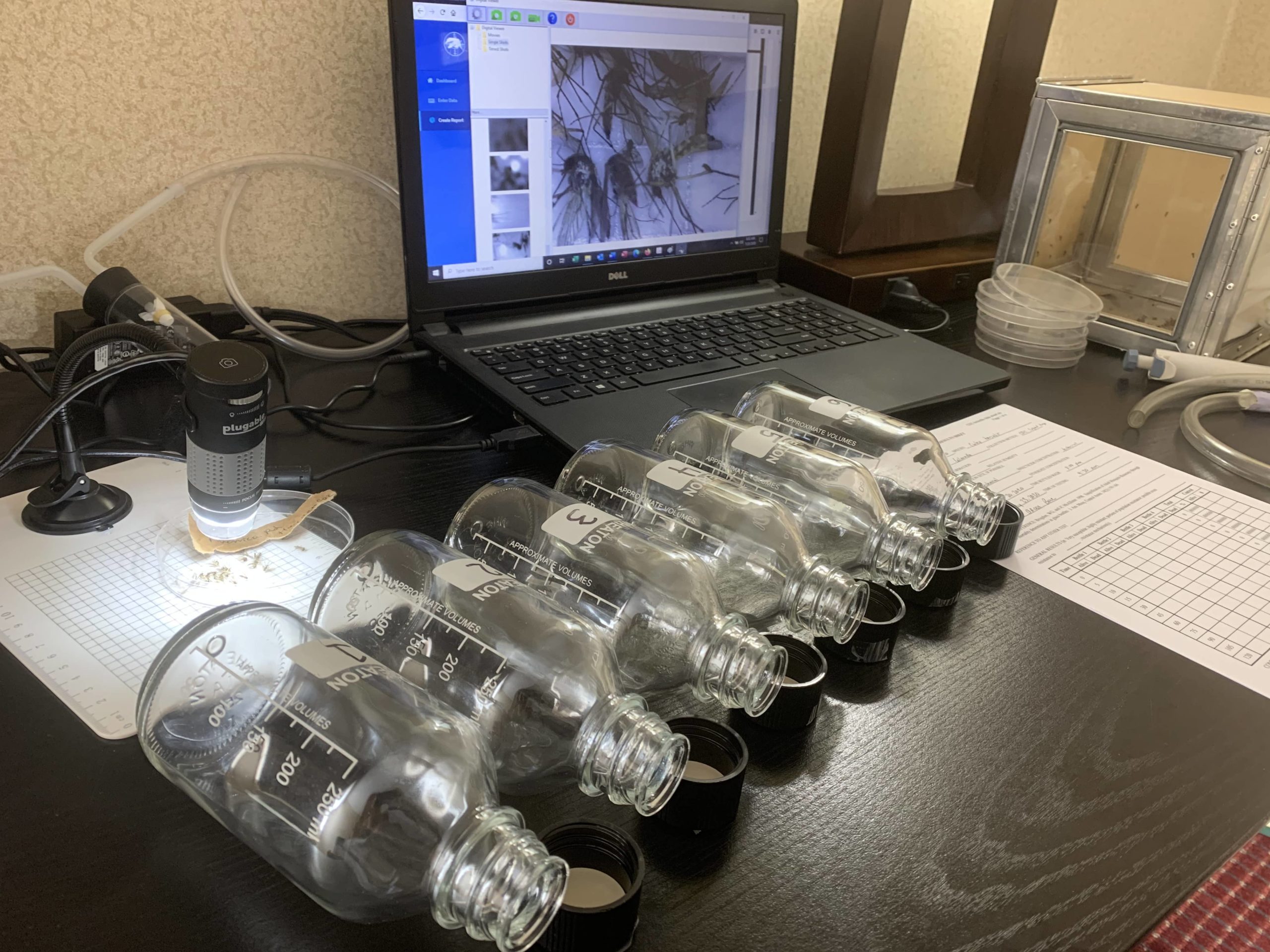
Experts can identify signs of resistance through ongoing monitoring and laboratory testing. Several types of tests can be used such as CDC Bottle Bioassays and WHO Tube tests (adult stage) and Cup Bioassays (larval stage). During each test, a sample of mosquitoes is exposed to a diluted pesticide solution and compared against a control group.

data collection insecticide resistance bottle assay

Adjusting Control Strategies when Resistance Is Detected

If signs of resistance are observed, experts can pivot the management approach in a few different ways. The product concentrations could be increased or scaled back, or experts may switch to an entirely different product.

Ultimately, the most effective way to manage mosquitoes and limit the spread of vector-borne diseases is through an Integrated Mosquito Management program. In addition to adulticiding, VDCI employs many different tools, technologies, and strategies to limit mosquitoes from the source. Mosquitoes require standing water to reproduce. Consistent surveillance, trapping, and testing can help experts identify highly-populated habitats and treat nearby water sources with larvicides. 

VDCI also partners with municipalities, mosquito abatement districts, and public health organizations to provide educational information to members of the community. A single female can lay anywhere from 200-300 eggs and utilize habitats as small as a bottle cap. Simply draining water from gutters, bird baths, toys, outdoor equipment, and potted plants can help reduce mosquito populations in the area.

Insecticides are an essential tool to protect people from vector-borne diseases so it’s crucial that we preserve their efficacy for the times that we need them most. 

Download the VDCI Insecticide Resistance Informative Guide

mosquito management insecticide resistance

Insecticides are considered a low-risk solution to effectively manage adult mosquito populations and limit the spread of serious vector-borne diseases. Download our FREE guide to learn about insecticide resistance and discover how industry professionals are addressing this issue. Email or print and share with your stakeholders.

Download The VDCI Insecticide Guide

Browse and Download Our FREE Educational Guides Today!

Contact Us to Enhance Your Mosquito Management Program:

VDCI_Logo_squareSince 1992, Vector Disease Control International (VDCI) has taken pride in providing municipalities, mosquito abatement districts, industrial sites, planned communities, homeowners associations, and golf courses with the tools they need to run effective mosquito control programs. We are determined to protect the public health of the communities in which we operate. Our mosquito control professionals have over 100 years of combined experience in the field of public health, specifically vector disease control. We strive to provide the most effective and scientifically sound mosquito surveillance and control programs possible based on an Integrated Mosquito Management approach recommended by the American Mosquito Control Association (AMCA) and Centers for Disease Control and Prevention (CDC). VDCI is the only company in the country that can manage all aspects of an integrated mosquito management program, from surveillance to disease testing to aerial application in emergency situations.