
2025 Mosquito-Borne Disease Year In Review

West-Nile-Virus-UK-spread-Europe-outbreak-1001738

Exploring the Impact of Mosquito-Borne Diseases In 2025

Mosquito populations and mosquito-bite disease risks are always changing due to weather, urban development, targeted management efforts, and other factors. Year-to-year variation is normal, and the 2025 data from the Centers for Disease Control and Prevention (CDC) reflect several notable changes in reported cases compared to 2024:

  • La Crosse Encephalitis: 203% increase; 194% increase in neuroinvasive
  • St. Louis Encephalitis: 200% increase; 200% increase in neuroinvasive
  • West Nile virus: 42% increase; 35% increase in neuroinvasive

Our 2025 year in review provides trends and insights that can help inform your mosquito management decisions in 2026.
West Nile Virus (WNv)

OVERVIEW:

  • The virus appeared in the U.S. in 1999, with the first case in New York City, leading to 62 human cases and 25 horse cases that year.
  • WNv is now the most common mosquito-borne disease in the country, with an estimated 2,000 cases reported each year.

TRANSMISSION:

  • The West Nile virus spreads primarily through mosquitoes that feed on infected birds, not through casual human-to-human contact.
  • In the U.S., Culex pipiens, Culex tarsalis, and Culex quinquefasciatus are the primary vectors.

RISKS:

  • Most cases are asymptomatic, but symptoms can include flu-like illness, fever, rash, headache, and neck stiffness.
  • Severe infections can cause encephalitis (brain swelling), affect the central nervous system, and may be fatal. Approximately 1 in 150 infections becomes neuroinvasive.

Year-Over-Year Change in West Nile Virus Cases

2025
2,076 cases (1,434 neuroinvasive)
2024
1,466 cases (1,063 neuroinvasive)
2023
2,406 cases (1,599 neuroinvasive)
2022
1,132 cases (827 neuroinvasive)
2021
2,911 cases (2,008 neuroinvasive)
2020
731 cases (559 neuroinvasive)

Top 5 States for West Nile Virus Human Case Count

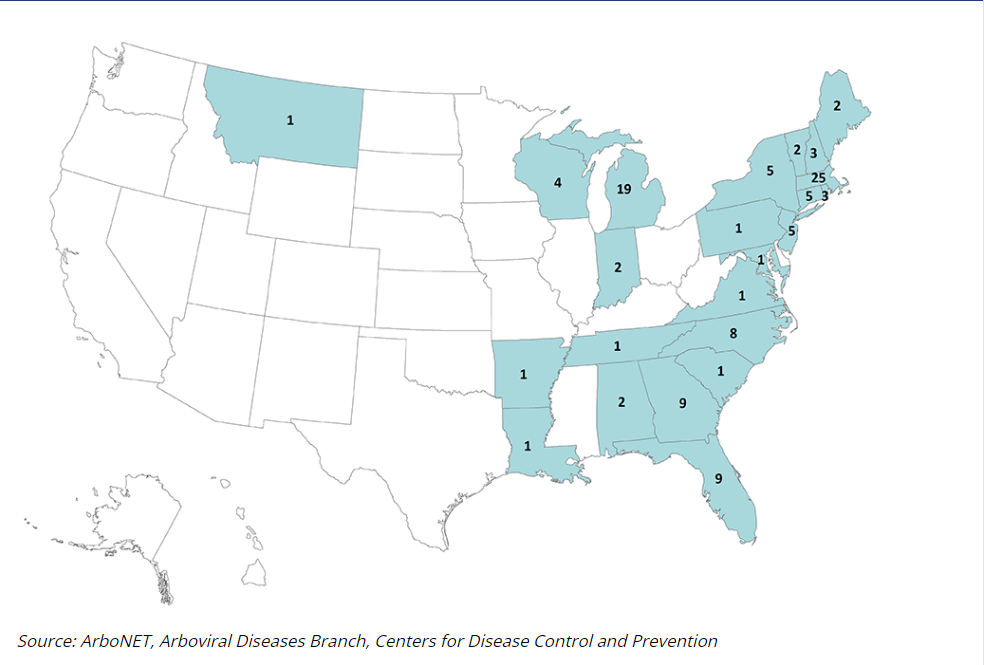
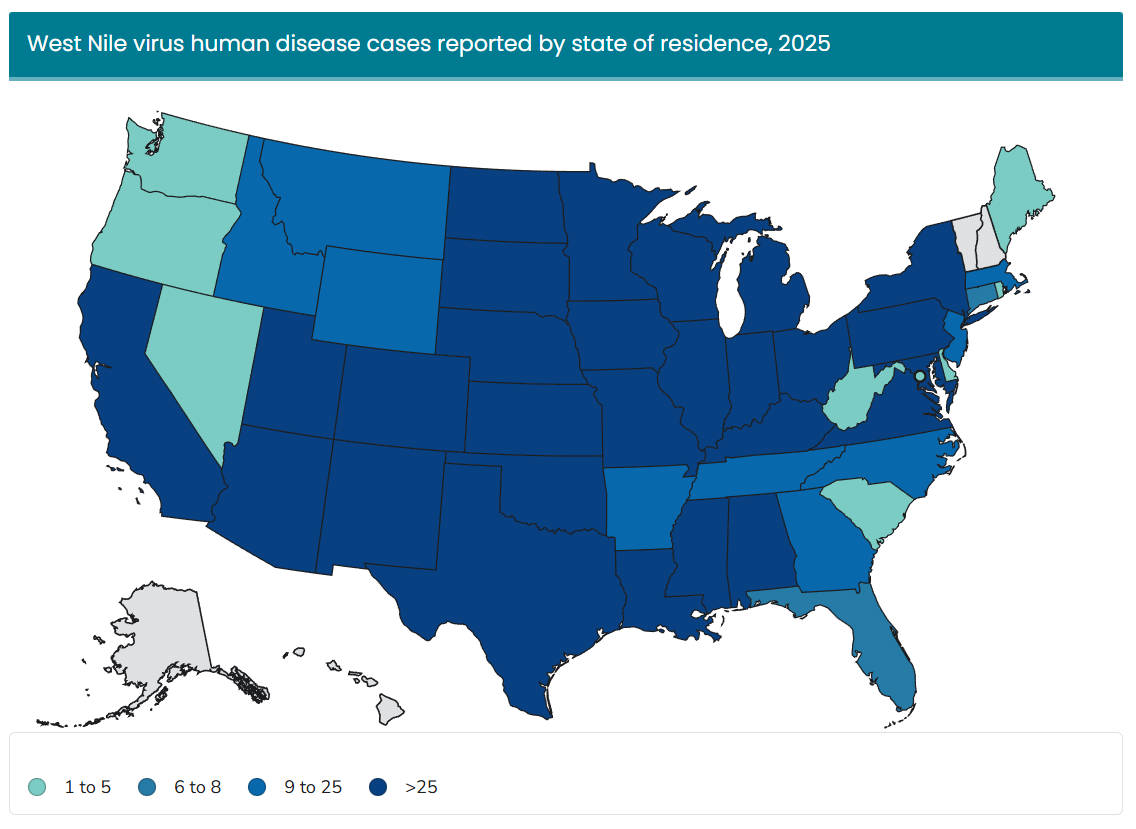
2025 West Nile Virus Human Cases In the U.S.
2025-west-nile-virus-human-disease-case-reported-by-state-map
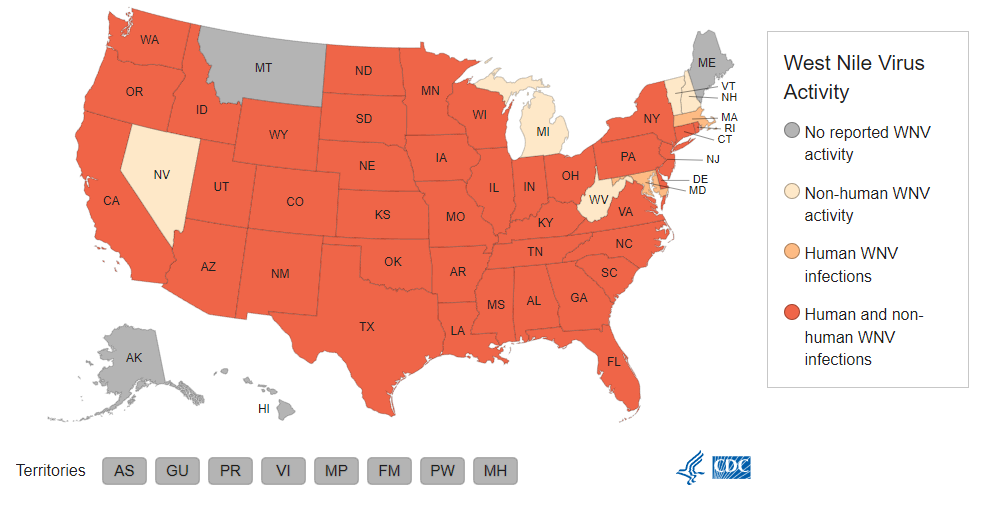
Image Source: U.S. Centers for Disease Control and Prevention https://www.cdc.gov/west-nile-virus/data-maps/current-year-data.html
Cases
0
Neuroinvasive Cases
0
States Reporting Human Cases
0

Dengue

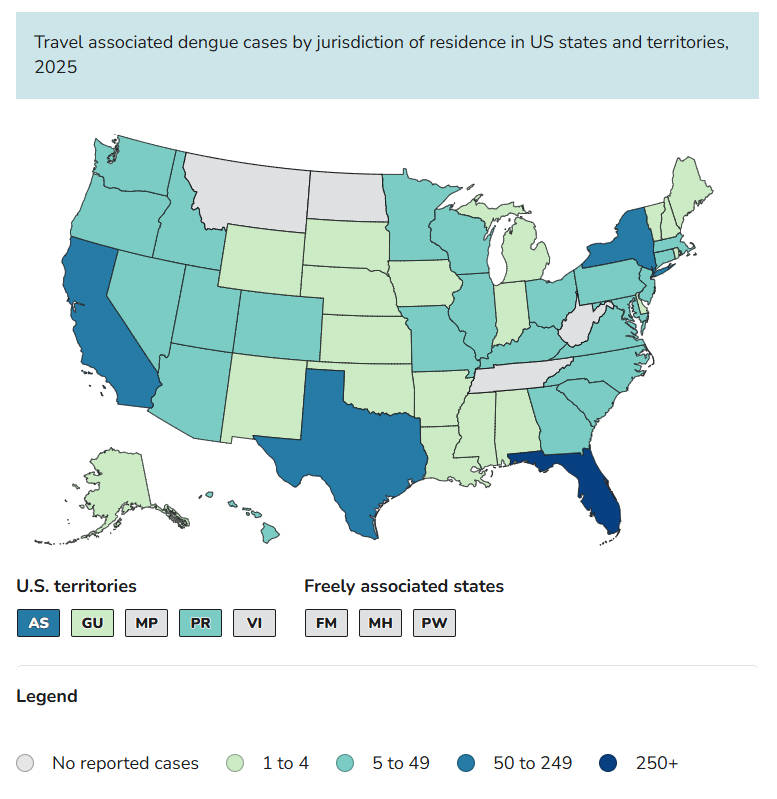
NOTE: Most dengue cases in the 49 continental U.S. states are imported through travel. Although local transmission can occur, it is largely limited to U.S. territories and states where dengue is common. Below, cases are categorized separately as either locally acquired or travel-associated.

OVERVIEW 

  • Dengue is common in the U.S. territories of American Samoa, Puerto Rico, and the U.S. Virgin Islands.
  • Most dengue cases reported in the 49 continental US states occur in travelers infected in areas with risk of dengue.
  • Dengue has become the fastest-growing mosquito-transmitted disease, with nearly 400 million infections annually worldwide. 

TRANSMISSION

  • There are 4 common Dengue viruses, denoted as Dengue 1, 2, 3, and 4.
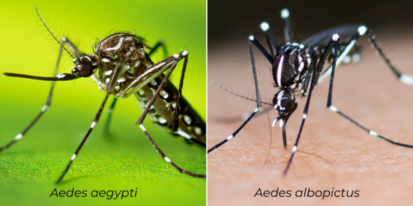
  • Dengue is transmitted to humans through infected Aedes mosquitoes, specifically Aedes aegypti and Aedes albopictus.

RISKS

  • Infection can cause “break-bone fever” (severe muscle/joint pain, high fever, rash, headache), with approximately 5% of cases developing severe dengue hemorrhagic fever, which can lead to internal bleeding and death.
  • Severe cases are more likely in young children and older adults.
  • The virus can be passed to fetuses during pregnancy.
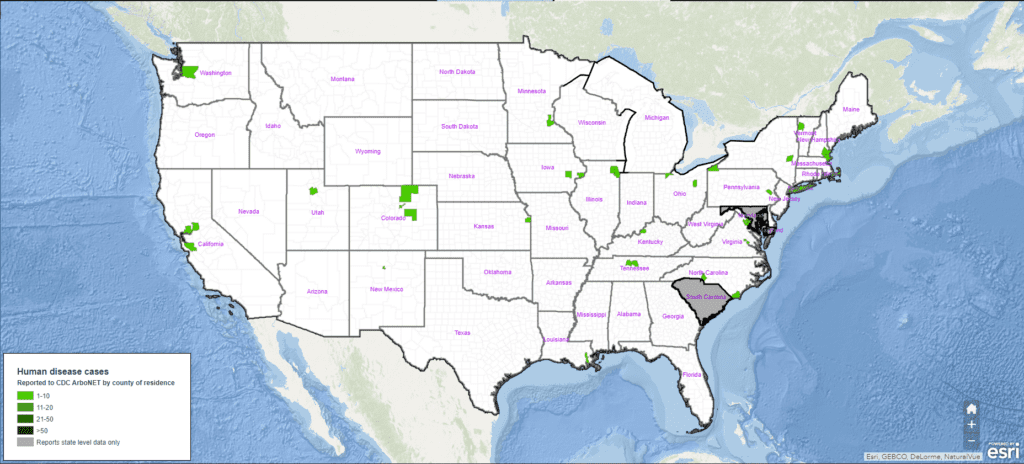
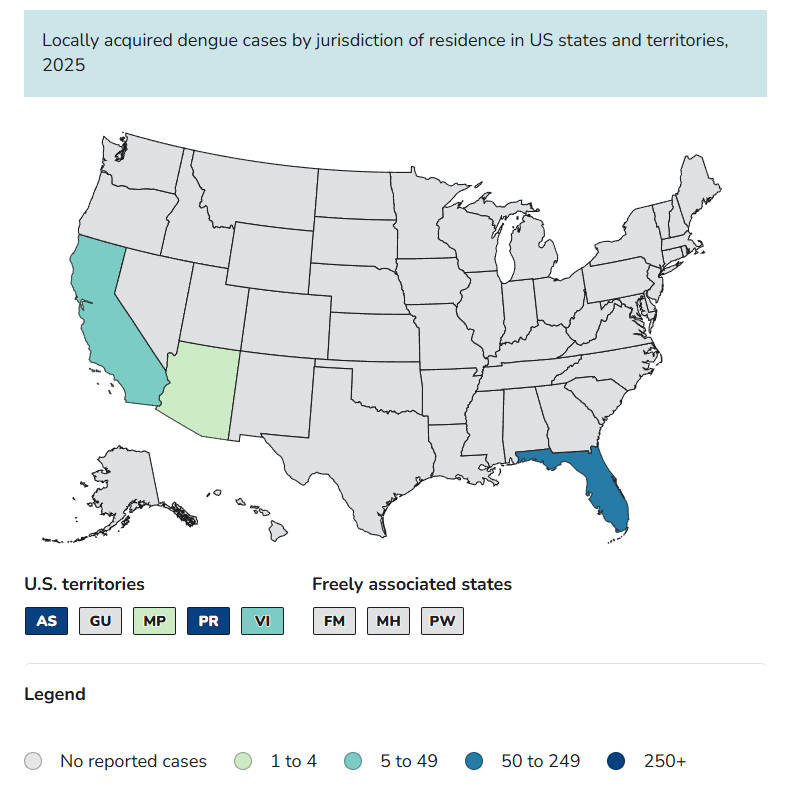
2025 Dengue Human Cases In the U.S.
LOCALLY ACQUIRED

The chart below provides a year-over-year comparison of locally acquired dengue cases to highlight changes in local transmission activity.

Year-Over-Year Change in Dengue Cases

2025
3,809 locally acquired cases
2024
6,076 locally acquired cases
2023
1,104 locally acquired cases
2022
1,044 locally acquired cases
2021
609 locally acquired cases
2020
983 locally acquired cases

Top 5 States for Dengue Human Case Count

2025-dengue-human cases-locally-aquired-us-map
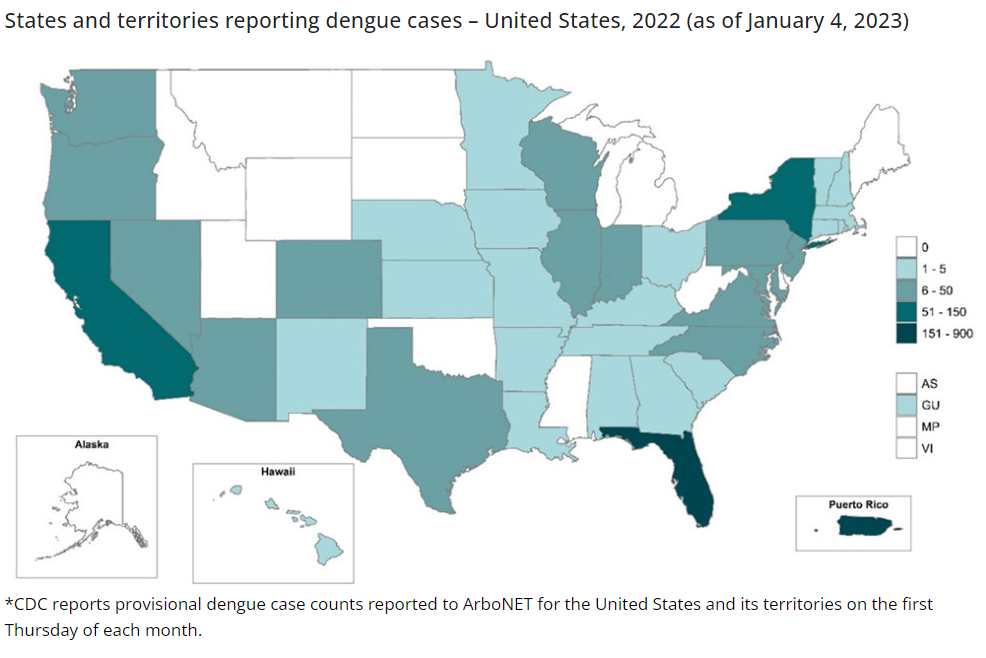
Image Source: U.S. Centers for Disease Control and Prevention, Accessed on January 1, 2025 https://www.cdc.gov/dengue/data-research/facts-stats/current-data.html
Locally Acquired Cases
0
Jurisdictions Reporting Locally Acquired Human Cases
0
2025 Dengue Human Cases In the U.S.
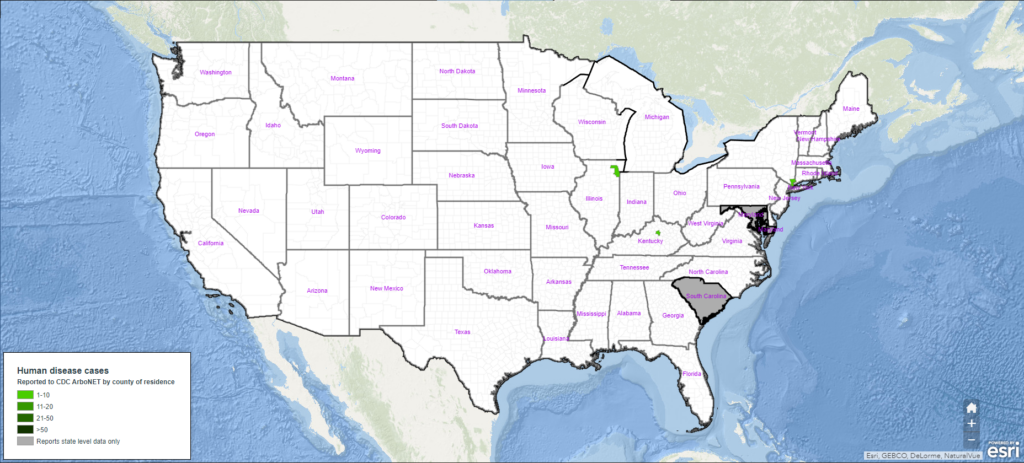
TRAVEL ASSOCIATED

The chart below provides a year-over-year comparison of travel-associated dengue cases to highlight changes in travel-related exposure patterns.

Year-Over-Year Change in Dengue Cases

2025
1,204 travel-related
2024
3,179 travel-related
2023
1,452 travel-related
2022
1,494 travel-related
2021
205 travel-related
2020
354 travel-related

Top 5 States for Dengue Human Case Count

2025-dengue-human cases-travel-associated-us-map
Travel Associated Cases
0
Jurisdictions Reporting Travel Associated Human Cases
0

Eastern Equine Encephalitis (EEE)

OVERVIEW 

  • Eastern Equine Encephalitis (EEE) was first recognized in horses in 1831, with the first confirmed human cases in 1938.
  • Today, EEE is found in North, Central, and South America, as well as the Caribbean.

TRANSMISSION

  • Culiseta melanura primarily infects birds, while bridge vectors like Coquillettidia pertubans, Aedes sollicitans, and Ochlerotatus canadensis transmit it to humans and horses.
  • People living or working near wetlands and swamps are at higher risk, and infections occur mainly during the summer months.

RISKS

  • Severe cases involve brain and spinal cord inflammation, with sudden high fever, stiff neck, disorientation, seizures, and coma.
  • Only about 5% of EEE infections lead to severe encephalitis; of those, 33% die, making it the deadliest arbovirus in the U.S.
  • The elderly (50+) and children (15 and younger) are most at risk for developing encephalitis.
  • There is no vaccine or antiviral treatment for humans.

Year-Over-Year Change in Eastern Equine Encephalitis Cases

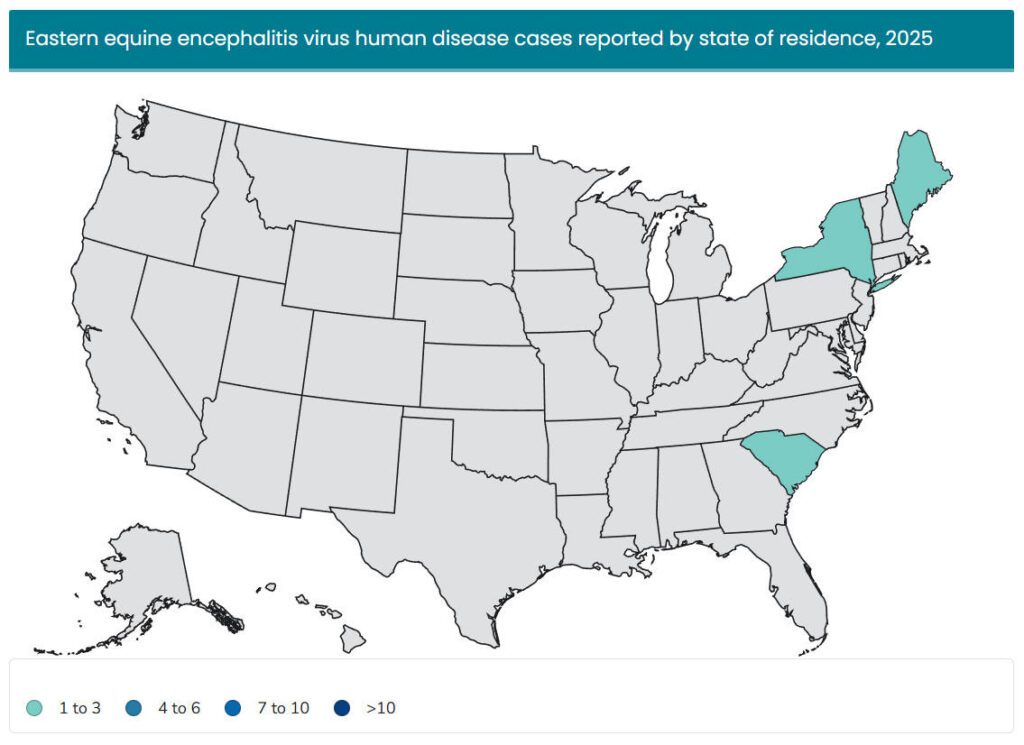
2025
3 cases (3 neuroinvasive)
2024
19 cases (19 neuroinvasive)
2023
7 cases (7 neuroinvasive)
2022
1 case (1 neuroinvasive)
2021
5 cases (5 neuroinvasive)
2020
13 cases (13 neuroinvasive)

Top 3 States for Eastern Equine Encephalitis Human Case Count

2025 Eastern Equine Encephalitis Human Cases Reported In the U.S.
2025-eee-virus-human-disease-case-report-mao
Image Source: U.S. Centers for Disease Control and Prevention, Accessed on January 1, 205 https://www.cdc.gov/eastern-equine-encephalitis/data-maps/current-year-data.html
Cases
0
Neuroinvasive Cases
0
States Reporting Human Cases
0

La Crosse Encephalitis (LAC)

OVERVIEW 

  • La Crosse Encephalitis (LAC) was first identified in the United States in 1964.
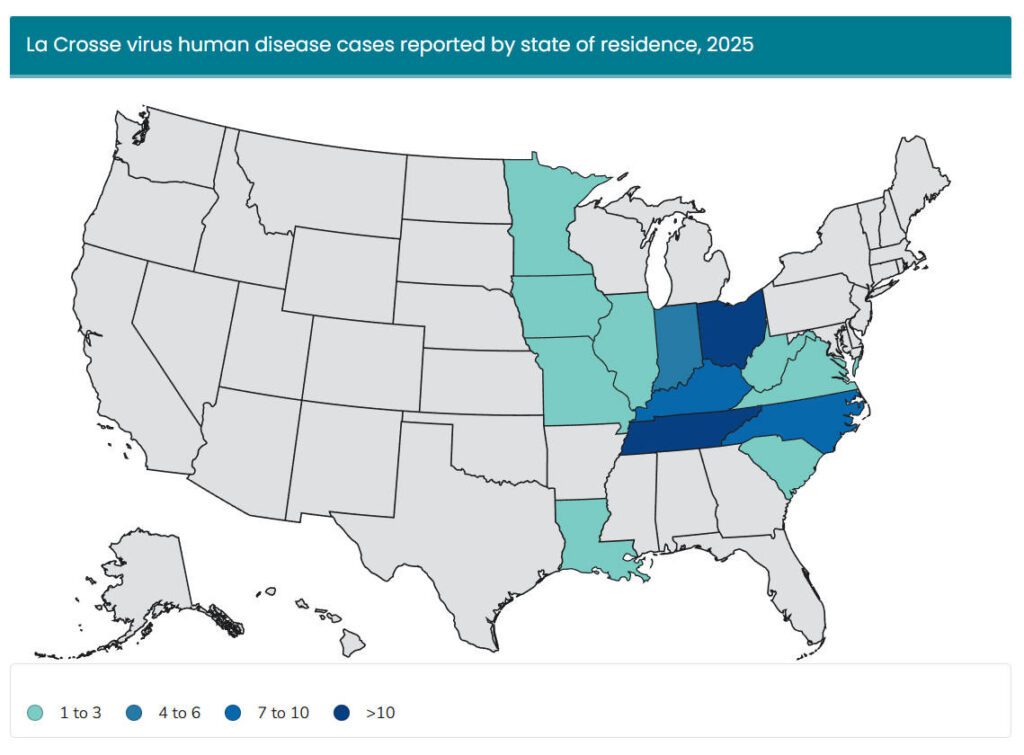
  • Most commonly reported in the upper Midwest and Mid-Atlantic states, including Ohio, West Virginia, and Minnesota.

TRANSMISSION

  • Primarily spread by the Eastern treehole mosquito, Aedes triseriatus.
  • Aedes triseriatus can pass the virus to its offspring, which allows it to persist across mosquito generations.
  • Reservoir hosts like chipmunks and squirrels are also carriers. 

RISKS

  • LAC primarily affects children under 16, making it a rare but serious pediatric mosquito-borne disease.
  • Flu-like symptoms, including headache, fever, nausea, vomiting, and fatigue, may appear 5-15 days after infection.
  • Severe infections can cause brain inflammation, seizures, cognitive impairment, vision loss, paralysis, or coma, though mortality is less than 1%.
  • There is no vaccine or antiviral treatment.

Year-Over-Year Change in La Crosse Encephalitis​ Cases

2025
106 cases (100 neuroinvasive)
2024
35 cases (34 neuroinvasive)
2023
31 cases (30 neuroinvasive)
2022
22 cases (19 neuroinvasive)
2021
40 cases (39 neuroinvasive)
2020
88 cases (84 neuroinvasive)

Top States for La Crosse Encephalitis Human Case Count

2025 La Crosse Encephalitis Human Cases In the U.S.
2025-la-crosse-encephalitis-human-cases-in-us-map
Image Source: U.S. Centers for Disease Control and Prevention, Accessed on January 1, 2025 https://www.cdc.gov/la-crosse-encephalitis/data-maps/current-year-data.html
Cases
0
Neuroinvasive Cases
0
States Reporting Human Cases
0

St. Louis Encephalitis (SLEV)

OVERVIEW 

  • The St. Louis encephalitis virus (SLEV) was first recognized in 1933 during a St. Louis, Missouri, epidemic that resulted in over 1,000 cases of encephalitis.
  • Before West Nile virus appeared in 1999, SLEV was considered the most significant epidemic mosquito-borne virus in the U.S., with the last major epidemic in 1975 along the Ohio–Mississippi River Basin (nearly 2,000 cases, 142 deaths).

TRANSMISSION

  • Primary vectors include Culex pipiens, Culex quinquefasciatus, Culex tarsalis, and Culex nigripalpus.
  • Wild birds, such as blue jays, sparrows, robins, and pigeons, act as amplifying hosts, but typically remain asymptomatic.

RISKS

  • Most infections are asymptomatic; severe cases can cause high fever, neck stiffness, disorientation, coma, or death, with mortality ranging from 3-30% depending on age.
  • Adults over 50 are more likely to develop severe disease, with mortality between 7-24%, while those under 50 generally face less than 5% mortality.

Year-Over-Year Change in St. Louis Encephalitis​ Cases

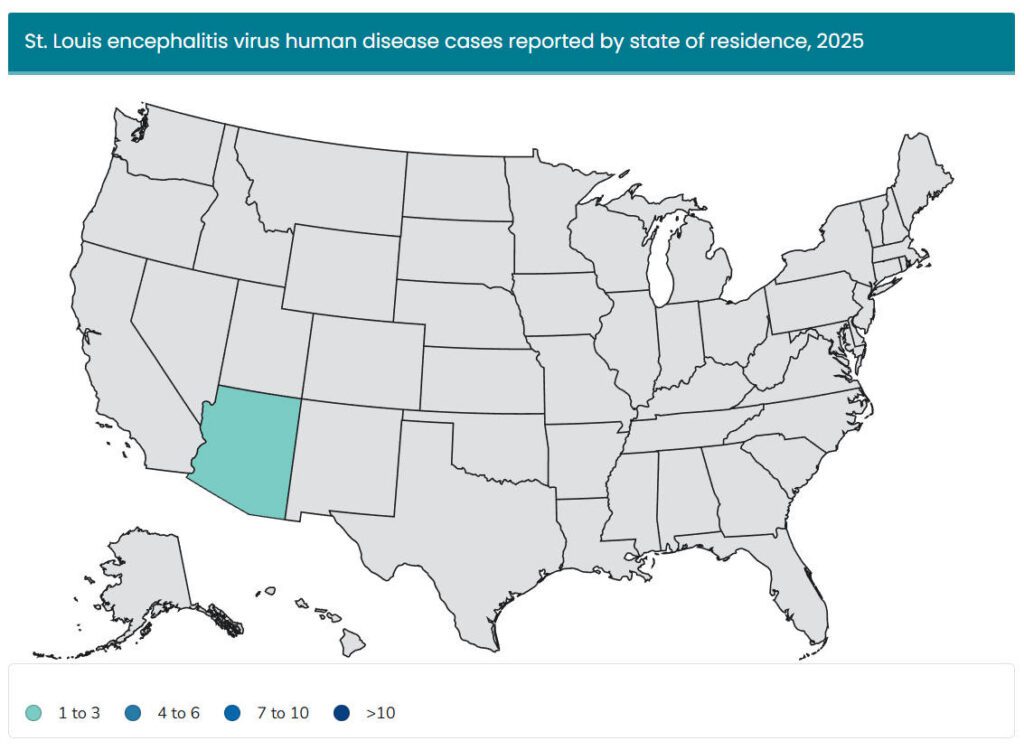
2025
3 case (2 neuroinvasive)
2024
1 case (0 neuroinvasive)
2023
19 cases (13 neuroinvasive)
2022
33 cases (27 neuroinvasive)
2021
17 cases (11 neuroinvasive)
2020
16 cases (14 neuroinvasive)

Top State for St. Louis Encephalitis Human Case Count

2025 St. Louis Encephalitis Human Cases In the U.S.
2025-st-louis-encephalitis-human-cases-map
Image Source: U.S. Centers for Disease Control and Prevention, Accessed on January 24, 2024 https://www.cdc.gov/sle/data-maps/current-year-data.html
Case
0
Neuroinvasive Cases
0
States Reporting Human Cases
0

Jamestown Canyon virus (JCV)

OVERVIEW

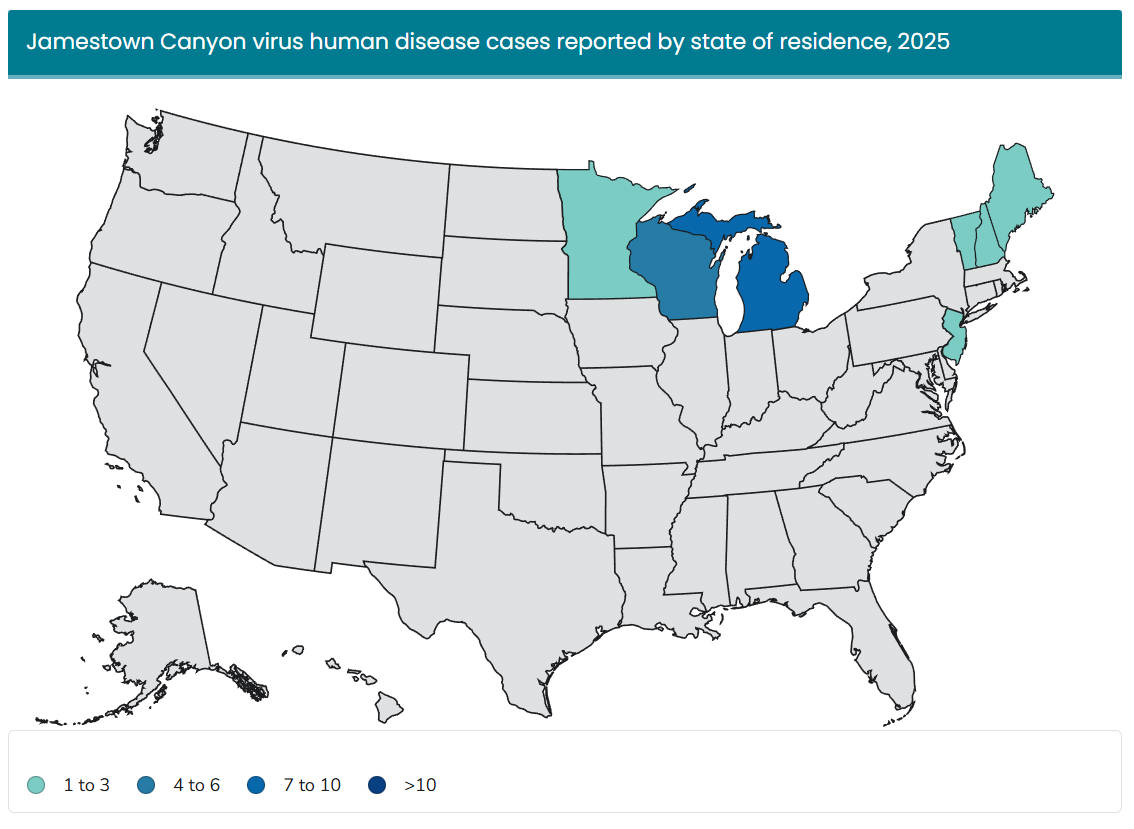
  • Jamestown Canyon virus (JCV) was first discovered in Culiseta mosquitoes in Jamestown, Colorado, in 1961.
  • It is found throughout much of the U.S., with most cases reported in the upper Midwest.

TRANSMISSION

  • Various mosquito species serve as vectors: Aedes, Culex, Coquillettidia.
  • JCV can be transmitted from mosquito parents to offspring. 
  • Deer often serve as the amplifying host, while humans are “dead-end” hosts and cannot transmit the virus to other mosquitoes.

RISKS

  • Symptoms include fever, headache, and fatigue.
  • Most JCV cases are neuroinvasive. About 68% of reported infections affect the nervous system, with symptoms ranging from fever and rash to meningitis or encephalitis.
  • No treatment currently exists.

Year-Over-Year Change in Jamestown Canyon Virus Cases

2024
22 cases (15 neuroinvasive)
2023
21 cases (15 neuroinvasive)
2022
12 cases (11 neuroinvasive)
2021
32 cases (21 neuroinvasive)
2020
13 cases (10 neuroinvasive)

Top States for Jamestown Canyon Virus Human Case Count:

2025 Jamestown Canyon virus Human Cases Reported In the U.S.
2025-jamestown-canyon-virus-human-disease-case-report-map
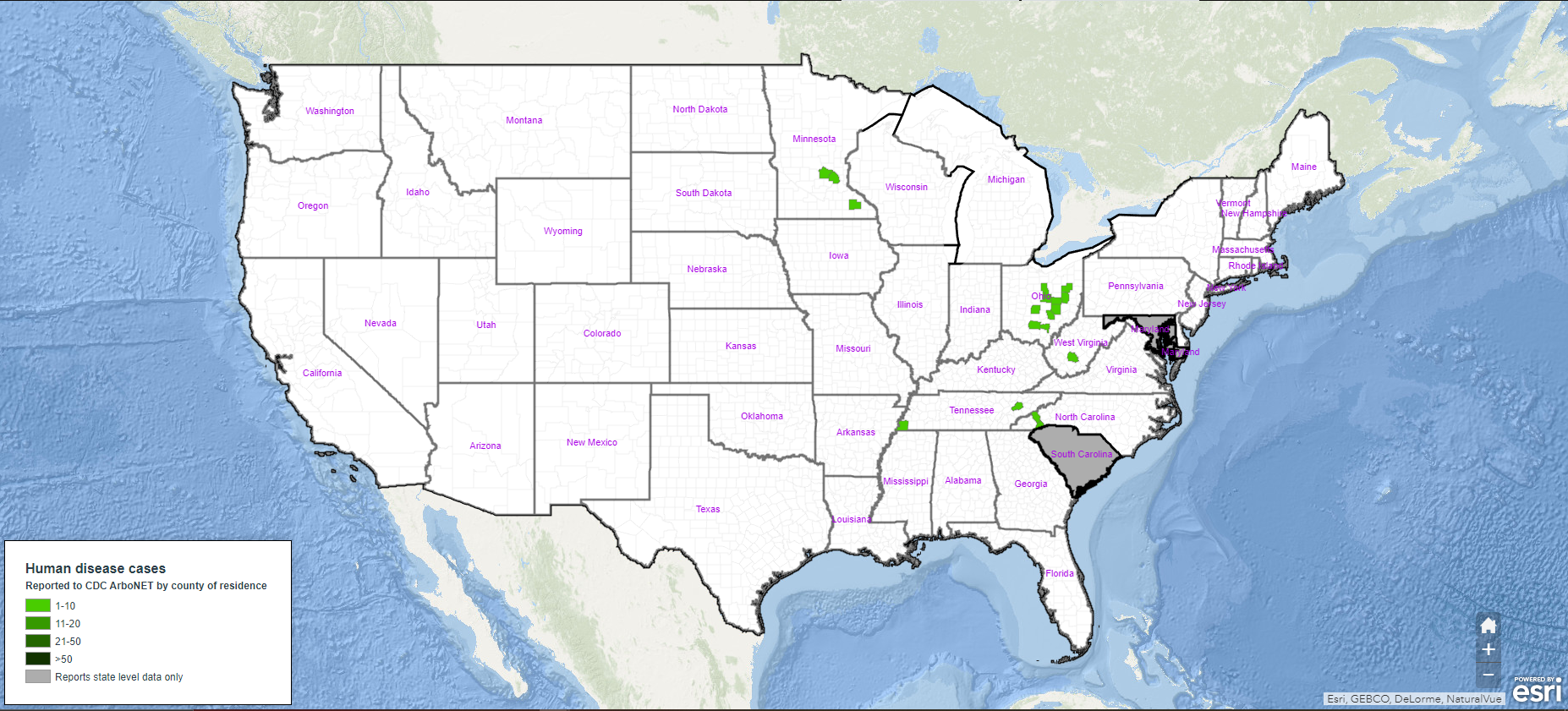
Image Source: U.S. Centers for Disease Control and Prevention, Accessed on January 24, 2025 https://www.cdc.gov/jamestown-canyon/data-maps/current-year-data.html
Locally Acquired Cases
0
Neuroinvasive Cases
0
States Reporting Human Cases
0

DATA IS THE BACKBONE OF EFFECTIVE MOSQUITO CONTROL PROGRAMS

Data from 2025 and prior years reveal that disease risks are continually shifting and evolving across the country. Protecting our local communities not only requires reactive solutions but also tailored, preventative strategies driven by data. 

Integrated Mosquito Management programs incorporate data and insights from surveillance, disease testing, and mosquito control at every lifecycle stage—all supported by robust public education initiatives—to stay ahead of mosquito-borne disease threats. 

Whether you need full program management or expert support, VDCI has the technical expertise to partner with local leaders and jurisdictions. Contact our mosquito management experts today to help curb the spread of mosquito-borne diseases in 2026.

SOURCES

1. U.S. Centers for Disease Control and Prevention (CDC). https://www.cdc.gov/ 

VDCI Wants To Make Your Community Safer. How Can We Help?

Speak to an expert about implementing an IMM program.

Fill out the information below, and one of our experts will follow up with you shortly.

VDCI_Logo_squareSince 1992, Vector Disease Control International (VDCI) has taken pride in providing municipalities, mosquito abatement districts, industrial sites, planned communities, homeowners associations, and golf courses with the tools they need to run effective mosquito control programs. We are determined to protect the public health of the communities in which we operate. Our mosquito control professionals have over 100 years of combined experience in the field of public health, specifically vector disease control. We strive to provide the most effective and scientifically sound mosquito surveillance and control programs possible based on an Integrated Mosquito Management approach recommended by the American Mosquito Control Association (AMCA) and Centers for Disease Control and Prevention (CDC). VDCI is the only company in the country that can manage all aspects of an integrated mosquito management program, from surveillance to disease testing to aerial application in emergency situations.

The Battle Against Mosquitoes: What Does “Winning” Look Like?

larviciding-plane-in-air-applying-aerial-treatment

Mosquitoes Are Here to Stay—So What Does Success Look Like?

Mosquitoes have existed for over 100 million years, surviving through the Jurassic Period, the Ice Age, and numerous environmental extremes thanks to their remarkable adaptability. While it’s appealing to imagine a world free from itchy mosquito bites, completely eliminating mosquitoes is an unrealistic goal. “Winning” the battle isn’t about eliminating all mosquitoes; it’s about protecting public health by reducing the mosquito population to a manageable level, thereby reducing the spread of vector-borne diseases. Historical precedent suggests this is only possible through a coordinated, integrated management approach.

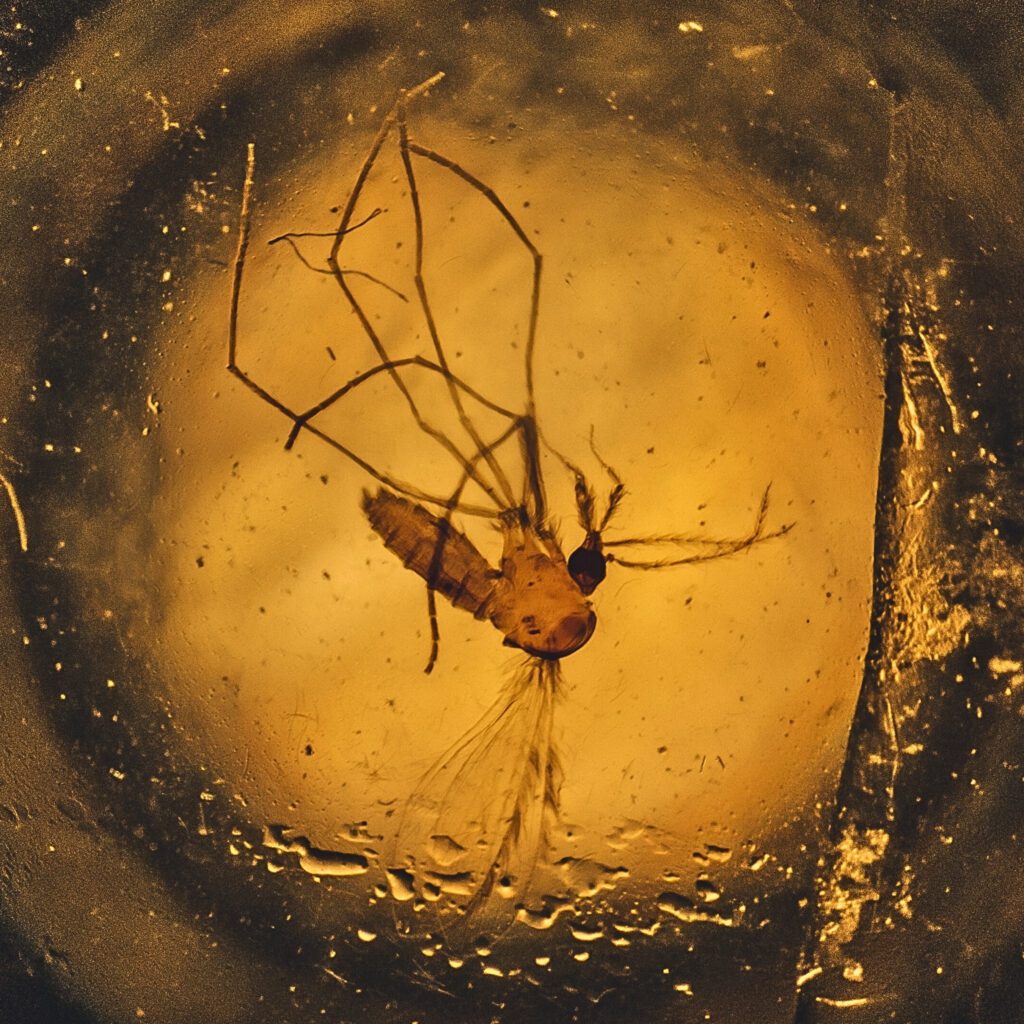
Ancient Mosquito Preserved in Amber

A Historic Example of Targeted Mosquito Control

For example, in the 1950s, Anopheles gambiae, a vector of malaria, was accidentally imported from Africa to Brazil, leading to thousands of deaths. In response, Brazil launched a highly organized campaign to eliminate this invasive species. This involved daily surveys, mapping infestations, and suffocating larvae by applying oil to their preferred breeding sites—puddles, irrigated fields, and even water that collected in cattle hoof prints. Because Anopheles gambiae feeds exclusively on humans and stays close to its breeding areas, teams could systematically move from the outskirts of communities inward. This approach successfully eliminated the Anopheles gambiae from Brazil and stands as one of the most historically successful mosquito elimination programs ever instituted.

Why Short-Term Mosquito Management Programs Fall Short

Similar strategies were used in the United States in the 1960s to control Aedes aegypti, the primary vector of yellow fever. Programs combined careful monitoring, habitat management, and door-to-door community education. Residents were encouraged to eliminate standing water from buckets, tires, birdbaths, and other small containers that serve as Aedes aegypti breeding grounds. These efforts temporarily reduced their populations to near-zero numbers in some areas. Unfortunately, when the program ended in the early 1970s due to funding and commitment challenges, this mosquito species rebounded in full force.

Clsoe-up-mosquito
dumping-standing-water

These examples illustrate that mosquito population dynamics are always evolving, particularly due to increased global trade, travel,  insecticide resistance, and climate change, which are creating new areas and conditions for mosquitoes to spread. Today’s mosquito management programs build on the lessons and successes of past initiatives. They are scientifically precise, carefully tailored, and designed to achieve maximum impact while minimizing environmental effects. 

Targeting Mosquitoes at Every Life Stage

VDCI’s Integrated Mosquito Management (IMM) programs are defined by four pillars: surveillance and disease testing, larval control, adult control, and public education. By leveraging the latest technologies and targeting mosquitoes at every stage of their life cycle, these programs can help reduce mosquito populations and the risk of disease transmission. Nonetheless, true success depends on the support and cooperation of the local community, particularly in removing standing water where many urban mosquitoes breed.

4 pillars of integrated mosquito management plans infographic

The Cost of Letting Mosquito Control Lapse

Historical examples prove that when mosquito management is prioritized, populations can be effectively managed. However, they also demonstrate that if efforts lapse due to funding gaps, political changes, or public disengagement, decades of progress can be quickly reversed. Government leaders and public health officials must recognize that the battle against mosquitoes can never be truly won. It is a continuous effort that requires a sustained investment in time, resources, and community education.

YouTube player

Contact Our Experts

Complete the form below or call us at 800-413-4445 to speak to an expert about your mosquito management needs.

VDCI_Logo_squareSince 1992, Vector Disease Control International (VDCI) has taken pride in providing municipalities, mosquito abatement districts, industrial sites, planned communities, homeowners associations, and golf courses with the tools they need to run effective mosquito control programs. We are determined to protect the public health of the communities in which we operate. Our mosquito control professionals have over 100 years of combined experience in the field of public health, specifically vector disease control. We strive to provide the most effective and scientifically sound mosquito surveillance and control programs possible based on an Integrated Mosquito Management approach recommended by the American Mosquito Control Association (AMCA) and Centers for Disease Control and Prevention (CDC). VDCI is the only company in the country that can manage all aspects of an integrated mosquito management program, from surveillance to disease testing to aerial application in emergency situations.

How Urbanization Impacts the Mosquito Population

What Communities Can Do to Control Mosquito Breeding in Urban Areas

Urban development changes the natural landscape, and while the effects on native plants and wildlife are often discussed, these conversations rarely include mosquitoes. It’s important to understand that whenever environmental conditions shift, mosquito dynamics can also change. And when mosquito dynamics change, new public health risks may emerge.

Hundreds of mosquito species can be found around the globe, each of which are adapted to specific ecological niches. Some, such as “tree-hole” mosquitoes, are typically found in undisturbed, forested areas where they rely on wildlife for blood meals. Others thrive in well-populated urban areas. These mosquitoes breed in standing water that collects in small artificial containers like plant saucers, old tires, outdoor pet bowls, clogged gutters, buckets, and even bottle caps.

mosquito-breeding-sites-public-education-awareness

It’s Not About More Mosquitoes — Just Different Ones

It’s natural to assume that urban development causes mosquitoes to move from cities into rural areas, or vice versa. In reality, urbanization tends to reduce the presence of mosquitoes adapted to rural and sylvatic (forests) environments while creating ideal conditions for species that thrive near humans. This shift doesn’t necessarily result in more mosquitoes overall, but it does increase populations of species that are likely to bite humans, causing viruses to spread more widely and rapidly.

Here are some mosquito species and diseases city residents should be aware of:

Culex quinquefasciatus is the primary vector of the most widespread disease in the country, West Nile virus (WNv). Culex quinquefasciatus can also serve as a secondary vector for Oropouche virus (OROV). OROV has been primarily isolated in South American countries like Brazil and Peru since the 1960s, but has spread significantly in a short period. Since 2024, over 120 cases have been identified in the U.S., likely due to travel-related exposure1.

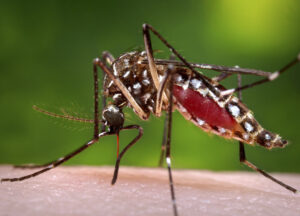
Other urban mosquitoes, including Aedes aegypti and Aedes albopictus, feed primarily on humans. They search for bloodmeals during the day when humans are most active, and are highly efficient vectors of diseases such as dengue, Zika, and chikungunya.

The 4Ds: Protect Yourself from Dangerous Mosquitoes

Whether you live in an urban or rural area, it’s important to protect yourself from biting mosquitoes by practicing the “4 D’s.”

DEFEND

   Use an EPA-approved repellent

   Protect pets with heartworm prevention

DRESS

     Wear light-colored, loose-fitting clothes and closed-toe shoes.

     Apply repellent to exposed skin on hands, ankles, neck, and face.

DRAIN

     Eliminate mosquito breeding sites by emptying standing water in buckets, birdbaths, tarps, plant saucers, and other containers.

     Ensure gutters, flower pots, rain barrels, and stormwater systems drain properly.

DUSK & DAWN

     Limit outdoor activity when mosquitoes are most active - Urban mosquitoes typically feed at dawn and dusk and rest in shaded, cool areas during the day.

Planning Ahead to Protect Public Health

Personal protection goes hand in hand with an Integrated Mosquito Management (IMM) program. These programs are designed to monitor changes in mosquito populations, identify new disease threats, and initiate targeted solutions. Surveillance and disease testing, larval and adult mosquito control, and public education are core pillars of an effective IMM program. Every city and region is different, which is why IMM programs are tailored based on goals, budgets, risk levels, and many other factors.

In many areas, urban development is only accelerating, but with proper planning, communities can stay ahead of mosquito-related threats as landscapes and populations change.

1 Why Is Oropouche Spreading so Fast? | Medscape, published May 19, 2025

YouTube player

Contact Our Experts

Complete the form below or call us at 800-413-4445 to speak to an expert about your mosquito management needs.

VDCI_Logo_squareSince 1992, Vector Disease Control International (VDCI) has taken pride in providing municipalities, mosquito abatement districts, industrial sites, planned communities, homeowners associations, and golf courses with the tools they need to run effective mosquito control programs. We are determined to protect the public health of the communities in which we operate. Our mosquito control professionals have over 100 years of combined experience in the field of public health, specifically vector disease control. We strive to provide the most effective and scientifically sound mosquito surveillance and control programs possible based on an Integrated Mosquito Management approach recommended by the American Mosquito Control Association (AMCA) and Centers for Disease Control and Prevention (CDC). VDCI is the only company in the country that can manage all aspects of an integrated mosquito management program, from surveillance to disease testing to aerial application in emergency situations.

Are Mosquito Control Programs Different from County to County or City to City?

Why Mosquito Control Programs Differ Across Communities

To those less familiar with mosquito control, it might seem straightforward. However, mosquito management approaches can vary widely from county to county and city to city. Whether a mosquito program is managed in-house by city or county departments such as public works or environmental services, or outsourced to contractors like VDCI, there’s no one-size-fits-all approach.

Each jurisdiction designs its program around many factors, including local mosquito species, community populations, surrounding geography, community management goals and desires, and available budget. The products and methods used for controlling mosquitoes can also vary greatly. Decisions are guided by the targeted mosquito species, their unique behaviors, and scientific analysis of resistance mechanisms within the local mosquito population. These insights help determine which control products will be most effective and whether ground-based, aerial, or a combination of methods should be used.

plane spraying adulticide

Matching Application Methods to Environments

The targeted mosquito species also influences whether ground-based methods are sufficient or if aerial applications are necessary for effective control. Some salt-marsh species like Aedes sollicitans and Aedes taeniorhynchus are strong flyers capable of traveling several miles from their breeding grounds. Others, such as the Asian tiger mosquito (Aedes albopictus), stay much closer to home—typically within 50 meters of small, artificial containers like buckets, flower saucers, pet bowls, and clogged gutters, often found in urban settings.

Furthermore, each city and county faces its own set of operational and environmental challenges that shape how mosquito control is approached. Terrain, climate, and the types of mosquitoes present can differ significantly, even within the same state. For instance, the coastal marshes of eastern Virginia can face very different challenges than the mountainous landscapes in the western part of the state. These distinctions play a critical role in shaping program design.

Challenges Facing Public Mosquito Programs

While many jurisdictions have sophisticated mosquito management programs and employ experienced entomologists and experts, others simply lack the resources. Some may be limited by budgets, insufficient manpower, or competing priorities. For example, mosquito control may take a backseat to urgent infrastructure issues like road repairs or sewer maintenance. Incorporation status can also influence coverage. Some unincorporated areas may be excluded from county-managed programs, leading to gaps in mosquito control.

Bridging the Gap with Specialized Teams

Contractors like VDCI can step in to bridge these gaps. Unlike municipal staff who often juggle multiple responsibilities, our team of experienced technicians and entomologists is solely dedicated to mosquito management. We stay current on emerging technologies, maintain required certifications, and continuously invest in specialized training. This focus allows us to respond quickly and strategically when mosquito threats arise. Meanwhile, some city or county employees may struggle to keep up with credentialing requirements or respond as swiftly amid competing demands.

mosquito tech talking to customer

Programs Designed Around Your Community’s Needs

No matter your level of need, VDCI has the technical expertise to run or support your program and collaborate with local leaders and stakeholders. Our Integrated Mosquito Management (IMM) programs are designed around each jurisdiction’s specific goals and budget. Essential strategies like surveillance, disease testing, and larval and adult mosquito control, and public education can be adapted as needed to keep your community safe. Together, we can develop a program that meets your immediate needs and remains effective over time.

YouTube player

Contact Our Experts

Complete the form below or call us at 800-413-4445 to speak to an expert about your mosquito management needs.

VDCI_Logo_squareSince 1992, Vector Disease Control International (VDCI) has taken pride in providing municipalities, mosquito abatement districts, industrial sites, planned communities, homeowners associations, and golf courses with the tools they need to run effective mosquito control programs. We are determined to protect the public health of the communities in which we operate. Our mosquito control professionals have over 100 years of combined experience in the field of public health, specifically vector disease control. We strive to provide the most effective and scientifically sound mosquito surveillance and control programs possible based on an Integrated Mosquito Management approach recommended by the American Mosquito Control Association (AMCA) and Centers for Disease Control and Prevention (CDC). VDCI is the only company in the country that can manage all aspects of an integrated mosquito management program, from surveillance to disease testing to aerial application in emergency situations.

2024 Mosquito-Borne Disease Year In Review

West-Nile-Virus-UK-spread-Europe-outbreak-1001738

Exploring the Impact of Mosquito-Borne Diseases In 2024

In 2024, the U.S. was impacted by 27 individual weather and climate disasters—the second most on record, behind 28 disasters in 2023¹. Climate change appears to be increasing the frequency, intensity, and regional impact of hurricanes, storms, and heat waves. These events, in addition to other human-caused activities like deforestation, not only foster environments that enable mosquitoes to transmit diseases but also drive mosquito populations into regions that were once less hospitable or affected by certain vector-borne diseases.

This year-in-review examines six of the most widespread mosquito-borne diseases in the U.S., comparing five years of historical data compiled by the U.S. Centers for Disease Control and Prevention (CDC)². While some diseases such as St. Louis Encephalitis saw a decrease in cases, others like Eastern Equine Encephalitis (EEE) rose sharply. EEE made several headlines this past year when an increase in cases was reported in New England, specifically New Hampshire and Massachusetts. Not to mention an increase in dengue outbreaks in North, Central, and South America and the Caribbean which lead to a spike in travel-associated and locally acquired cases in the U.S. These insights can help shape your mosquito management plans and public education initiatives for the year ahead.  

*At the time of publishing this information, mosquito-borne disease-related deaths have not been reported by the CDC. Please note, the CDC counts the District of Columbia as a state

West Nile Virus

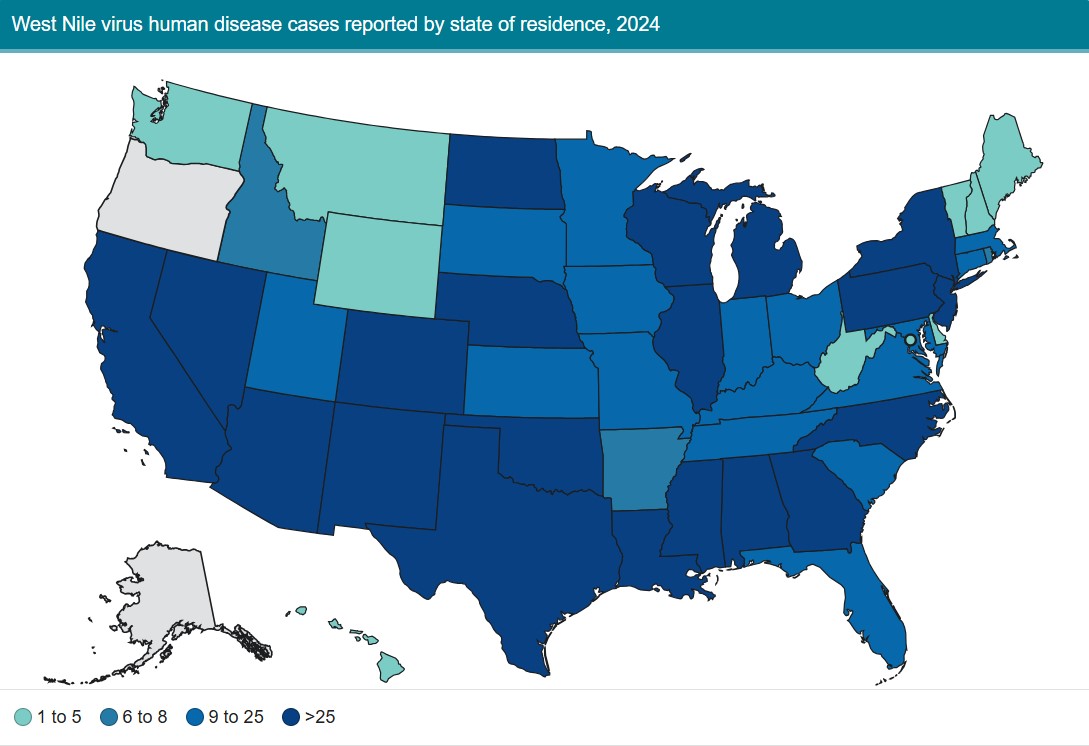
West Nile virus (WNv) remains the most deadly mosquito-borne illness in the continental U.S. Since its initial detection in 1999, it has become endemic (regularly occurring) in most regions. Although WNv cases significantly declined in 2024 compared to the previous year, the virus remains widespread—reported in every state except Alaska and Oregon. Of the 1,466 cases, more than 72% were classified as neuroinvasive.

Symptoms

While healthy individuals may not notice symptoms, they can range from mild flu-like symptoms such as fevers, headaches, or neck stiffness to severe neurological conditions such as meningitis and encephalitis (brain inflammation), particularly among older populations or those with compromised immune systems. Approximately 5-10% of cases are fatal.

Primary vectors 

WNv is most commonly transmitted by mosquitoes from the genera Culex, including Culex pipiens, Culex tarsalis, and Culex quinquefasciatus. Birds also play a notable role in the spread of the virus. When a mosquito bites an infected bird, it can contract the virus and become a carrier. The mosquito can then transmit the virus to humans through later bites.

Year-Over-Year Change in West Nile Virus Cases

2024
1,466 cases (1,063 neuroinvasive)
2023
2,406 cases (1,599 neuroinvasive)
2022
1,132 cases (827 neuroinvasive)
2021
2,911 cases (2,008 neuroinvasive)
2020
731 cases (559 neuroinvasive)

Top 5 states for West Nile Virus Human Case Count

2024 West Nile Virus Human Cases In the U.S.
Image Source: U.S. Centers for Disease Control and Prevention https://www.cdc.gov/west-nile-virus/data-maps/current-year-data.html
Cases
0
Neuroinvasive Cases
0
States Reporting Human Cases
0

Dengue

Dengue consists of four distinct viruses, referred to as dengue 1, 2, 3, and 4. It is most prevalent in tropical and subtropical regions. In 2024, over 12 million cases of dengue were reported in North, Central, and South America and the Caribbean. These outbreaks led to a major spike in travel-associated infections in the United States. Last year, the CDC reported 9,255 total cases, including both locally acquired and travel-associated infections. Combined, these cases spanned 53 U.S. jurisdictions, though local transmission occurred in only three states, California, Florida, and Texas.

Symptoms

Dengue symptoms can vary from mild joint pain, headaches, and fever to severe hemorrhagic fever, which can cause blood vessel damage. Contracting the virus a second time greatly increases the risk of severe illness, particularly in young children and older adults. Approximately 1% of cases are fatal.

Primary vectors 

Dengue is most often spread to humans by Aedes genus mosquitoes, particularly Aedes aegypti and Aedes albopictus. Additionally, the virus can be transmitted to fetuses during pregnancy.

Year-Over-Year Change in Dengue Cases

2024
6,076 locally acquired cases (3,179 travel-related)
2023
1,104 locally acquired cases (1,452 travel-related)
2022
1,044 locally acquired cases (1,494 travel-related)
2021
609 locally acquired cases (205 travel-related)
2020
983 locally acquired cases (354 travel-related)

Top 5 states for Dengue Human Case Count

2024 Dengue Human Cases In the U.S.
Dengue​ cdc map 2024
Image Source: U.S. Centers for Disease Control and Prevention, Accessed on January 1, 2025 https://www.cdc.gov/dengue/data-research/facts-stats/current-data.html
Locally Acquired Cases
0
Travel-associated Cases
0
States Reporting Locally Acquired Human Cases
0

Eastern Equine Encephalitis

Eastern Equine Encephalitis (EEE) is a rare but potentially deadly mosquito-borne disease primarily found in Northeast, Mid-Atlantic, and Gulf Coast states. In 2024, EEE made several headlines with reports reaching a five-year high with 19 confirmed cases—the third-highest count since 2005. 

Symptoms

Symptoms include high fever, headache, brain inflammation, seizures, and paralysis. Severe cases are most likely to occur among children and older populations. Approximately 30% of cases are fatal, but evidence suggests survivors develop lifelong immunity to the virus. Horses, pigs, rodents, and some deer species are also susceptible to the disease. 

Primary vectors 

EEE primarily circulates between birds and the primary mosquito vector species, Culiseta melanura. However, transmission to humans and animals occurs through mosquitoes from the Aedes, Coquillettidia, and Culex genera, which feed on infected birds before biting mammals.

Year-Over-Year Change in Eastern Equine Encephalitis Cases

2024
19 cases (19 neuroinvasive)
2023
7 cases (7 neuroinvasive)
2022
1 case (1 neuroinvasive)
2021
5 cases (5 neuroinvasive)
2020
13 cases (13 neuroinvasive)

Top 5 states for Eastern Equine Encephalitis Human Case Count

2024 Eastern Equine Encephalitis Human Cases Reported In the U.S.
Image Source: U.S. Centers for Disease Control and Prevention, Accessed on January 1, 205 https://www.cdc.gov/eastern-equine-encephalitis/data-maps/current-year-data.html
Cases
0
Neuroinvasive Cases
0
States Reporting Human Cases
0

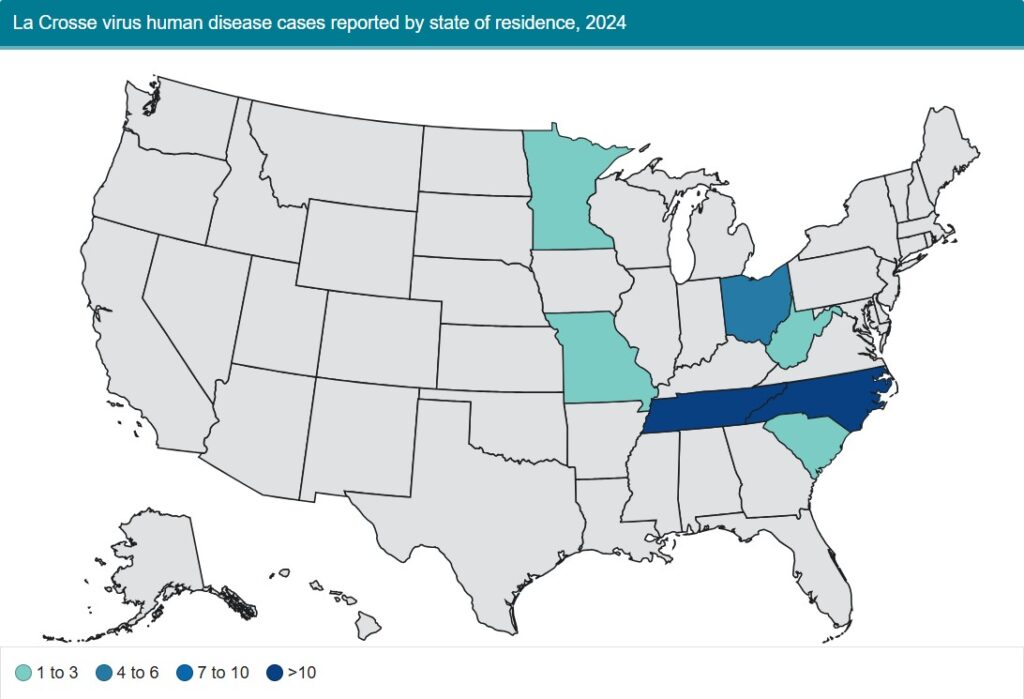
La Crosse Encephalitis

In 2024, La Crosse Encephalitis cases continued their upward trend, with most reports coming from North Carolina and Tennessee. Nearly all reported infections progressed to neuroinvasive disease.

Symptoms

This mosquito-borne disease primarily impacts children, causing symptoms like fever, headache, and nausea. In neuroinvasive cases, it can lead to severe complications such as seizures, disorientation, vision loss, and other serious issues. Approximately 1% of cases are fatal.

Primary vectors 

The La Crosse virus is transmitted through the bite of an infected Aedes triseriatus, commonly known as the Eastern treehole mosquito.

Year-Over-Year Change in La Crosse Encephalitis​ Cases

2024
35 cases (34 neuroinvasive)
2023
31 cases (30 neuroinvasive)
2022
22 cases (19 neuroinvasive)
2021
40 cases (39 neuroinvasive)
2020
88 cases (84 neuroinvasive)

Top 3 states for La Crosse Encephalitis Human Case Count

2024 La Crosse Encephalitis Human Cases In the U.S.
Image Source: U.S. Centers for Disease Control and Prevention, Accessed on January 1, 2025 https://www.cdc.gov/la-crosse-encephalitis/data-maps/current-year-data.html
Cases
0
Neuroinvasive Cases
0
States Reporting Human Cases
0

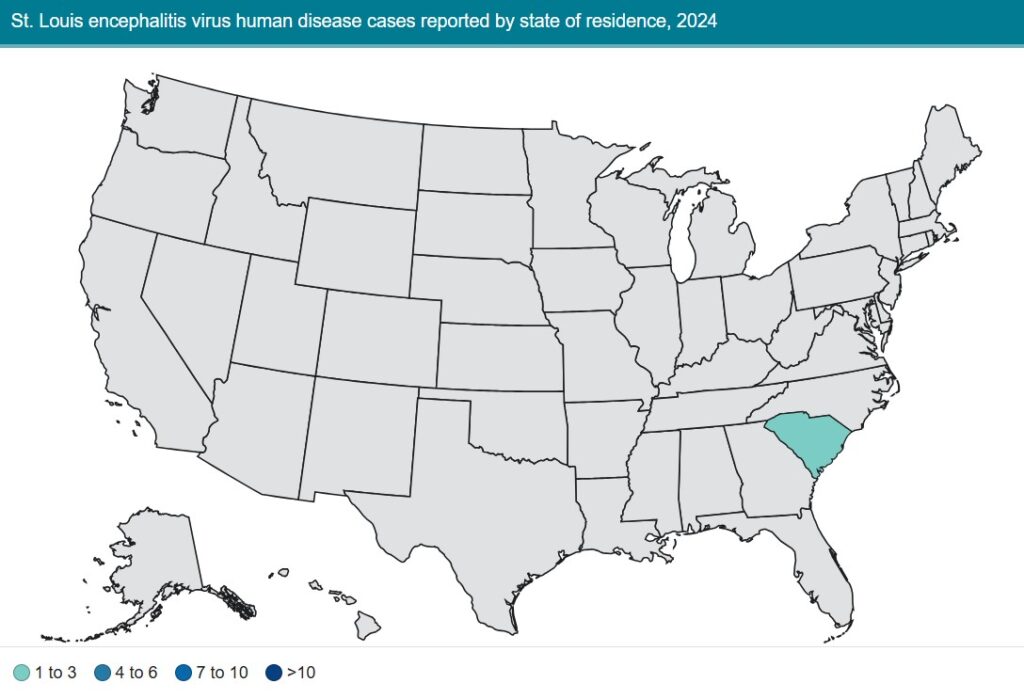
St. Louis Encephalitis

The St. Louis encephalitis virus was first identified in 1933 during an epidemic in St. Louis, Missouri, which led to over 1,000 cases of encephalitis. In 2024, St. Louis Encephalitis cases saw a dramatic decline, with only one reported case in South Carolina—the lowest case count since 2013 when just a single case was also recorded.

Symptoms

Common symptoms include fever, headache, and confusion, with severity often increasing with age. On average, 90% of infected older adults develop brain inflammation. The fatality rate ranges from 3% to 30%.

Primary vectors 

The main mosquito vectors for the virus are Culex pipiens, Culex quinquefasciatus, Culex tarsalis, and Culex nigripalpus. Wild birds, such as blue jays, sparrows, robins, and pigeons serve as amplifying hosts. 

Year-Over-Year Change in St. Louis Encephalitis​ Cases

2024
1 case (0 neuroinvasive)
2023
19 cases (13 neuroinvasive)
2022
33 cases (27 neuroinvasive)
2021
17 cases (11 neuroinvasive)
2020
16 cases (14 neuroinvasive)

Top states for St. Louis Encephalitis Human Case Count

2024 St. Louis Encephalitis Human Cases In the U.S.
Image Source: U.S. Centers for Disease Control and Prevention, Accessed on January 24, 2024 https://www.cdc.gov/sle/data-maps/current-year-data.html
Case
0
Neuroinvasive Cases
0
States Reporting Human Cases
0

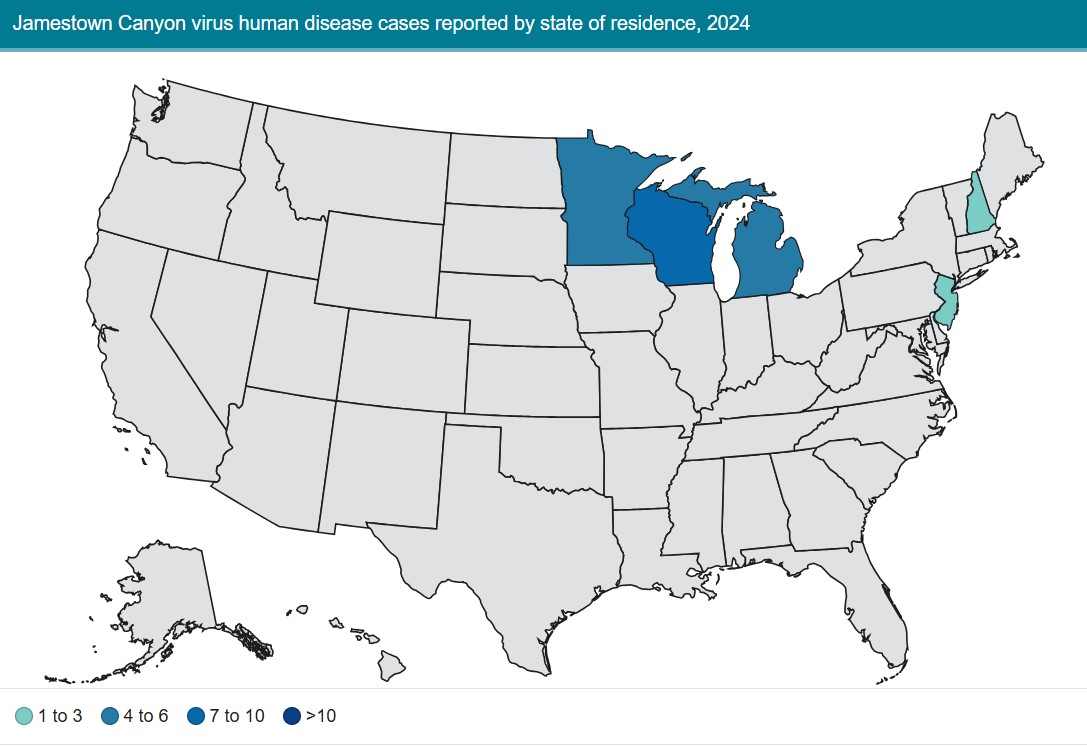
Jamestown Canyon virus

In 2024, the number of Jamestown Canyon virus cases remained consistent with the previous year, with 22 reported cases—15 of which became neuroinvasive. The majority of cases were concentrated in the Great Lakes region. Historically, more than half of all cases have been reported in Wisconsin and Minnesota.

Symptoms

Many people infected with Jamestown Canyon virus do not have symptoms. Those who do may experience fever, headache, muscle soreness, and respiratory issues. Severe infections can lead to disorientation, seizures, and other neurological complications.

Primary vectors 

The virus can be spread by different mosquito species, with deer often serving as the amplifying host. Humans are deemed “dead-end” hosts for the virus, as their blood lacks the virus levels necessary to infect mosquitoes and propagate the disease further.

Year-Over-Year Change in Jamestown Canyon Virus Cases

2024
22 cases (15 neuroinvasive)
2023
21 cases (15 neuroinvasive)
2022
12 cases (11 neuroinvasive)
2021
32 cases (21 neuroinvasive)
2020
13 cases (10 neuroinvasive)

Top 3 states for Jamestown Canyon Virus Human Case Count:

2024 Jamestown Canyon virus Human Cases Reported In the U.S.
jamestown
Image Source: U.S. Centers for Disease Control and Prevention, Accessed on January 24, 2025 https://www.cdc.gov/jamestown-canyon/data-maps/current-year-data.html
Locally Acquired Cases
0
Neuroinvasive Cases
0
States Reporting Human Cases
0

Utilizing Data to Drive Effective Integrated Mosquito Management Programs

The 2024 data underscore the growing threat of mosquito-borne diseases and the need for adaptive solutions and strategies, such as Integrated Mosquito Management (IMM) programs. IMM programs incorporate adult and larval mosquito control, surveillance and disease testing, and public education to stay ahead of evolving environmental challenges, reduce the risk of insecticide resistance, and keep our communities safe from vector-borne diseases. Through a proactive approach, we can build a strong foundation for long-term mosquito prevention and control.

SOURCES

1 NOAA National Centers for Environmental Information (NCEI) U.S. Billion-Dollar Weather and Climate Disasters (2025). https://www.ncei.noaa.gov/access/billions/ 

2 U.S. Centers for Disease Control and Prevention (CDC). https://www.cdc.gov/ 

VDCI Wants To Make Your Community Safer. How Can We Help?

Speak to an expert about implementing an IMM program.

Fill out the information below, and one of our experts will follow up with you shortly.

Since 1992, Vector Disease Control International (VDCI) has taken pride in providing municipalities, mosquito abatement districts, industrial sites, planned communities, homeowners associations, and golf courses with the tools they need to run effective mosquito control programs. We are determined to protect the public health of the communities in which we operate. Our mosquito control professionals have over 100 years of combined experience in the field of public health, specifically vector disease control. We strive to provide the most effective and scientifically sound mosquito surveillance and control programs possible based on an Integrated Mosquito Management approach recommended by the American Mosquito Control Association (AMCA) and Centers for Disease Control and Prevention (CDC). VDCI is the only company in the country that can manage all aspects of an integrated mosquito management program, from surveillance to disease testing to aerial application in emergency situations.

Reduce Mosquito-Borne Diseases with Disease Testing

Colleague-counting-mosquitos-close-up-oversholder

How Data Collection and Testing Help Reduce Mosquito-Borne Diseases

Mosquitoes are known to transmit several dangerous diseases that can pose a threat to human health. In the United States, mosquito-borne diseases such as West Nile virus, Eastern equine encephalitis virus, and dengue have all caused significant harm to communities nationwide – making the prevention of mosquito-borne diseases crucial for helping keep citizens safe. 

Proactively reducing the spread of these diseases starts with effective mosquito surveillance as part of an Integrated Mosquito Management (IMM) plan. Once adult mosquitoes are collected from various traps, they are sorted, identified, and analyzed in a lab where they undergo several tests, including disease testing. By testing adult mosquitoes for diseases, we can identify areas where disease-carrying mosquitoes are present and take appropriate action to reduce their population – ultimately reducing the spread of mosquito-borne diseases

VDCI lab testing vial mosquito control education

How Mosquito-Borne Disease Testing Works

Integrated Mosquito Management plans require extensive knowledge of mosquito species, breeding activities, and population dynamics to be successful. By conducting regular adult mosquito surveillance, experts can steadily monitor local populations, allowing us to detect mosquito-borne diseases weeks before they can be transmitted to humans or animals. Here’s how the disease testing process works:

  1. Our expert entomologists strategically set adult mosquito traps throughout a given area. Various mosquito traps are used depending on what information is desired. Each trap has its own unique advantages, many attract specific mosquito species, thereby focusing efforts to collect certain mosquito species that are more likely to carry disease. Traps are typically set weekly for regular population monitoring.

  2. Once a mosquito sample is collected, our entomologists will take them back to the lab for mosquito-borne disease testing.

  3. To identify which diseases are present in mosquito populations, our laboratory technicians will run PCR and RAMP® WNv tests. PCR tests allow us to detect different pathogens that are present inside the mosquito, while RAMP® tests are designed to detect West Nile virus, a commonly found mosquito-borne disease in the U.S.

  4. If a mosquito sample tests positive for any mosquito-borne diseases, our entomologists will report the results to all appropriate local and state health departments. With this data, experts can determine the severity of a disease outbreak and respond with effective mosquito management solutions. This often involves returning to the area where the sample was collected and employing adult and larval mosquito control efforts. 
surveillance and disease testing - lab testing - mosquito control - vdci - vector management - markets served

Testing Best Practices

Mosquito-borne disease testing is crucial for helping support effective and environmentally responsible mosquito control. It’s important to follow industry best practices when testing mosquitoes for diseases such as West Nile and malaria. 

  1. Test mosquitoes regularly to ensure we detect the presence of mosquito-borne diseases in a timely manner. 

  2. Test mosquitoes trapped in various parts of the community to ensure we are casting a wide net for mosquito surveillance in the whole community. 

  3. Use mosquito-borne disease testing results to drive IMM programs and reduce the spread of disease. 

When a mosquito pool tests positive for a disease, the results of these tests are immediately communicated to government and health officials. This allows decision-makers to act quickly to reduce the spread of mosquito-borne diseases within their communities. By following these best practices, we can arm public officials with the knowledge they need to make control decisions to reduce the spread of mosquito-borne diseases

Truck-spraying-treatment

Why Mosquito-Borne Disease Testing and Surveillance Matters

Mosquito-borne diseases can have severe consequences on the health and well-being of our communities nationwide. These diseases are transmitted through mosquito bites and can cause symptoms ranging from fever, rash, and neurological problems. Mosquito-borne disease testing and mosquito surveillance provide data and insights to drive a more effective IMM plan that works to reduce mosquito breeding sites and control both nuisance and disease-carrying mosquitoes.

A successful IMM program involves more than mosquito-borne disease testing. Several key pillars, including adult mosquito and larval surveillance, employing a variety of control strategies, and implementing public education within the community, are all part of a comprehensive program’s success. Citizens can help reduce the spread of mosquito-borne diseases by following the 4Ds: Defend, Dress, Drain, and Dusk & Dawn. Applying an EPA-approved mosquito repellent and wearing close-toe shoes, light-colored clothing, and long sleeves and pants while outdoors can significantly protect you from mosquito bites. Draining any standing water that could be a potential mosquito breeding site significantly reduces the mosquito population and the application of insecticides. In addition, limiting your outdoor exposure time, especially from dusk to dawn when mosquitos are most active, will lessen your chances of being bitten. When a comprehensive IMM program is established, it will protect public health and keep our communities safe. 

family playing on playground structure

Importance of Integrated Mosquito Management

Our scientific experts at VDCI have the experience, knowledge, and equipment required to implement a comprehensive IMM plan. A proactive approach to mosquito surveillance reduces mosquito-borne diseases and provides adequate time to respond to disease threats before becoming a serious issue to the public. With our industry-leading experts guiding mosquito management strategies in the communities we serve, you can rest assured that your citizens are protected.

Contact Our Experts

Complete the form below to speak to an expert about your community’s mosquito management needs.

VDCI_Logo_squareSince 1992, Vector Disease Control International (VDCI) has taken pride in providing municipalities, mosquito abatement districts, industrial sites, planned communities, homeowners associations, and golf courses with the tools they need to run effective mosquito control programs. We are determined to protect the public health of the communities in which we operate. Our mosquito control professionals have over 100 years of combined experience in the field of public health, specifically vector disease control. We strive to provide the most effective and scientifically sound mosquito surveillance and control programs possible based on an Integrated Mosquito Management approach recommended by the American Mosquito Control Association (AMCA) and Centers for Disease Control and Prevention (CDC). VDCI is the only company in the country that can manage all aspects of an integrated mosquito management program, from surveillance to disease testing to aerial application in emergency situations.
2023 Mosquito-Borne Disease Year In Review

West-Nile-Virus-UK-spread-Europe-outbreak-1001738

Exploring the Impact of Mosquito-Borne Diseases In 2023

In recent years, the United States has experienced an increase in the abundance and distribution of mosquito-borne diseases. The expansion of mosquito habitats, fueled by climate change, urban development, and other human-related factors poses considerable risks to public health. The need for increased vigilance and proactive strategies is clear in the 2023 data reported by the Centers for Disease Control (CDC) and Prevention, which indicates a resurgence of locally acquired malaria, a dramatic increase in West Nile virus cases, and shifts in the distribution of diseases like La Crosse encephalitis, Eastern equine encephalitis, dengue, Jamestown Canyon virus, and St. Louis encephalitis. In our 2023 review, we analyze the details of each disease, including case counts, notable trends, and the potential impact on public health.

*Please note, at the time of publishing this information, mosquito-borne disease-related deaths have not been reported by the CDC.

Malaria

While uncommon in the United States, 9 locally acquired malaria cases were reported across Florida (7 cases), Texas (1 case), and Maryland (1 case) during the summer of 2023. Though believed to be isolated events, the majority of these cases were caused by Plasmodium vivax, a protozoal parasite that infects the blood of its host and causes disease in humans.

Malaria can present with symptoms such as fever, chills, and flu-like illness. Severe cases may result in complications affecting the kidneys, lungs, and blood vessels. It is crucial to note that malaria can affect individuals of all ages, and prompt diagnosis is essential for effective treatment.

Typically, the United States records over 1,000 imported cases of malaria each year and zero locally acquired cases. According to the CDC, locally acquired mosquito-borne malaria has not been reported in the United States since 2003, when 8 cases were identified in Palm Beach County, FL. The main vector for malaria in the Eastern United States is Anopheles quadrimaculatus. The occurrence of 9 locally acquired malaria cases in 2023 serves as a reminder that mosquito dynamics are subject to change, and proactive measures are essential to address potential shifts in disease transmission patterns.

malaria distribution by country
Image Source: U.S. Centers for Disease Control and Prevention https://www.cdc.gov/parasites/malaria/index.html

West Nile virus

The frequency of West Nile virus infections reported in 2023 were more than double what we saw in 2022.  With torrential rains and flooding across many of the western states a total of 2,406 human disease cases were reported and many of those (n=1,599) experienced the most severe form of infection, including neuroinvasive symptoms. The top 5 states affected by this surge include  Colorado (626 cases), California (367 cases), Nebraska (150 cases), Illinois (113 cases), and South Dakota (93 cases). With 47 states reporting cases in 2023, compared to 43 in 2022, the virus continues to pose a widespread threat. 

Mosquitoes from the genera Culex are recognized as the primary vectors of the disease worldwide and in the U.S. Among these, Culex pipiens, Culex tarsalis, and Culex quinquefasciatus are the main species responsible for transmitting West Nile virus in the U.S. West Nile virus symptoms range from mild flu-like symptoms to severe neurological conditions. Older adults are particularly vulnerable to severe cases, experiencing complications such as meningitis and brain inflammation. 

Year Over Year Change

2023
2,406 cases (1,599 neuroinvasive)
2022
1,132 cases (827 neuroinvasive)
2021
2,911 cases (2,008 neuroinvasive)
2020
731 cases (559 neuroinvasive)

Top 5 states for Human Case Count:

2023 West Nile virus Cases In the U.S.
map-usa
Image Source: U.S. Centers for Disease Control and Prevention, Accessed on January 31, 2024 https://www.cdc.gov/westnile/statsmaps/current-season-data.html
2023 Human Case Count
0
2022 Human Case Count
0
States* reporting cases 2023
0
States* reporting cases 2022
0

*note: CDC counts District of Columbia as a state

La Crosse Encephalitis

La Crosse encephalitis witnessed an increase in human cases, with 31 reported in 2023, including 30 neuroinvasive cases. Ohio (12 cases), Tennessee (5 cases), and West Virginia (5 cases) led the 10 states that reported cases. 

This mosquito-borne disease primarily affects children and can lead to symptoms such as fever, headache, nausea, and, in severe cases, neuroinvasive complications. The transmission of the La Crosse virus occurs through the bite of an infected Aedes triseriatus, commonly known as the Eastern tree-hole mosquito.

Year Over Year Change​

2023
31 cases (30 neuroinvasive)
2022
22 cases (19 neuroinvasive)
2021
40 cases (39 neuroinvasive)
2020
88 cases (84 neuroinvasive)

Top 3 states for Human Case Count:​

2023 La Crosse Encephalitis Cases In the U.S.
map-usa
Image Source: U.S. Centers for Disease Control and Prevention, Accessed on January 31, 2024 https://www.cdc.gov/lac/statistics/current-season-data.html
2023 Human Case Count
0
2022 Human Case Count
0
States reporting cases 2023
0
States reporting cases 2022
0

Eastern Equine Encephalitis

Though there was only 1 case of Eastern Equine Encephalitis in 2022, 7 cases were reported by 4 states in 2023. All cases were neuroinvasive and occurred in the southeast – Alabama (3 cases), Florida (2 cases), Georgia (1 case), and Louisiana (1 case). 

While it primarily circulates between birds and the mosquito species Culiseta melanura, transmission to humans and animals can occur through mosquitoes of the Aedes, Coquillettidia, and Culex genera. These mosquitoes feed on infected birds and subsequently bite mammals, spreading the virus.

This disease poses a significant risk, especially among older adults and young children. Symptoms include high fever, headache, and, in severe cases, brain inflammation. The impact on vulnerable populations emphasizes targeted public health campaigns and mosquito control efforts.

Year Over Year Change​

2023
7 cases (7 neuroinvasive)
2022
1 case (1 neuroinvasive)
2021
5 cases (5 neuroinvasive)
2020
13 cases (13 neuroinvasive)

Top 4 states for Human Case Count:​

2023 Eastern Equine Encephalitis Cases In the U.S.
map-usa
Image Source: U.S. Centers for Disease Control and Prevention, Accessed on January 31, 2024 https://www.cdc.gov/easternequineencephalitis/statistics-maps/current-season-data.html
2023 Human Case Count
0
2022 Human Case Count
0
States reporting cases 2023
0
States reporting cases 2022
0

Jamestown Canyon Virus

Jamestown Canyon virus experienced a notable increase, with 21 human cases reported in 2023, 15 of which were neuroinvasive. Of the 7 states that reported cases, Wisconsin led with 9 human case counts, followed by Michigan (5 cases), Minnesota (2 cases), New Hampshire (2 cases), Illinois (1 case), New Jersey (1 case), and New York (1 case). 

The virus can be spread by different types of mosquitoes, with deer often serving as the amplifying host. Symptoms may include fever, headache, and neurological issues in severe cases. While not often fatal, the virus can cause long-term neurological complications. However, humans are deemed “dead-end” hosts for the virus, as their blood lacks the virus levels necessary to infect mosquitoes and propagate the disease further.

Year Over Year Change​

2023
21 cases (15 neuroinvasive)
2022
12 cases (11 neuroinvasive)
2021
32 cases (21 neuroinvasive)
2020
13 cases (10 neuroinvasive)

Top 4 states for Human Case Count:​

2023 Jamestown Canyon Virus Cases In the U.S.
map-usa
Image Source: U.S. Centers for Disease Control and Prevention, Accessed on January 31, 2024 https://www.cdc.gov/jamestown-canyon/statistics/current-season-data.html
2023 Human Case Count
0
2022 Human Case Count
0
States reporting cases 2023
0
States reporting cases 2022
0

St. Louis Encephalitis

St. Louis encephalitis reported 19 cases in 2023 (13 neuroinvasive), a notable decrease from 2022. Of the 3 reporting states, California recorded the highest number (17 cases), followed by South Carolina (1 case) and Washington (1 case). 

Culex pipiens, Culex quinquefasciatus, Culex tarsalis, and Culex nigripalpus are the predominant mosquito vectors. Wild birds are amplifying hosts, yet typically remain asymptomatic.

This disease primarily affects older adults and can result in symptoms such as fever, headache, and confusion. The severity of symptoms typically increases with age. Approximately 90% of elderly people who become infected with this virus develop brain inflammation, according to the CDC. The fatality rate for cases ranges between 5% and 20%.

Year Over Year Change​

2023
19 cases (13 neuroinvasive)
2022
33 cases (27 neuroinvasive)
2021
17 cases (11 neuroinvasive)
2020
16 cases (14 neuroinvasive)

Top 3 states for Human Case Count:​

2023 St. Louis Encephalitis Cases In the U.S.
2023 Human Case Count
0
2022 Human Case Count
0
States reporting cases 2023
0
States reporting cases 2022
0
map-usa
Image Source: U.S. Centers for Disease Control and Prevention, Accessed on January 31, 2024 https://www.cdc.gov/sle/statistics/current-season-data.html

Dengue

Dengue comprises a group of viruses transmitted to humans through infected mosquitoes of the Aedes genus, specifically Aedes aegypti and Aedes albopictus. Though showing a slight overall decrease, Dengue still poses a considerable public health concern with 2,556 reported cases in 2023. More than half of the cases were travel-associated, but 1,104 were locally acquired. Puerto Rico and Florida emerged as the top jurisdictions reporting locally acquired cases.

Dengue symptoms range from mild fever to severe hemorrhagic fever. Severe cases are more common in young children and older adults. Transmission of the disease to a fetus can also occur during pregnancy.

Year Over Year Change​

2023
1,104 cases
1,452 cases
2022
1,044 cases
1,494 cases
2021
609 cases
205 cases
2020
983 cases
354 cases

*Red= Locally Acquired Cases, Grey= Travel Related Cases

Top 4 states for Human Case Count:​

2023 Dengue Cases In the U.S.
map-usa
Image Source: U.S. Centers for Disease Control and Prevention, Accessed on January 31, 2024 https://www.cdc.gov/dengue/statistics-maps/current-data.html
2023 Human Case Count
0
2022 Human Case Count
0
States reporting cases 2023
0
States reporting cases 2022
0

Utilizing Data to Drive Informative Mosquito Management Programs

The 2023 data highlights the evolving regional dynamics of mosquito-borne diseases and underscores the importance of tailored, localized efforts to limit the spread. Adult mosquito management,  surveillance, disease testing, and public education are pivotal in safeguarding the health of our nationwide communities. Integrated Mosquito Management programs incorporate these key strategies and provide a science-based approach to mosquito control. As we navigate the evolving landscape of mosquito-borne diseases, proactive measures and a collective commitment to public health remain our most impactful tools to combat these growing threats.

Other Noteable Data

  • Locally acquired malaria found in U.S. for first time in 20 years (2003, 8 cases in Florida)
  • West Nile virus case count more than doubles from 2022 (105.65% increase)
  • La Crosse (31% 🔼) , Eastern Equine (600% 🔼), and Jamestown Canyon (66.66% 🔼) all see human case count increases.
  • Dengue human case count decreases slightly (🔽 -7.6%)

VDCI Wants To Make Your Community Safer. How Can We Help?

Speak to an expert about implementing an IMM program.

Fill out the information below, and one of our experts will follow up with you shortly.

Since 1992, Vector Disease Control International (VDCI) has taken pride in providing municipalities, mosquito abatement districts, industrial sites, planned communities, homeowners associations, and golf courses with the tools they need to run effective mosquito control programs. We are determined to protect the public health of the communities in which we operate. Our mosquito control professionals have over 100 years of combined experience in the field of public health, specifically vector disease control. We strive to provide the most effective and scientifically sound mosquito surveillance and control programs possible based on an Integrated Mosquito Management approach recommended by the American Mosquito Control Association (AMCA) and Centers for Disease Control and Prevention (CDC). VDCI is the only company in the country that can manage all aspects of an integrated mosquito management program, from surveillance to disease testing to aerial application in emergency situations.

VDCI’s 2022 Mosquito-Borne Disease Year In Review

West-Nile-Virus-UK-spread-Europe-outbreak-1001738

With COVID-19, an ongoing “tripledemic” of multiple respiratory diseases, the economy, and politics dominating the headlines in 2022, vector-borne diseases didn’t get much attention in the national spotlight. However, diseases spread by mosquitoes and ticks are on the leading edge of increasing concerns about climate change, and the experts at VDCI continue to monitor their activity so we can keep the public and our clients informed.

This year in review looks at major mosquito-borne diseases in the United States, summarizes case counts in 2022, and highlights key areas of activity. As we kick off a new year, these data points can inform and shape your integrated mosquito management plans, as well as give you information to provide to your citizens, employees, customers, and the public at large to help them protect themselves and their families from mosquito-borne disease.

West Nile Virus

2022 US Case Count: 1,035 human cases; 79 deaths

West Nile continues to be the deadliest mosquito-borne disease in the continental U.S. First reported in 1999, the virus is now considered endemic by public health authorities in most areas.

There are an estimated 200 species of mosquitoes found in the United States; of those, approximately 150 can be vectors of West Nile virus (WNv). Species of the Culex genus are considered to be the primary carriers of the disease both globally and in the U.S., with Culex pipiens, Culex tarsalis, and Culex quinquefasciatus being the primary species that spread West Nile virus in the U.S.

Humans contract WNv when bitten by an infected mosquito. While even healthy adults can contract the disease, West Nile can be especially dangerous for the very young and the very old, as well as anyone with a compromised immune system. Many infected people have no symptoms; however, those that do may have flu-like symptoms, fever, rash, neck stiffness, and headache. For some infected individuals, the disease can be more severe and lead to encephalitis, or swelling of the brain, and be fatal. The U.S. Centers for Disease Control and Prevention (CDC) estimate that 1 in every 150 cases of West Nile lead to the central nervous system being affected, and the onset of neuroinvasive disease. These cases become more severe and can leave people with long-lasting or permanent neurological symptoms.

In 2022*, there were 1,035 human cases of West Nile reported by the CDC in the U.S., with 298 being qualified as neuroinvasive disease. There were 79 fatalities as a result of the disease. Both human cases and deaths from WNv were significantly down from 2021, but since the disease is cyclical, the drop in case counts does not indicate that there is less reason for concern, and some regions of the country reported significantly higher case counts than they’ve ever seen.

Nearly every U.S. state faced West Nile virus, with only 4 reporting no activity of any type: Alaska, Hawaii, Maine, and Montana. None of the 8 reporting U.S. territories had West Nile activity, non-human, or human infections.

States with the highest incidence of human West Nile virus cases
Colorado (204)
California (168)
New York (79)
South Dakota (66)
Nebraska (64)

States with the highest West Nile virus death toll
Colorado (18)
California (11)
Texas (7)
Louisiana (6)
Nebraska (4)
Arizona (4)
Illinois (4)

Get more information on this mosquito-borne disease on our West Nile virus page. If you are concerned about West Nile virus in your community or around your business, connect with us to speak with one of our experts.

Dengue

2022 US Case Count: 1073 human cases, 0 deaths

Dengue is a group of viruses spread to humans by infected Aedes genus mosquitoes, specifically Aedes aegypti and Aedes albopictus; pregnant people can also pass the disease to a fetus. There are 4 common Dengue viruses, denoted as Dengue 1, 2, 3, and 4. Worldwide, there are over 400 million cases annually, and an estimated 40,000 people die each year.

According to the CDC, public health authorities in the United States reported a total of 1,073 cases of Dengue this year. However, the vast majority of those cases were travel-acquired, meaning that the subjects were infected outside of the U.S. Only 59 cases were considered locally transmitted. There were no reported fatalities in the country as a result of Dengue, although this may reflect underreporting.

U.S. territories Guam and Puerto Rico reported a combined total of 828 cases. Unlike the continental U.S., nearly all of these cases in the territories were locally acquired – 820, to be exact. This is not surprising, given the more tropical conditions, and vector abundance in these locales.

One significant development that is worth noting: in 2022, the Dengvaxia vaccine was approved for use in the United States in children august 9 to 16 with laboratory-confirmed results of a previous Dengue infection.

The U.S. case counts in 2022 illustrate a substantial increase in reported cases over both 2021 and 2020, but a slight decrease versus 2019. This could be a reflection of an increase in the traveling public in 2022, since there was a significant post-pandemic return-to-travel. 2019 marked the highest number of Dengue cases reported in the U.S. since 2010 when it became a reportable disease and case counts began being tracked. That makes 2022 the second-highest case count reported in U.S. states in the last 12 years.

This could be an interesting trend to watch around the globe. According to the Pan American Health Organization, in 2022, a number of countries in North, Central, and South America saw substantial increases in human Dengue cases over 2021.

Americas (North, South, Central), 5 countries with highest increases in Dengue human cases 

Country

2021 Dengue Cases

2022 Dengue Cases

Percentage Increase

United States

117

1073

⬆️817.094%

Panama

3095

11172

⬆️260.969%

El Salvador

5572

16542

⬆️196.877%

Guatemala

2861

8407

⬆️193.848%

Nicaragua

36741

97541

⬆️165.483%

The World Health Organization (WHO) tracks Dengue activity around the globe and in early January 2023, issued an update on Dengue in the Western Pacific Region, indicating that activity has substantially increased in many countries including Lao, Malaysia, the Philippines, Singapore, and Viet Nam.

Get more facts and information about Dengue virus from VDCI.

La Crosse Virus Disease

2022 US Case Count: 21 human cases

La Crosse virus is typically spread by Aedes triseriatus, commonly called the Eastern treehole mosquito. This disease most commonly affects children and teenagers.

La Crosse virus disease is endemic in the United States and is considered a reportable illness.

Symptoms of La Crosse virus are similar to those of other mosquito-borne diseases and include fever, headache, nausea and vomiting, and fatigue. However, it can become dangerous if it becomes La Cross encephalitis, which results in infection of the brain that can manifest through seizures, disorientation, loss of vision, and other serious conditions. Fatalities are rare.

Although the CDC’s La Crosse virus website does not reflect case counts after 2020, the agency’s Arbovirus Surveillance System, ArboNet, reports that there were 21 infections in 2022. More than half of these cases were reported in Ohio. The total number of cases is down from 2021, when 34 cases were reported.

U.S. states reporting La Crosse virus cases in 2022

State

Case Count

Minnesota

3

North Carolina

2

Ohio

13

Tennessee

2

West Virginia

1

las-crosse-virus-disease-cdc-usa-map

Eastern Equine Encephalitis (EEE)

2022 US Case Count: No reporting available

While rare, Eastern Equine Encephalitis (EEE) is a mosquito-borne disease that can affect both humans and some animals. While it is propagated between birds and the mosquito species Culiseta melanura, it is spread to humans and animals by species in the Aedes, Coquillettidia, and Culex genera that feed on infected birds and then mammals.

As its name suggests, horses are especially susceptible to the disease. Other animals that can become infected with EEE virus (EEEv) include pigs, rodents, and certain species of deer. Scientists believe that humans who contract and recover from EEEv have lifelong immunity against re-infection.

Approximately 4 – 5% of human EEEv infections lead to contracting Eastern Equine Encephalitis (EEE), which results in swelling of the brain. EEE has a very high mortality rate, with about one-third of those infected succumbing to the disease.

From 2011 – 2020, only 110 human cases of EEEv have been reported in the United States. In 2019, several outbreaks sparked concern and resulted in 38 human cases and 19 deaths, the highest number of deaths reported in a single year from the disease.

As the map below illustrates, these EEEv infections occurred primarily on the East Coast of the U.S., with high concentrations in New England, the Southeastern U.S., and the state of Michigan.

EEEv infections in the U.S. by state, 2011 – 2020

eeev-infections-us-by state-2011-2020

The CDC has not reported on EEEv infections since 2020. However, the U.S. Department of Agriculture’s Animal and Plant Health Inspection Service (APHIS) reported 110 animal cases in 2021. No data is available yet for 2022.

Learn more about EEE and EEEv on VDCI’s Eastern Equine Encephalitis resource page.

Chikungunya virus

2022 U.S. Case Count: 47 human cases (travel acquired)

Chikungunya virus was rarely discussed in the United States prior to 2006, but as global travel increased and climate shifts have occurred, more U.S. citizens have had experiences with Chikungunya in recent years. It is prevalent in the Caribbean, and while most cases remain travel-acquired, documented local transmission first occurred in 2013. Since 2015, Chikungunya has been a reportable illness in the U.S., which means that health officials are required to report any cases.

Spread to humans via the bite of an infected Aedes genus mosquito, particularly Aedes aegptyi or Aedes albopictus, Chikungunya virus infection can leave those infected with symptoms such as fever, joint pain and swelling, muscle aches, headaches, and more; joint pains are one of the most prominent symptoms and can last for months after the virus subsides. Fatalities are rare.

The CDC has not updated its Chikungunya reporting site since 2020, however, through the agency’s National Arbovirus Surveillance System ArboNet website, VDCI notes that 47 cases of the disease were reported by states in 2022. All of these cases were travel acquired. These cases were reported in 21 states, as reflected in the table below.

U.S. states reporting travel-acquired Chikungunya virus cases in 2022

State

Case Count

California

4

Colorado

3

Illinois

8

Iowa

3

Kansas

1

Kentucky

1

Louisiana

1

Massachusetts

2

Minnesota

1

New Hampshire

1

New Jersey

1

New Mexico

1

New York

5

North Carolina

3

Ohio

2

Pennsylvania

2

Tennessee

2

Utah

1

Vermont

1

Virginia

3

Washington

1

chikunginya-virus-travel-usa-map-2022

In 2021, there were 21 reported travel-acquired cases, so 2022 reflects a 123% increase in overall case counts over the previous year. As with the increase in Dengue, this may reflect a more global trend that is the result of a return to travel post-pandemic.

You can learn more about Chikungunya virus, its history, and its symptoms on VDCI’s resource page.

Zika Virus

2022 U.S. Case Count: 3 human cases (travel acquired)

Like Chikungunya virus, Zika virus has only recently become a significant concern in the United States. But, after significant tropical outbreaks in 2015 and 2016, locally acquired cases were reported in southern states such as Florida and Texas with much media attention, putting the disease on the map in the U.S. with health authorities and the public at large alike.

While Zika virus is spread primarily through the bite of infected Aedes genus mosquitoes, especially Aedes aegypti and Aedes albopictus that are found prevalently in the U.S., it can also be spread through sexual activity, which means that someone does not need to be bitten by a mosquito to be infected. This disease carries special risks for pregnant people who become infected. Zika virus can be passed to a fetus by the mother and result in birth defects and abnormalities.

In 2022, the CDC’s ArboNet system had no reports of locally transmitted Zika virus, but 3 travel-acquired cases were reported in the states listed below. This is a slight decrease from 2021 when 4 cases were reported.

U.S. states reporting travel-acquired Zika virus cases in 2022

State

Case Count

Illinois

1

Kentucky

1

New York

1

zika-virus-travel-usa-map-2022-state

While these case counts are low, there is no way to predict when the U.S. could see a spike in activity like it did in 2015 and 2016. It is important for community leaders to help citizens understand the risks associated with Zika virus and to report any Zika symptoms to their doctors, especially if they or someone they are close with has recently traveled to an area where Zika virus is prevalent. It is also critical that individuals understand the risks and take action to protect themselves, especially while traveling.

Find out more about Zika virus, symptoms, and mosquito-bite protection on VDCI’s vector-borne disease resource website.

Other vector-borne diseases of concern

While this year-in-review focuses on 6 major mosquito-borne diseases, there are others that remain a source of concern in the U.S., including malaria, St. Louis Encelphalitis and Jamestown Canyon virus. And let’s not forget heartworm, which is spread by infected mosquitoes to our beloved pets.

There are also other vector-borne diseases, which encompass viruses and illnesses spread by other pests, such as rodents, ticks, and fleas. These include some common conditions that most people are familiar with, such as Lyme disease, and lesser-known diseases such as hantavirus, plague, Rocky Mountain Spotted fever, Powassan virus, and more.

Protecting your community from mosquitoes


Whether you are responsible for mosquito programs in your community or concerned about mosquito activity on your business property, having an in-depth knowledge of integrated mosquito management programs is critical to protecting those under your care from mosquito-borne disease.

VDCI is committed to mosquito surveillance and disease monitoring, developing robust integrated mosquito management programs for our clients, and educating the public on measures to protect themselves from vector-borne diseases. We also offer emergency response and drone and aerial application services to assist communities in preventing disease, especially following major weather events such as hurricanes and flooding.

If we can assist you or your community in mosquito prevention, please connect with us online or call (866) 977-6964.

*Results reported to U.S. Centers for Disease Control and Prevention as of January 12, 2023.

The key to limiting the spread of mosquito-borne diseases is monitoring and prevention. Municipalities and mosquito abatement districts often execute Integrated Mosquito Management (IMM) programs to help protect communities, but private citizens can support these efforts and empower themselves with disease tracking tools like the CDC’s ArboNet map. The map provides a live overview of reported mosquito activity and the most common vector-borne diseases, including:

  • West Nile Virus (WNV)
  • St. Louis Encephalitis (SLE)
  • Eastern Equine Encephalitis (EEE)
  • La Crosse (LAC)
  • Dengue (DEN) locally-acquired and travel-associated
  • Chikungunya (CHIK) locally-acquired and travel-associated
  • Zika Virus (ZIKA) locally-acquired and travel-associated

*ArboNet is designed to reflect real-time information, but there are times when it may not be in sync. This resource is easy to navigate and can be sorted by disease type, state, and year.

Public Education in Reducing Mosquito Populations 2 bugspray mosquito prevention health and safetyIn addition to staying informed about the risks posed by mosquitoes in your community, it’s important to observe any travel warnings issued by the CDC, particularly when pregnant. It’s also essential to exercise personal protection measures like wearing insect repellent and exercising best practices around your property to reduce mosquito reproduction.

VDCI is committed to public education and spreading awareness throughout the U.S. about the dangers of mosquito-borne diseases and their preventability, with the overarching goal of reducing illness and fatalities. Our dedicated and experienced team works tirelessly with local governments to prevent the spread of mosquito-borne diseases in all of the contracts we service from coast to coast.

VDCI Wants To Make Your Community Safer. How Can We Help?

Speak to an expert about implementing an IMM program.

Fill out the information below, and one of our experts will follow up with you shortly.

VDCI_Logo_squareSince 1992, Vector Disease Control International (VDCI) has taken pride in providing municipalities, mosquito abatement districts, industrial sites, planned communities, homeowners associations, and golf courses with the tools they need to run effective mosquito control programs. We are determined to protect the public health of the communities in which we operate. Our mosquito control professionals have over 100 years of combined experience in the field of public health, specifically vector disease control. We strive to provide the most effective and scientifically sound mosquito surveillance and control programs possible based on an Integrated Mosquito Management approach recommended by the American Mosquito Control Association (AMCA) and Centers for Disease Control and Prevention (CDC). VDCI is the only company in the country that can manage all aspects of an integrated mosquito management program, from surveillance to disease testing to aerial application in emergency situations.
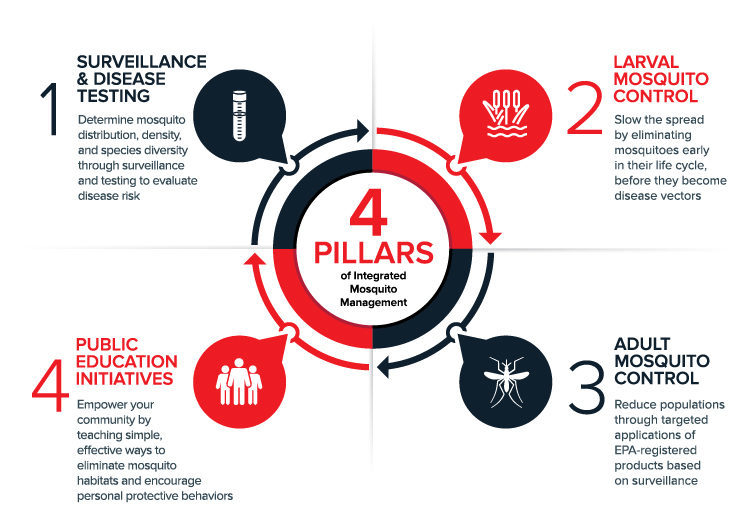
Do Mosquitoes Bite Dogs and Horses? Yes! Here’s How You Can Protect Them…

Heartworm Prevention and Dogs

Most of us know the dangers mosquitoes pose to humans across the globe, but it’s easy to forget about the toll vector-borne diseases can take on pets, particularly dogs and horses. Taking preventative measures to protect these animals is crucial. It’s also important to know and recognize the symptoms of infection to help ensure these animals receive swift care if they do contract a mosquito-borne disease – and understanding how threatening diseases spread can help break the cycle of disease transmission. 

Heartworms

heartworm fact iconIf you’re a dog owner wondering ‘do mosquitoes bite dogs?,’ your vet has likely warned you about Dirofilaria immitis, better known as heartworms. More than 250,000 dogs are diagnosed annually. After biting an infected animal, Aedes, Anopheles, and Mansonia mosquitoes can transmit this parasitic roundworm to many other species, including cats, foxes, raccoons, and wolves, but dogs are the natural host. This answers the question ‘do mosquitoes bite dogs’ and highlights the risk these bites pose. As they mature over approximately 7 months, heartworms may grow up to 12 inches and survive for several years within a dog’s circulatory system.

Symptoms of Heartworm Disease in Dogs:

  • Persistent cough
  • Decreased appetite
  • Weight loss
  • Stunted growth
  • Fatigue
  • Anemia
  • Fainting

Treatment of Heartworm Disease in Dogs

VDCI_Mosquito_Emerg_Response_Guide_Page_08

We’ve addressed the popular question, ‘Do mosquitoes bite dogs?’. Now it’s time to discuss how to treat your dog once it’s been bitten by a disease-carrying mosquito. Without proper treatment, most dogs will die from heartworm disease which is why it’s important to monitor your dog and seek medical guidance if your dog is experiencing any of the symptoms associated with heartworms. Luckily, treatment is typically successful and prescription medicine can be used to prevent the development of heartworms should a dog be bitten by an infected mosquito. There are also FDA-approved products to prevent heartworms in dogs. Depending on the severity and stage of the disease, surgical removal may be necessary.

Eastern Equine Encephalitis (EEE) Virus

Though mosquitoes are most known for infecting dogs with heartworms, which cannot be spread to humans, dogs can also contract other viruses like Eastern Equine Encephalitis (EEE), sometimes referred to as sleeping sickness. However, horses and other equids are the natural hosts of EEE. Culiseta melanura mosquitoes are the primary vector of this virus, but Coquillettidia pertubans, Aedes sollicitans, and Ochlerotatus canadensis may also contribute to the spread. This virus attacks and inflames the central nervous system (brain and spinal cord) of its host and is often fatal. 

Symptoms of EEE in Horses:

  • Fever
  • Lack of appetite
  • Muscle weakness
  • Disorientation
  • Blindness
  • Seizures
  • Paralysis

Treatment of EEE in Horses

EEE Prevention for Horses

In 80-90% of EEE cases, the infection is fatal, and horses may die within a few days. Luckily, vaccinations are available to protect horses from infection. While rare, EEE can also be contracted by humans. Treatment can be effective for less severe infections, but even with treatment, the disease is fatal in approximately 30% of cases.

Heartworms and EEE are more commonly found in warmer, wetter climates, but can be contracted nearly anywhere in the country. While it’s crucial to keep animals up-to-date on their vaccinations and preventative medicine no matter where they are located, it’s equally important to understand how to protect ourselves from mosquito bites and mosquito-borne diseases.

To help prevent mosquito bites, remember the 4 “Ds”

1. DEFEND

Consistently wear and reapply an EPA-approved repellent when outdoors

  • The safest and most effective repellents should contain one of the following active ingredients:
    • DEET
    • Picaridin (known as KBR 3023 and icaridin outside the US)
    • IR3535
    • Oil of lemon eucalyptus (OLE)
    • Para-menthane-diol (PMD)
    • 2-undecanone
  • Always follow manufacturer guidelines found on the label to ensure safe and optimal product use.
  • Review the EPA’s list of registered insect repellents – www.epa.gov/insect-repellents/find-repellent-right-you
  • Keep pets up to date on vaccinations and use preventative medications.

2. DRESS

Wear closed-toe shoes, light colors, and long sleeves and pants to keep your skin protected.

  • Mosquitoes are more attracted to darker clothing.
    Comfortable, loose-fitting clothes are more effective at preventing mosquito bites.
  • Bare skin on your hands, ankles, face, neck, or other areas should be protected with mosquito repellent.

3. DRAIN

Mosquitoes require standing water to complete their life cycle.

  • Empty and prevent future water collection in outdoor tools and objects like tires, tarps, buckets, birdbaths, basketball goals, wheelbarrows, and lawn care equipment.
  • Ensure water can drain properly from gutters, flower pots, watering cans, rain barrels, low-lying ditches, and stormwater pipes and structures.

4. DUSK & DAWN

Limit spending time outdoors when mosquitoes are most active.

  • Mosquitoes can become dehydrated in direct sunlight.
  • During the day, most mosquito species prefer cool, shaded places like thick weeds, ivy, bushes, and wood piles.

Self-protection – and protection of your pets – is an essential part of an integrated mosquito management approach that incorporates public education, partnership with local community leaders and organizations, professional surveillance, monitoring, disease testing, and the use of pesticides when pre-determined action thresholds have been met. At VDCI, we are dedicated to driving the mosquito management industry forward through technological advancement and setting new standards for safety and efficiency, so people and animals can safely enjoy the outdoors.

Contact Us to Learn More About Effective Mosquito Prevention Strategies

VDCI_Logo_square Since 1992, Vector Disease Control International (VDCI) has taken pride in providing municipalities, mosquito abatement districts, industrial sites, planned communities, homeowners associations, and golf courses with the tools they need to run effective mosquito control programs. We are determined to protect the public health of the communities in which we operate. Our mosquito control professionals have over 100 years of combined experience in the field of public health, specifically vector disease control. We strive to provide the most effective and scientifically sound mosquito surveillance and control programs possible based on an Integrated Mosquito Management approach recommended by the American Mosquito Control Association (AMCA) and Centers for Disease Control and Prevention (CDC). VDCI is the only company in the country that can manage all aspects of an integrated mosquito management program, from surveillance to disease testing to aerial application in emergency situations.

Debunking Myths: Bats for Effective Mosquito Control

Eastern Small Footed Bat

Written by:
Michael “Doc” Weissmann, Ph.D., VDCI Entomologist

Co-Written by:
Dr. Louise Lynch-O’Brien of the University of Nebraska at Lincoln

Though mosquitoes are considered the most dangerous species in the world, they are more widely known as one of the most annoying. For thousands of years, humans have sought out solutions and techniques to thwart mosquitoes when spending time outdoors – some effective, some not. While modern scientific advancements have provided us the tools and knowledge to manage mosquitoes more safely and effectively than ever before, dozens of old wives’ tales still persist. One of the most common misconceptions centers around bats.

Bats can consume up to 1,000 mosquitoes in an hour, right? This “fact” is often presented as a primary reason to promote bat conservation. In more extreme instances, some activists claim that installing bat boxes in a neighborhood will lead to successful mosquito control and prevent people from contracting mosquito-borne illnesses like West Nile virus.

Eastern Small Footed BatThe claim likely originated from a study published in 1960 about how certain bats use echolocation to detect and capture small insects (Griffin et al. 1960). As part of the study, Donald Griffin and colleagues at Harvard University photographed little brown bats (Myotis lucifugus) and Eastern small-footed bats (M. leibii) preying on mosquitos (Culex quinquefasciatus) placed together in a room measuring (2.44 m. wide by 4.88 m. long by 2.44 m. tall (8 ft. wide by 16 ft. long by 8 ft. high). Only a small fraction of the bats (less than 10%) demonstrated prey capture behavior when released into the room that initially contained approximately 2000 mosquitoes, but the study focused on these “good catchers.” Again, this was a study on prey capture technique, not prey quantity.

Based on the amount of weight gained by the bats during each trial, the researchers estimated the number of mosquitoes consumed on average during that period. The study began with 2,000 mosquitoes for the initial trial, but they were not able to replenish the mosquito population to that same level during subsequent trials. The “champion catcher” was an individual M. leibii that was recorded to consume an average of 9.5 mosquitoes per minute during the 15-minute trial. It is summarized in the paper with the statement, “This bat was thus catching about ten mosquitoes per minute or one every six seconds.” Note that this was the highest rate recorded during the study, with all other capture rates being significantly less.

Since that publication, others have quoted this statement out of context, and used it to extrapolate numbers to greater time periods. Ten mosquitoes per minute becomes 600 mosquitoes in an hour. Just as the 9.5 mosquitoes per minute was rounded to 10, the 600 mosquitoes per hour is usually generously rounded up to 1000. Over an 8-hour mid-summer night, that would be 8,000 mosquitoes per night, or more than 2.9 million mosquitoes in a year, or nearly 117 million mosquitoes over a 40-year lifespan – just for one bat! Very impressive.

Is this kind of extrapolation justified? It assumes that the “champion catcher” rate of consumption is 1) true for all bats; 2) maintained for a full hour (or for the full evening, week, month, year, lifetime); and 3) no other insects are consumed except mosquitoes. The original study placed the bats in a room with only mosquitoes to feed on and nothing else. It has been demonstrated that some species of bats do consume mosquitoes as part of their diet (for example, Wray et al. 2018). However, bats tend to be generalist and opportunistic predators, feeding on a wide variety of nocturnal insects as available at different times of year and different times during a single evening. Optimal foraging strategy suggests that bats would prefer larger insects like beetles and moths that provide more dietary value for the predatory effort (“more bug for the buck”). Except in circumstances where mosquitoes are temporally and locally extremely abundant, they are likely to comprise only a small fraction of a bat’s caloric intake on a typical night of foraging.

Bats are important predators, valuable to humans for their role in reducing agricultural pest populations. Boyles et al. (2011) estimate the annual benefit of bat predation to North American agriculture at more than US$3.7 billion, based on consumption of crop pest species (a value that should be quoted with caution, of course, since that dollar figure is itself an extrapolation, based on the per-acre value of cotton in Texas!). However, studies confirming bats’ importance in mosquito control are limited, and the “1000 mosquitoes per hour” claim is not likely to be true under natural conditions.
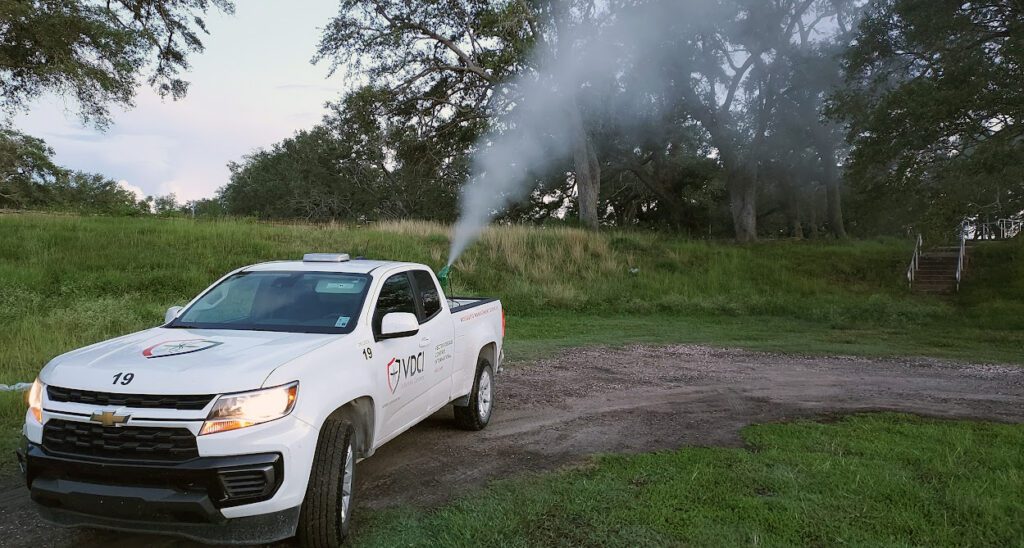

Luckily, there are much more impactful ways to prevent the spread of mosquito-borne diseases. Integrated Mosquito Management (IMM) programs are designed to proactively target mosquitoes at every stage of their lifecycle using professional surveillance and disease testing, population monitoring, larviciding, and adulticiding. These science-backed actions are supported by public education initiatives that empower community members to wear EPA-registered repellents and clothing that covers their bare skin, drain standing water where mosquitoes breed, and stay indoors during dusk and dawn when mosquitoes are most active.

Seeing bats swooping around in the evening does not mean you’re being defended, but they can serve as an important reminder to continue practicing responsible mosquito prevention efforts that protect ourselves and our communities.

Boyles, J.G., Cryan, P.M., McCracken, G.F., & Kunz, T.H. (2011). Economic importance of bats in agriculture. Science, 332 (6025): 41-42.

Griffin, D.R., Webster, F.A., & Michael, C.R. (1960). The echolocation of flying insects by bats. Animal Behaviour, 8 (3-4): 141-154.

Wray, A.K, Jusino, M.A., Banik, M.T., Palmer, J.M., Kaarakka, H., White, J.P., Lindner, D.L., Gratton, C., & Peery, M.Z. (2018). Incidence and taxonomic richness of mosquitoes in the diets of little brown and big brown bats. Journal of Mammalogy, 99 (3): 668-674.­

Contact Us to Learn More About Effective Mosquito Prevention Strategies

VDCI_Logo_square Since 1992, Vector Disease Control International (VDCI) has taken pride in providing municipalities, mosquito abatement districts, industrial sites, planned communities, homeowners associations, and golf courses with the tools they need to run effective mosquito control programs. We are determined to protect the public health of the communities in which we operate. Our mosquito control professionals have over 100 years of combined experience in the field of public health, specifically vector disease control. We strive to provide the most effective and scientifically sound mosquito surveillance and control programs possible based on an Integrated Mosquito Management approach recommended by the American Mosquito Control Association (AMCA) and Centers for Disease Control and Prevention (CDC). VDCI is the only company in the country that can manage all aspects of an integrated mosquito management program, from surveillance to disease testing to aerial application in emergency situations.