

And Why Human Expertise Matters More Than Ever
Artificial intelligence is already becoming deeply woven into modern society. It’s transforming industries, changing how businesses operate, and reshaping the way people interact with technology in daily life. Mosquito control is no exception.
Across the globe, researchers, public health agencies, universities, and private businesses are exploring how AI can help combat one of the world’s oldest and deadliest threats―mosquitoes. Mosquitoes are responsible for transmitting mosquito-borne diseases that affect millions of people every year, including malaria, dengue, Zika, chikungunya, West Nile virus, and yellow fever. According to the American Mosquito Control Association, mosquito-borne diseases contribute to more than one million deaths annually.(1)
Why AI Is Gaining Attention in Mosquito Control
Mosquito control is becoming more complex every year. Climate change is contributing to longer mosquito seasons. Increased global trade and travel are accelerating the spread of different mosquito species into previously unaffected areas. Insecticide resistance continues to erode the effectiveness of traditional control strategies.
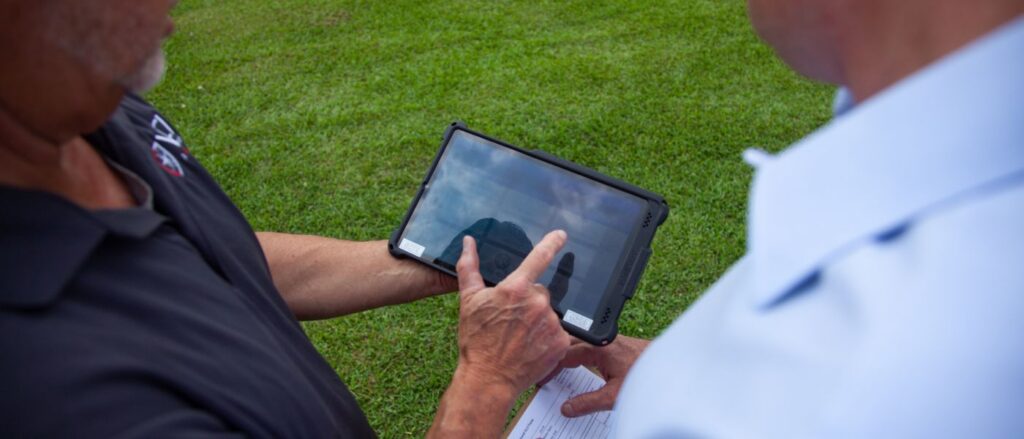
With this in mind, it’s easy to understand why AI has garnered so much attention. Yet, despite many futuristic headlines, the reality is more nuanced. The most important role of AI is not replacing mosquito control professionals or autonomously eliminating mosquitoes. Instead, AI may help experts work smarter by improving mosquito surveillance, identifying high-risk areas, optimizing management strategies, and processing enormous amounts of data more quickly.
Smart Species Identification
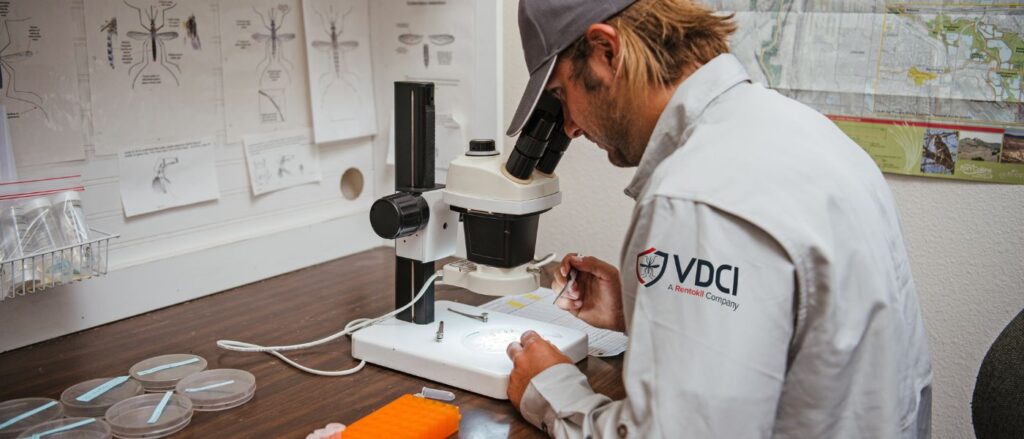
Not all mosquitoes pose the same public health risks. Some species are highly efficient disease vectors; others pose smaller risks or don’t bite humans at all. By assessing the mosquito species present in a given area, experts can better understand public health threats and make more informed management decisions.
Traditionally, this process has involved manually examining mosquito samples under microscopes, which is a highly specialized and time-consuming task. AI-powered tools may help expedite this process.
A handheld species identification device is being developed through research efforts associated with Johns Hopkins University.(2) It uses a smartphone, magnifying lens, lighting system, and machine learning software to review high-resolution images. The device can correctly determine:
- The mosquito species with 94% accuracy
- The mosquito’s sex with 98% accuracy
- The mosquito’s abdominal status (whether it has recently fed or is in a reproductive stage) with 82% accuracy
This low-cost tool is not a replacement for highly trained entomologists. It’s designed specifically for use in field environments where knowledgeable experts may not always be available. In malaria-endemic regions like Uganda, rapid identification of the vector genus , Anopheles, can help guide interventions and community outreach campaigns before outbreaks intensify.
Sterile Insect Technique (SIT)
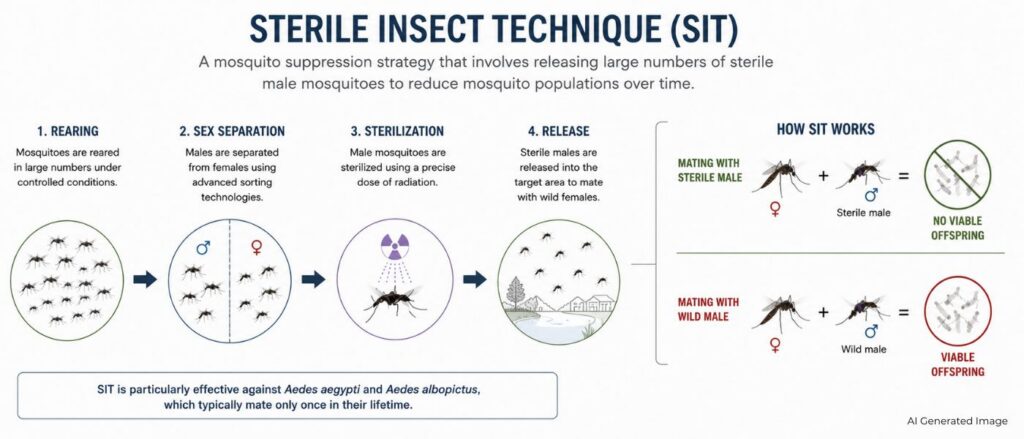
SIT is a mosquito suppression strategy that involves releasing large numbers of sterile male mosquitoes that do not bite or spread diseases. The technique is particularly effective against Aedes aegypti and Aedes albopictus females that typically mate only once during their lifetime; if she mates with a sterile male, no viable offspring are produced. While Culex and Anopheles mosquitoes also generally mate only once, evidence of females mating with multiple males is more common in these groups, which can affect SIT effectiveness.
Producing millions of mosquitoes, accurately separating males from females, sterilizing them, and effectively disseminating them is labor-intensive and logistically challenging. Some companies are applying machine learning and computer imaging technologies to analyze subtle anatomical differences between male and female mosquitoes and improve the speed and precision of the sorting process.
The science behind SIT is not new, but it has struggled to scale for numerous reasons, including operational complexity, high risks of error, and lack of funding.(3)
Acoustic Technology
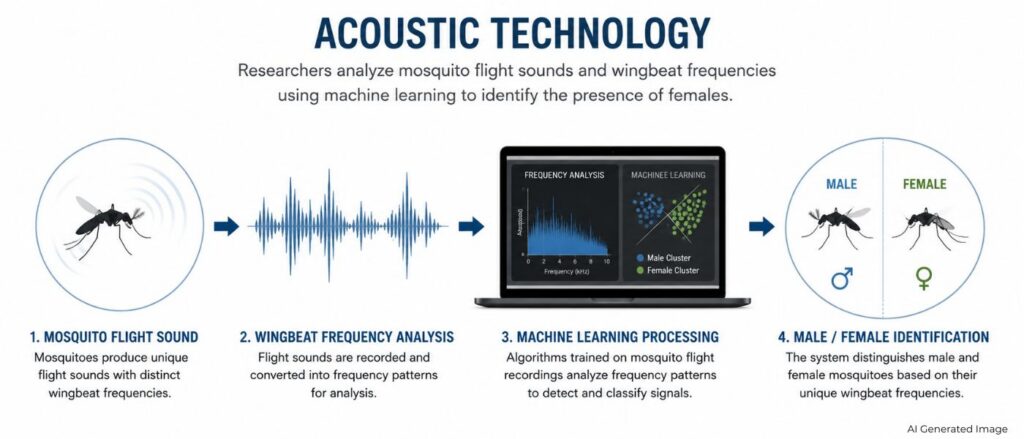
Researchers are working to develop AI systems that can distinguish male and female mosquitoes based on wingbeat frequencies and flight sounds. Using machine learning algorithms trained on mosquito flight recordings, these systems have demonstrated the ability to detect the presence of females inside mosquito release containers.(4)
However, while the technology is promising, it is greatly limited by a lack of standardization and access to consistent data.
Drone Imagery and AI-Powered Mosquito Surveillance
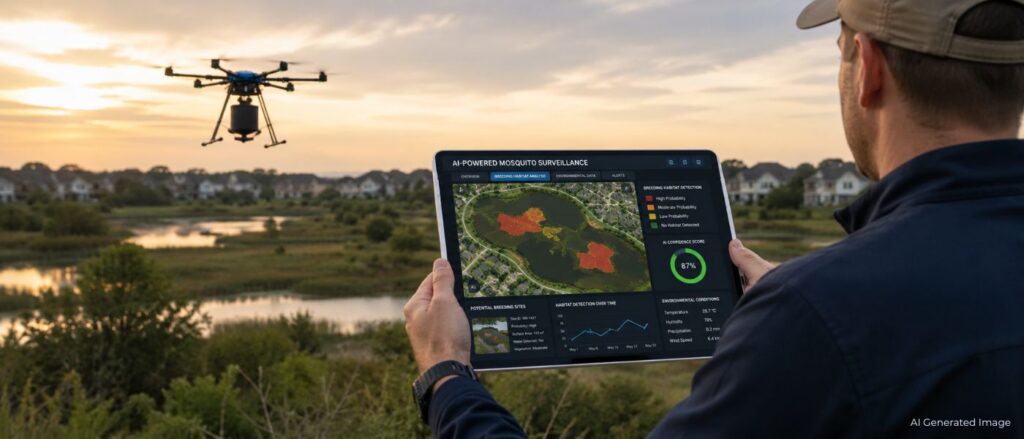
Commercial drones are already valuable tools in mosquito control because they allow professionals to survey inaccessible or dangerous areas safely and efficiently. Wetlands, flood-prone regions, retention ponds, dense vegetation, and environmentally sensitive habitats can be surveyed from above with far greater speed and precision than traditional ground inspections alone.
Researchers can now combine drone imagery with AI-powered analysis systems that are capable of identifying mosquito breeding habitats.
Projects Across Different Countries Point to the Technology’s Growing Potential
INDONESIA
In a study conducted in Indonesia, researchers used drone imagery and deep learning models to detect discarded tires in urban areas as part of efforts to identify breeding sites for Aedes aegypti, a primary vector of dengue, Zika, yellow fever, and chikungunya.
Using high-resolution aerial images collected by local drone pilots, they trained convolutional neural networks to recognize tire shapes and patterns associated with mosquito habitat. The AI system identified nearly twice as many tires as human reviewers and was even able to detect tires partially submerged in water or hidden by vegetation and shadows.(5)
KENYA
Similar research in Kenya used aerial imaging and machine learning to map and classify trash piles in communities at high risk for dengue and chikungunya transmission. Drone imagery was combined with ground inspections to assess waste sites based on their potential to serve as mosquito breeding habitats. Each site was then categorized as high, medium, low, or no risk based on factors such as water retention, density, surface area, and surrounding environmental conditions.
The results were promising:
- Drone image analysis identified 1.8 to 4.4 times more trash sites than traditional walking surveys.
- When compared with ground validation, 94% of UAV-identified trash sites were correctly located and properly classified.
- The system correctly avoided 98% of “trash mimics” (objects that could be mistaken for trash during ground surveys).(6)
INDIA
Some governments are already beginning to pilot large-scale AI-assisted mosquito surveillance systems. In India, the state of Andhra Pradesh recently announced the development of the Smart Mosquito Surveillance System (SMoSS), a technology-driven program that integrates AI-powered sensors, drones, environmental monitoring systems, and automated alerts.(7)
The system is designed to monitor mosquito species, population density, environmental conditions, and potential outbreak risks in real time. Alerts are triggered when mosquito activity exceeds predefined action thresholds, enabling rapid, targeted intervention.
Why Human Expertise Still Leads Integrated Mosquito Management

Despite the excitement surrounding AI, it is important to separate true innovation from exaggerated headlines. Machine learning cannot replace the experience, judgment, and community engagement provided by mosquito control experts. These systems are only as reliable as the data they receive, and many models perform far better in controlled research settings than they do in complex real-world environments.
AI can help process surveillance data, identify potential breeding sites, and improve operational efficiency, but it cannot fully account for changing weather, human behavior, infrastructure challenges, or the adaptability of mosquitoes themselves. Entomologists play vital roles in validating data, interpreting environmental conditions, and determining the most effective management approach for each unique situation.
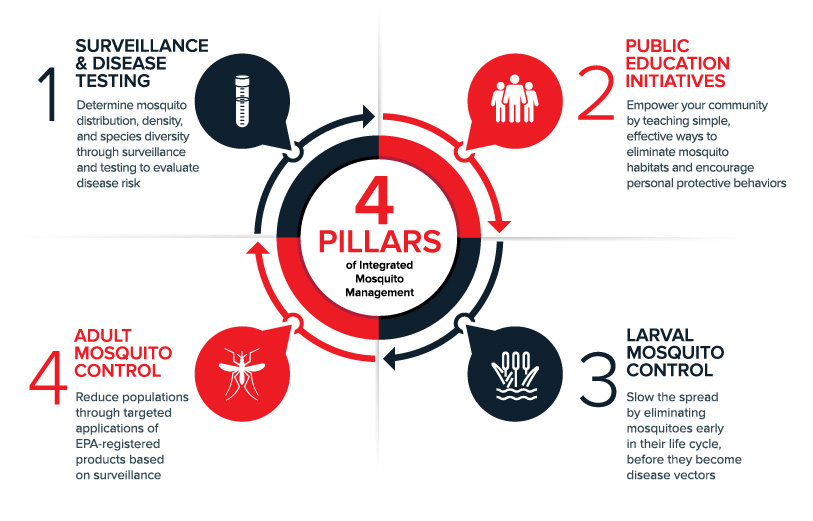
This is especially important for Integrated Mosquito Management (IMM) programs, which require far more than simply identifying mosquitoes or conducting treatments. Effective IMM strategies involve balancing public health priorities, scientific evidence, regulatory requirements, operational capacity, and environmental considerations.
Successful mosquito control programs also depend on professionals who can build relationships, establish trust, and maintain open communication in the communities they serve. That kind of local engagement and human connection takes time, experience, and empathy that AI simply cannot replace.
SOURCES
- American Mosquito Control Association | Vector Borne Diseases
- Johns Hopkins University | Towards transforming malaria vector surveillance using VectorBrain
- World Health Organization | Mosquito sterilization offers new opportunity to control chikungunya, dengue, and Zika
- Ecological Informatics | A review of acoustic systems for insect monitoring: From recording technologies to species recognition performance
- Science Direct | Enhancing Aedes aegypti breeding site detection: A deep learning approach to tire identification in unmanned aerial vehicle imagery from urban Indonesia
- Research Gate | Comparison of unmanned aerial vehicle imaging to ground truth walkthroughs for identifying and classifying trash sites serving as potential Aedes aegypti breeding grounds
- Business Standard | Andhra to unveil AI-based surveillance system to tackle mosquito menace

Contact Our Experts
Complete the form below or call us at 800-413-4445 to speak to an expert about your mosquito management needs.
 Since 1992, Vector Disease Control International (VDCI) has taken pride in providing municipalities, mosquito abatement districts, industrial sites, planned communities, homeowners associations, and golf courses with the tools they need to run effective mosquito control programs. We are determined to protect the public health of the communities in which we operate. Our mosquito control professionals have over 100 years of combined experience in the field of public health, specifically vector disease control. We strive to provide the most effective and scientifically sound mosquito surveillance and control programs possible based on an Integrated Mosquito Management approach recommended by the American Mosquito Control Association (AMCA) and Centers for Disease Control and Prevention (CDC). VDCI is the only company in the country that can manage all aspects of an integrated mosquito management program, from surveillance to disease testing to aerial application in emergency situations.